Figuring out what leak detection costs in 80023 shouldn't feel like a guessing game — yet plenty of homeowners get quotes that read like riddles: a range with no explanation, an hourly rate with no cap, or a single number with no breakdown. Here's the straight version. In the Broomfield area, professional leak detection is typically priced as a flat fee for the detection visit itself, quoted before anyone comes out. The repair is almost always priced separately, because nobody can honestly quote a repair until the leak's location and the access needed to reach it are known. What you should focus on isn't just the number — it's what sits behind it: the equipment brought to your door, the thoroughness of the search, a written record of what was found, and a guarantee that the pinpointed spot is actually where the water is coming from. This guide walks through both common pricing models, the factors that push the number up or down, and the warning signs of a quote you shouldn't trust. If you'd rather just ask a human, our leak detection service for 80023 gives you a firm, written price for the visit before we roll a truck.
The Two Pricing Models You'll Run Into
Nearly every leak detection company prices the diagnostic visit one of two ways. The first is a flat-rate detection fee: one number, quoted up front, covering the visit no matter how long the search takes. This is the model most established companies use, because it aligns everyone's incentives — the technician is motivated to find the leak efficiently, and you know the cost before the doorbell rings. Whether the leak surrenders in forty minutes or demands three hours of acoustic tracing and thermal scanning, the price doesn't budge.
The second model is a diagnostic fee plus repair quote. The diagnostic fee covers the same finding work, and once the leak is pinpointed, you get a separate written quote for the repair itself. Some companies credit a portion of the diagnostic fee toward the repair if you hire them to do it; others treat the two as fully independent charges. Both are legitimate — what matters is that the policy is stated before the visit, not discovered on the invoice.
Avoid the unofficial third model: open-ended hourly billing with no cap. It rewards slow work and punishes you for a difficult leak — the opposite of what you want. If only an hourly rate is offered, ask what a typical visit totals, and get that answer in writing.
What A Proper Quote Includes, Line By Line
A quote you can trust reads like a scope of work, not a fortune cookie. Before you agree to anything, the company should be able to tell you each of these plainly:
- The detection visit itself — the technician's time on site, typically one to three hours depending on the leak's difficulty, with the price fixed in advance.
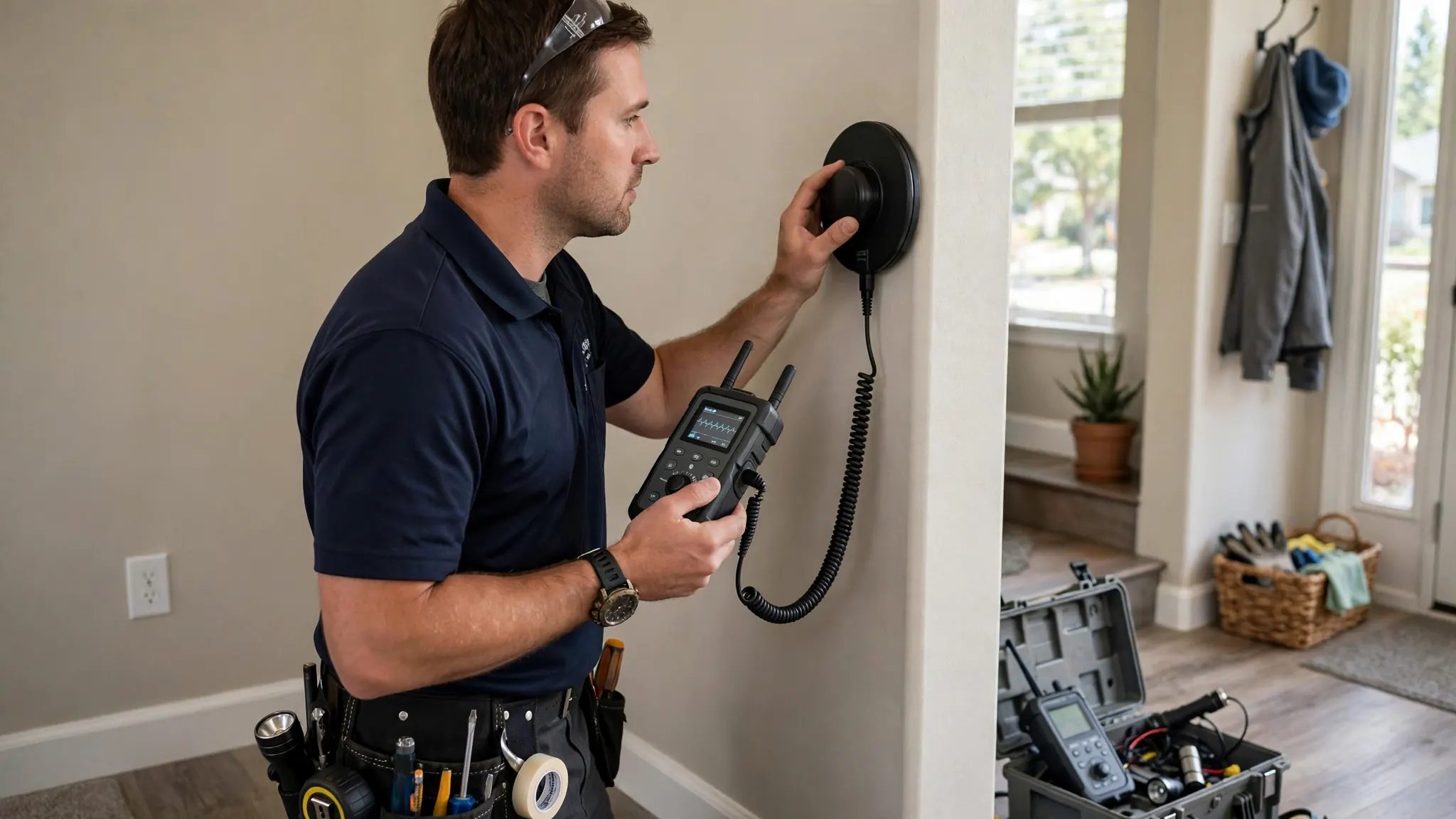
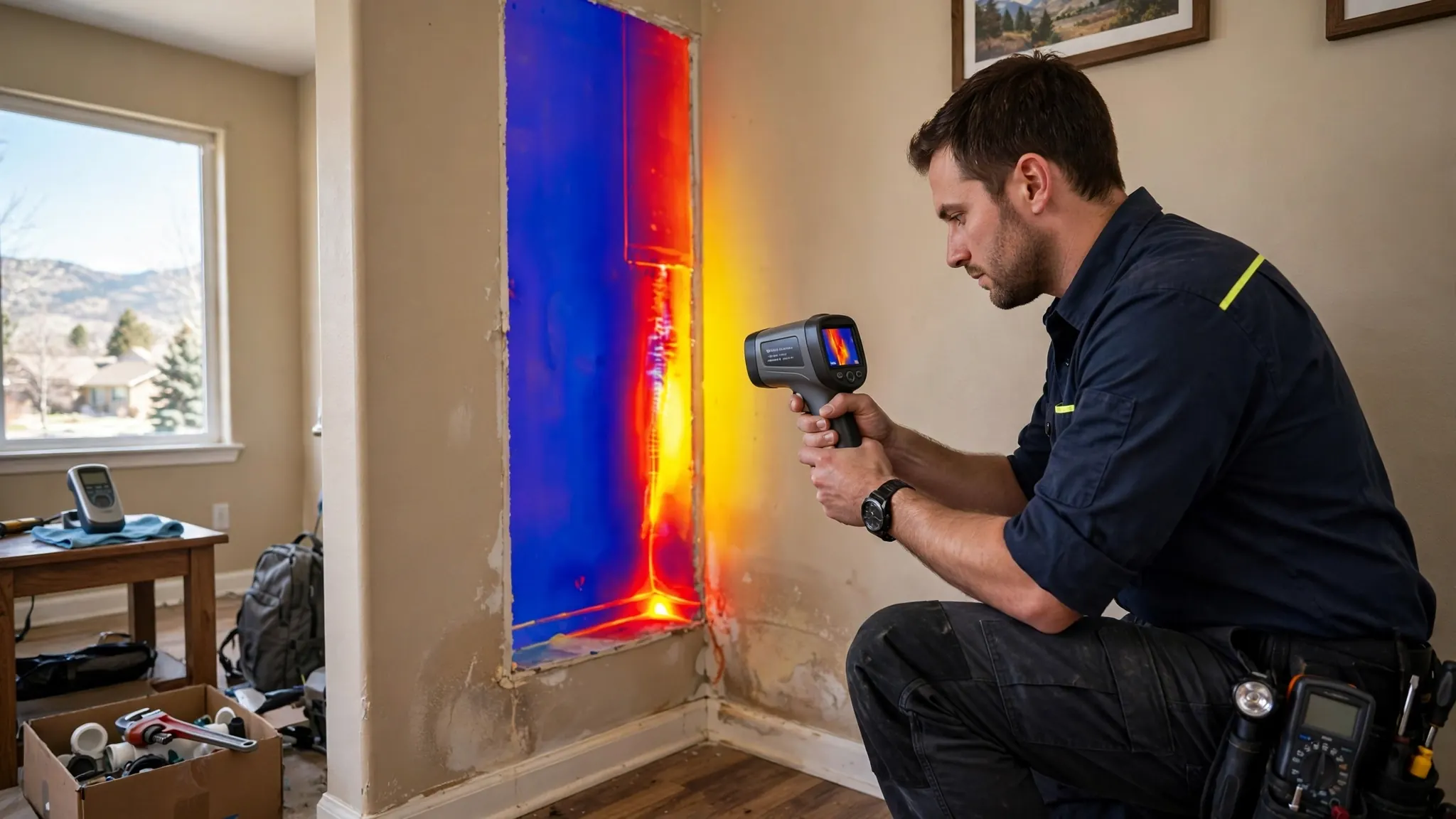
- The equipment used — acoustic listening gear, thermal imaging, pressure testing, moisture meters. A company should name its tools, not just promise to "take a look."
- The pinpointed location — not a vague area ("somewhere under the kitchen") but a marked, specific spot you can point a contractor to.
- Written findings — a short report describing what was tested, what the readings showed, and where the leak was located. This document is what you hand to a repair plumber or an insurance adjuster.
- The guarantee terms — what happens if the marked location turns out to be wrong. A real guarantee means the company comes back and re-tests at no charge.
If a quote covers all five, you're comparing a professional service. If it covers one or two, you're comparing a guess with a truck — and the cheapest quote is usually the one that skips the written findings and the guarantee, which is exactly where expensive mistakes hide.
What Moves The Price Up Or Down
Legitimate price differences between jobs come down to difficulty, not zip code. Here's what actually changes the number:
- Leak location and access. A leaking supply line inside an accessible wall is straightforward. A leak under a concrete slab, beneath a finished basement, or deep in a yard line takes more equipment and more time — and the quote reflects that.
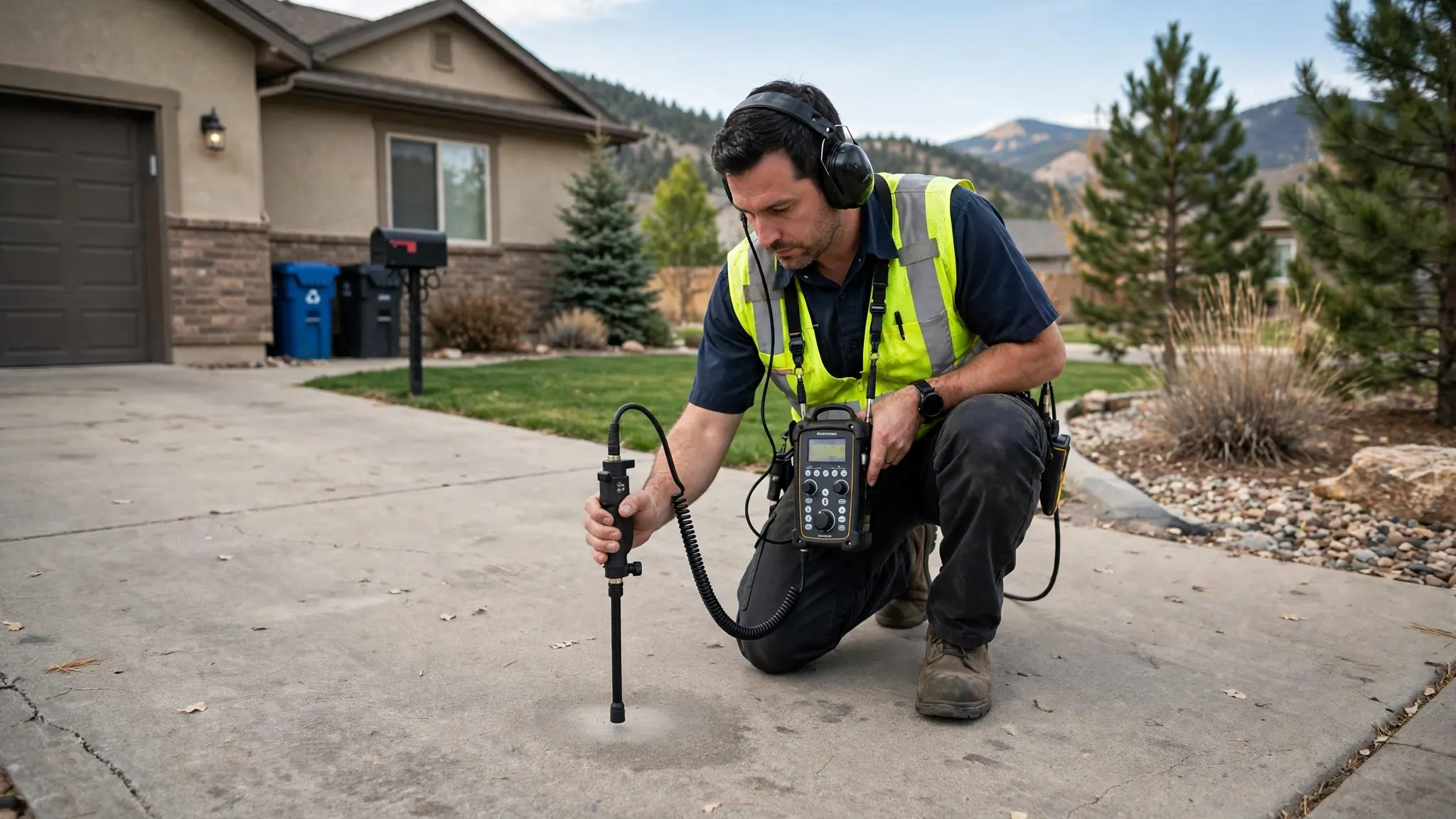
- Indoor vs. outdoor. Meter and service-line investigations involve tracing lines across a property, sometimes with correlators that measure across long distances. That specialized work prices differently from a bathroom wall search.
- Equipment required. A simple moisture-meter survey is quick; a full acoustic correlation plus thermal scan across a slab takes longer and uses costlier gear. The quote should reflect the toolkit, not just the clock.
- Time of service. Scheduled daytime visits are the baseline. After-hours, weekend, and holiday emergency dispatches can carry a premium — reasonable, as long as it's stated on the phone before dispatch, not at your door.
- Documentation depth. A verbal "it's under the sink" costs less to produce than a written report with photos and pressure readings. But that report is what protects you if a repair contractor or an insurer questions the diagnosis later.
None of these factors should be a surprise line item. A good dispatcher hears your symptoms — a spiking water bill, a warm spot on the floor, a hissing wall — and can tell you which difficulty tier your situation falls into before quoting.
Red Flags In Vague Pricing
Some quotes are vague by accident; others are vague by design. Watch for these:
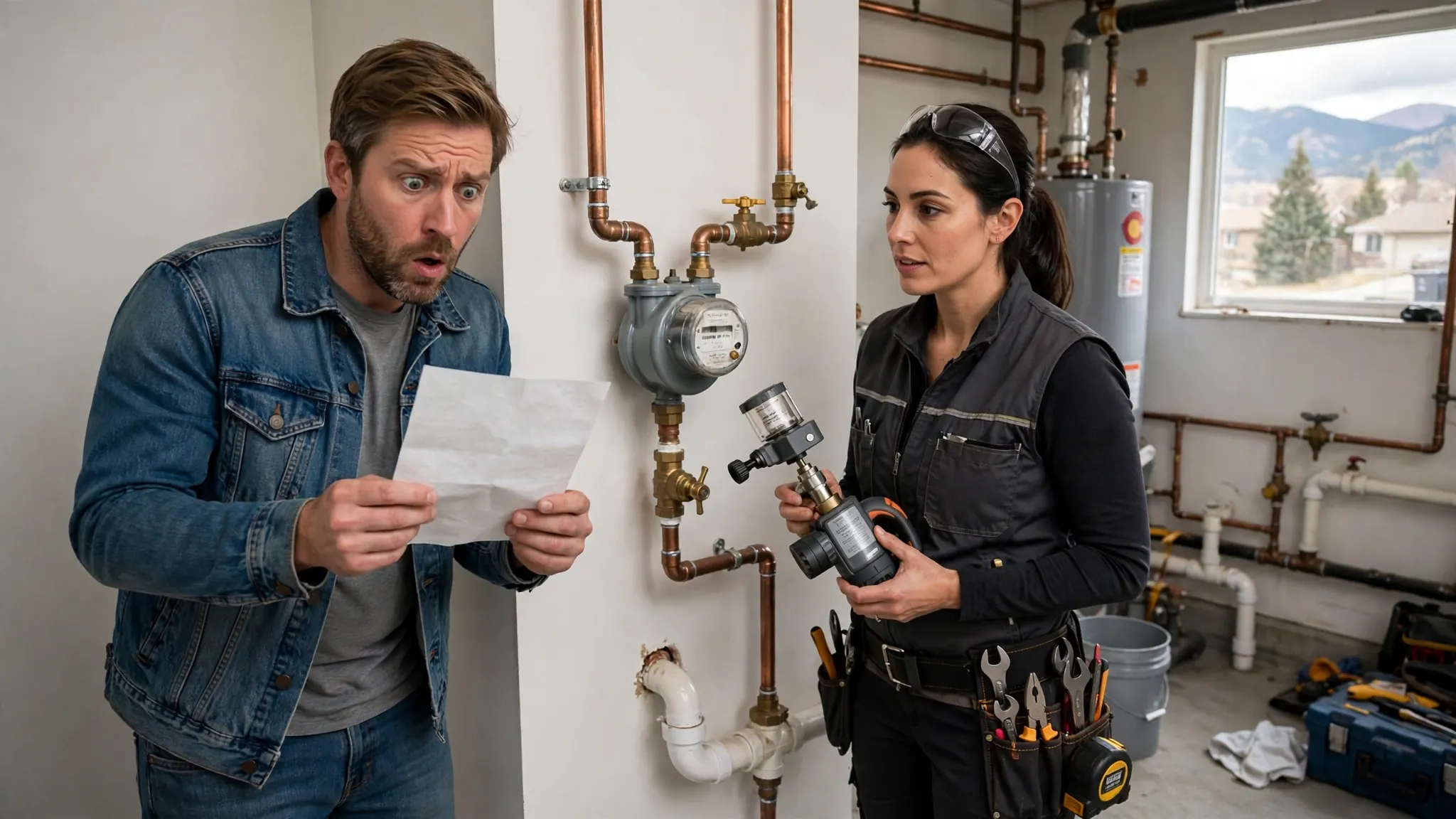
- "We'll see once we get there." A company that can't price its own diagnostic visit doesn't have a pricing model — it has a mood.
- An hourly rate with no estimate of hours. Ask what a typical visit totals. If the answer is another shrug, move on.
- Pressure to approve repairs on the spot. Detection and repair are separate decisions. Anyone who finds the leak and then insists you must authorize the fix immediately is selling, not diagnosing.
- No written quote, ever. Verbal numbers have a way of growing between the phone call and the invoice. Get it in writing — text or email counts.
- The price changes at the door. If the number you agreed to on the phone isn't the number on the paperwork, stop the visit and say so. Legitimate companies honor their quoted price.
- Demolition suggested before detection. "We'll open up the wall and have a look" is the most expensive diagnostic method ever invented — yours, not theirs. Non-invasive detection exists precisely so walls stay closed until the leak's location is certain.
A text message with the price, what's included, and the guarantee terms takes thirty seconds and eliminates every pricing dispute. Any company worth hiring will send it without being asked twice.
How To Compare Two Quotes Fairly
When you have two numbers in hand, resist the urge to pick the lower one on reflex. Instead, line them up on the same five questions: What equipment does each visit include? Is the price flat or hourly? Do you get written findings with photos? What is the guarantee if the pinpoint is wrong? And is the diagnostic fee credited toward repair?
The "expensive" quote usually includes the report, the guarantee, and the senior technician; the cheap one is often a junior tech with a moisture meter and a verbal shrug. A wrong location can send a repair crew into the wrong slab section, so the cost of a bad diagnosis dwarfs any savings on the visit. Compare certainty, not just price.
Questions To Ask Before Anyone Rolls A Truck
Five questions, asked on the phone, will tell you nearly everything about a company:
- "What is the flat price for the detection visit, and what does it include?" You want one number and a list, not a range and a hope.
- "What equipment will the technician bring?" Listen for acoustic listening, thermal imaging, and pressure testing — the actual toolkit, named out loud.
- "Do I get a written report with the findings?" If the answer is no, you're paying for an opinion, not a diagnosis.
- "What happens if the leak isn't where you marked it?" The right answer involves coming back at no charge. The wrong answer is silence.
- "Is there an after-hours charge, and what is it exactly?" Get the number now, not at midnight.
A company that answers all five crisply is a company with its act together. One that dodges, hedges, or rushes you off the phone has told you everything too — just not in words. Price transparency isn't a courtesy in this business; it's the clearest signal of competence you'll get before anyone picks up a tool.
For an 80023-specific hiring checklist see choosing a company in 80023; if a bill spike came first, the water-bill spike guide walks through the meter test, and documenting for an insurance claim covers the paperwork.