You found the stain this morning, the meter is moving, or the wall has started hissing — and "we can fit you in next Thursday" isn't an answer you can use. Same-day leak detection exists for exactly this gap: urgent enough that waiting a week risks real damage, stable enough that it isn't a middle-of-the-night emergency. But "same-day" gets thrown around loosely in home services, so this guide explains what it realistically covers, how dispatch logistics actually work behind the scenes, and — most usefully — how to position yourself for the earliest available slot. If you need someone in 80023 today, the short version is simple: call (720) 715-9734 now, because the day's route fills in call order. Here's the full picture of how our 80023 same-day service operates.
What "Same-Day" Realistically Covers
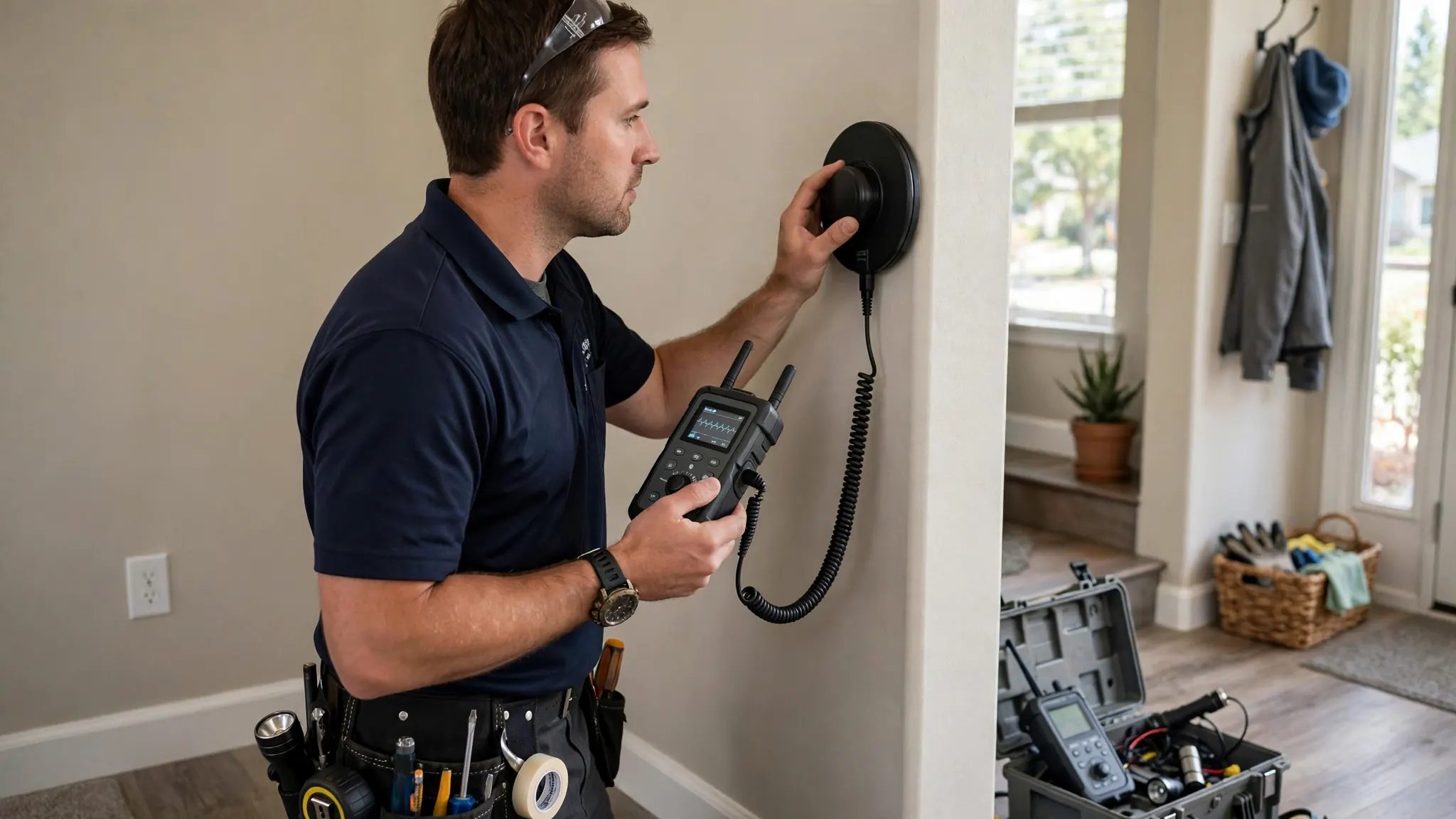
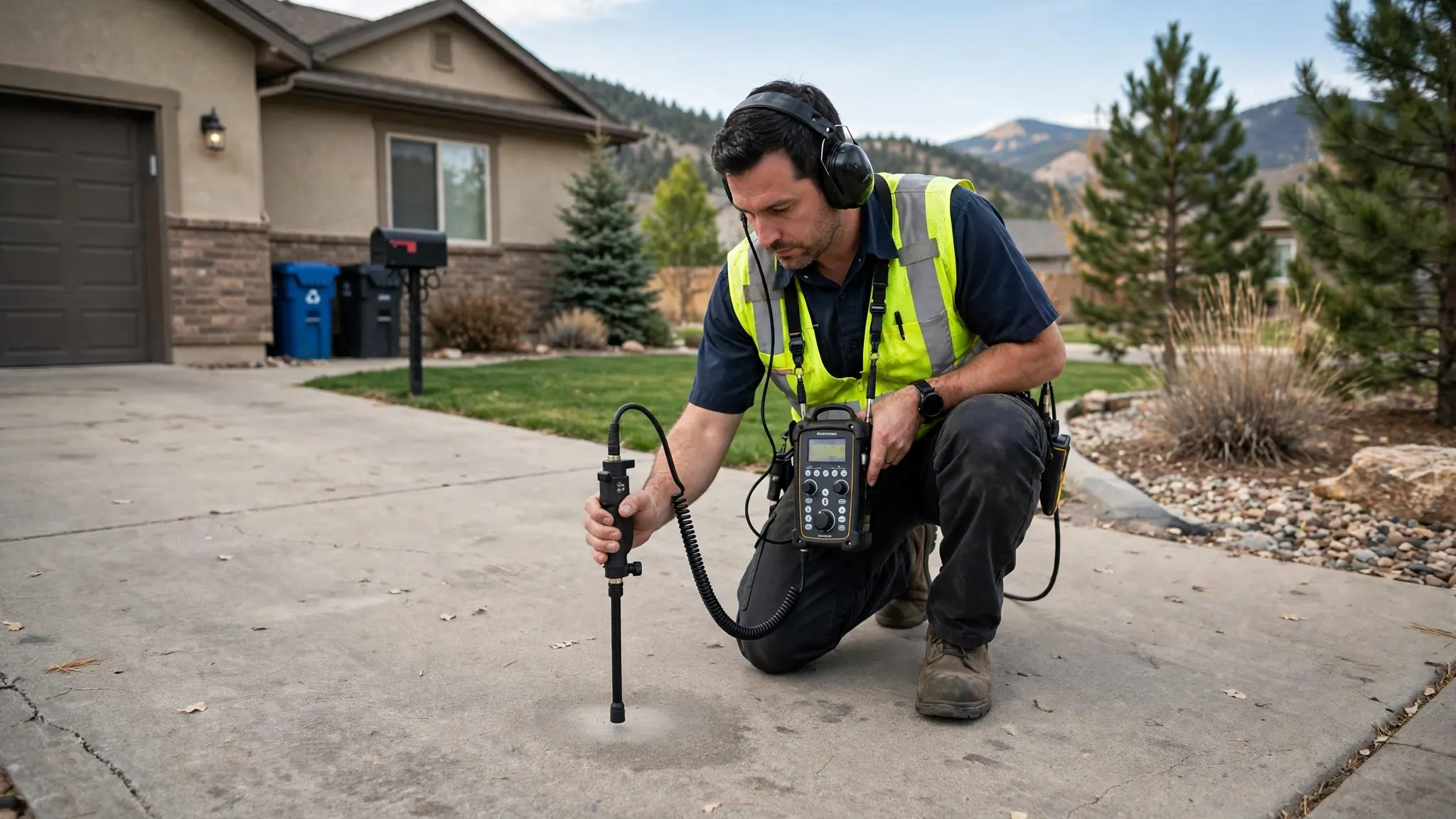
Let's set expectations precisely, because this is where disappointment usually comes from. A same-day visit is a complete diagnostic appointment squeezed into today's schedule: the technician arrives with the full equipment set — acoustic listening gear, thermal imaging, pressure testing, moisture meters — locates the leak non-invasively, marks the exact spot, and hands you written findings. It is the same thorough service as a scheduled visit, just faster on the calendar.
What same-day does not automatically include is the repair. Detection and repair are separate jobs with separate quotes, because the repair's scope depends on what the diagnosis reveals — access, pipe material, and extent. In many cases the technician can stabilize the situation on the spot (isolating a section, capping a line) so nothing worsens before the repair visit. But "same-day" promises answers today, not necessarily a finished repair today. Any company that guarantees both in one visit, sight unseen, is guessing about at least one of them.
The other realistic boundary: complexity. Most residential leaks — wall lines, slab lines, service lines, irrigation zones — are fully diagnosable in a single visit. Truly unusual situations (multiple simultaneous leaks across a large property, or leaks requiring utility coordination) may need a follow-up. A professional tells you this up front rather than after the third hour.
How Dispatch Logistics Work
Same-day availability isn't luck — it's route engineering. Here's the machinery behind the promise:
- Staged technicians, not a distant shop. On-call technicians are positioned around the service area rather than dispatched from a single depot. When your call comes in, the system looks for the nearest available tech — which is what makes a 30–45 minute arrival window realistic across Broomfield, including 80023.
- Triage by severity. Active emergencies jump the queue; urgent-but-stable same-day calls fill the next available windows. Your description on the phone determines your tier — which is why specific symptoms ("meter spinning, no water running, warm spot on the slab") get you routed faster than vague ones ("I think something might be leaking").
- Route density. Dispatchers cluster nearby jobs to minimize drive time, which is why flexibility on your part ("anytime after 1 p.m. works") often lands an earlier slot than a rigid two-hour window. The more flexible you are, the easier you are to fit.
- Real-time updates. Once dispatched, you should get an arrival estimate — and an update if it shifts. Silence between booking and arrival is a process failure, not a norm.
This is the same dispatch backbone behind our emergency response — same-day calls simply ride the priority tier just below active emergencies.
How To Get The Earliest Slot
You can't control the day's call volume, but you can control everything about your own call. These five moves consistently land earlier appointments:
- Call early. The day's route is built in call order. A 7:30 a.m. call gets first pick of windows; a 3 p.m. call gets what's left. If you discovered the problem last night, call first thing — don't wait until your lunch break.
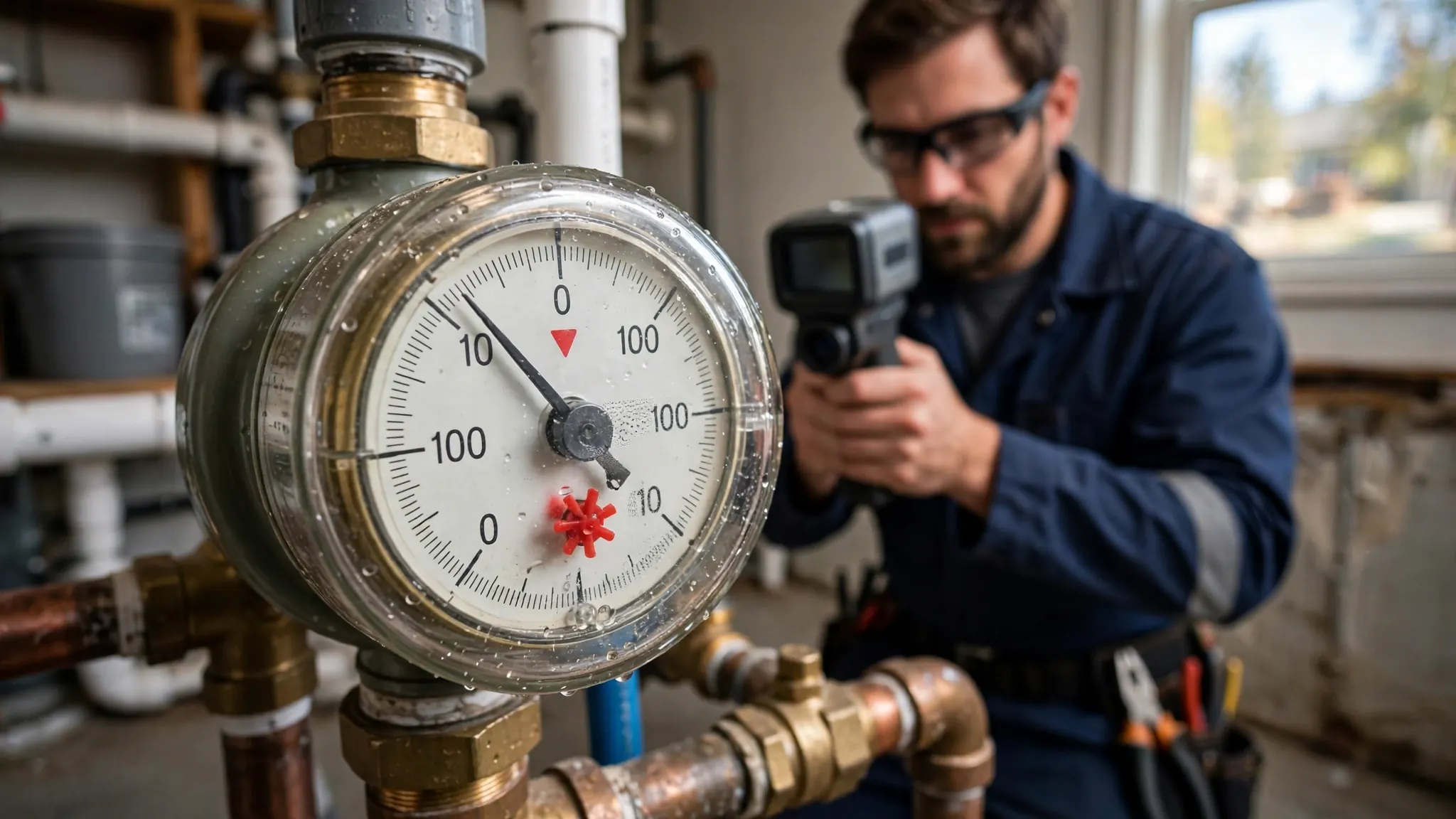
- Describe symptoms specifically. "Water meter spinning with everything off, hissing in the laundry room wall" lets the dispatcher tier your call accurately and brief the technician on which equipment to prioritize. Specificity speeds everything downstream.
- Be reachable. Dispatch may call back with a tighter window or an earlier opening from a cancellation. A missed callback can cost you the slot — keep your phone on and answer unknown numbers for the next few hours.
- Offer flexibility. "Anytime this afternoon" is far easier to schedule than "only between 2:00 and 2:30." The wider your availability, the earlier the fit.
- Clear access before the tech arrives. Unlock gates, secure pets, and move stored items away from the suspected area. A technician who can start diagnosing on arrival finishes sooner — which keeps the whole day's route on time, including yours.
Same-day schedules shift constantly — morning jobs finish early, afternoon jobs cancel. If the first slot offered isn't ideal, ask to be called if anything opens earlier. Dispatchers would rather fill a gap with you than drive past your street empty.
What Slows A Same-Day Visit Down
Knowing the friction points helps you avoid them. The most common delays are all on the homeowner's side of the equation and all preventable:
- No one home. The technician can't diagnose through a locked door. If you can't be there, arrange for someone who can — a neighbor, a family member — and tell dispatch the plan.
- Blocked access. The leak area buried behind garage storage, a locked side gate, or an aggressive dog in the yard. Five minutes of clearing beats thirty minutes of waiting.
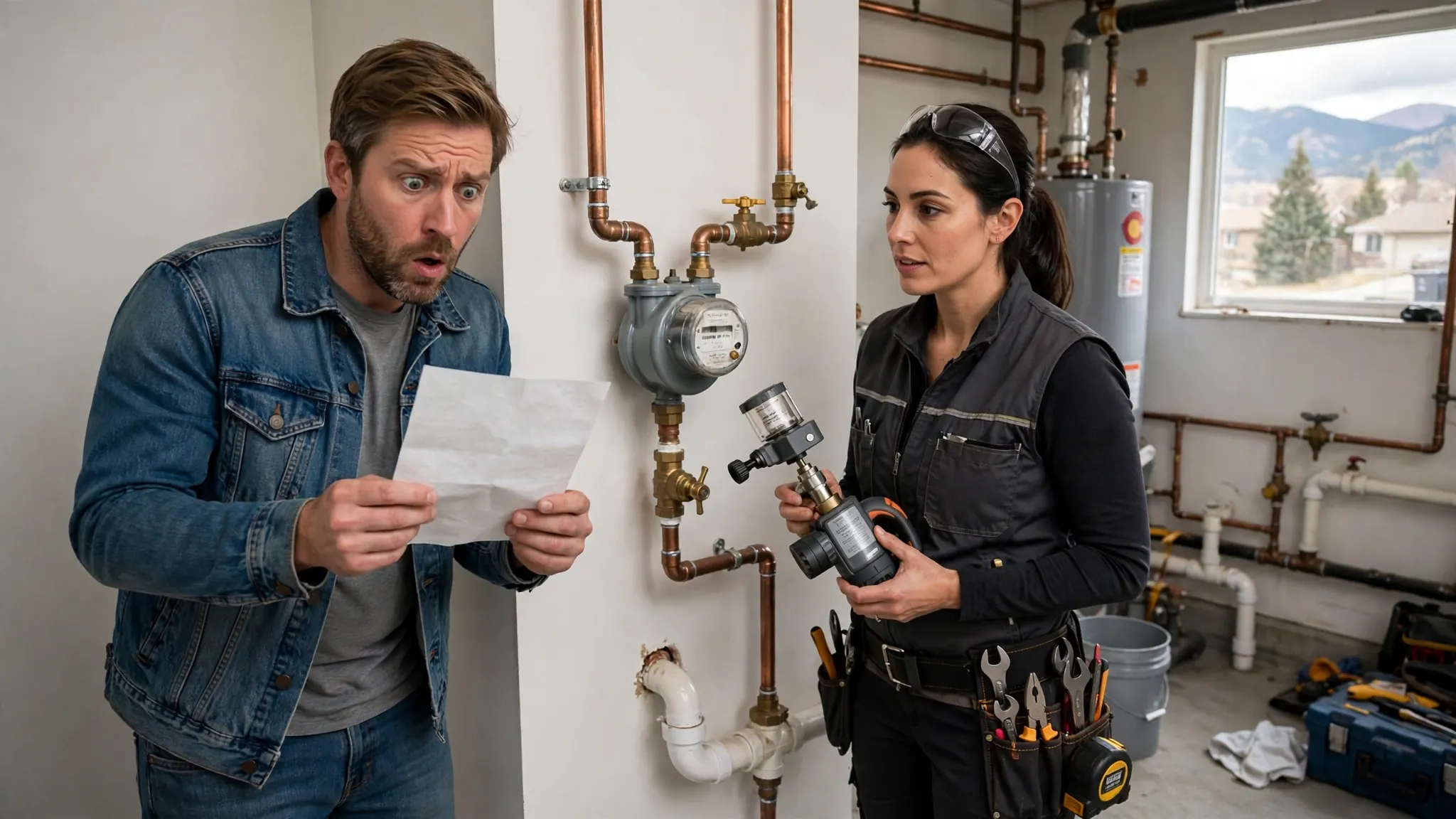
- Vague symptoms. "Something seems off with the water" gives the dispatcher nothing to triage with. The meter test and a specific description (where, when, what you hear) transform the call.
- Competing emergencies. When a genuine emergency — active flooding, a burst main — hits the schedule, it takes priority. This is the one delay you can't prevent, and it's also the reason you want a company with enough technicians that one emergency doesn't freeze the whole day.
Same-Day Vs. Emergency: Which Do You Need?
The distinction matters because it determines how your call is handled:
- Choose emergency when water is actively spreading and you can't stop it, when water is near anything electrical, or when there's a safety hazard — sewage, gas, structural. Emergency calls jump the queue at any hour; our emergency line is answered 24/7 for exactly these situations.
- Choose same-day when the situation is urgent but stable: a stain that's growing, a meter that moves, a bill that spiked, a sound you just noticed. You need answers today, not next week — but nobody's standing in water right now.
When in doubt, describe what you see and let the dispatcher decide. That's literally what dispatchers are for — and a good one will never make you feel silly for asking. Under-triaging your own emergency to "save the emergency slot for someone else" is how small floods become big ones.
What Happens After The Same-Day Find
The visit ends the same way every professional diagnosis ends: with certainty. You get the pinpointed location marked, written findings with photos and readings, and a clear explanation of what the technician found and what it means. That documentation is yours — it's what a repair plumber quotes from and what an insurance adjuster asks for.
From there, the repair is quoted separately and scheduled at your convenience. Because the location is already certain, the repair quote is straightforward — no exploratory work, no "we'll open it up and see." And if the situation needs stabilizing before the repair date (a section isolated, a line capped), the technician handles that before leaving. You end the day knowing exactly what's wrong, exactly where it is, and exactly what the fix involves — which is the entire point of same-day service. Our standard leak detection process delivers the same documented certainty on a scheduled timeline whenever same-day isn't needed.
Need it handled today because of active damage? the emergency playbook is the urgent guide, and costs in 80023 sets price expectations.