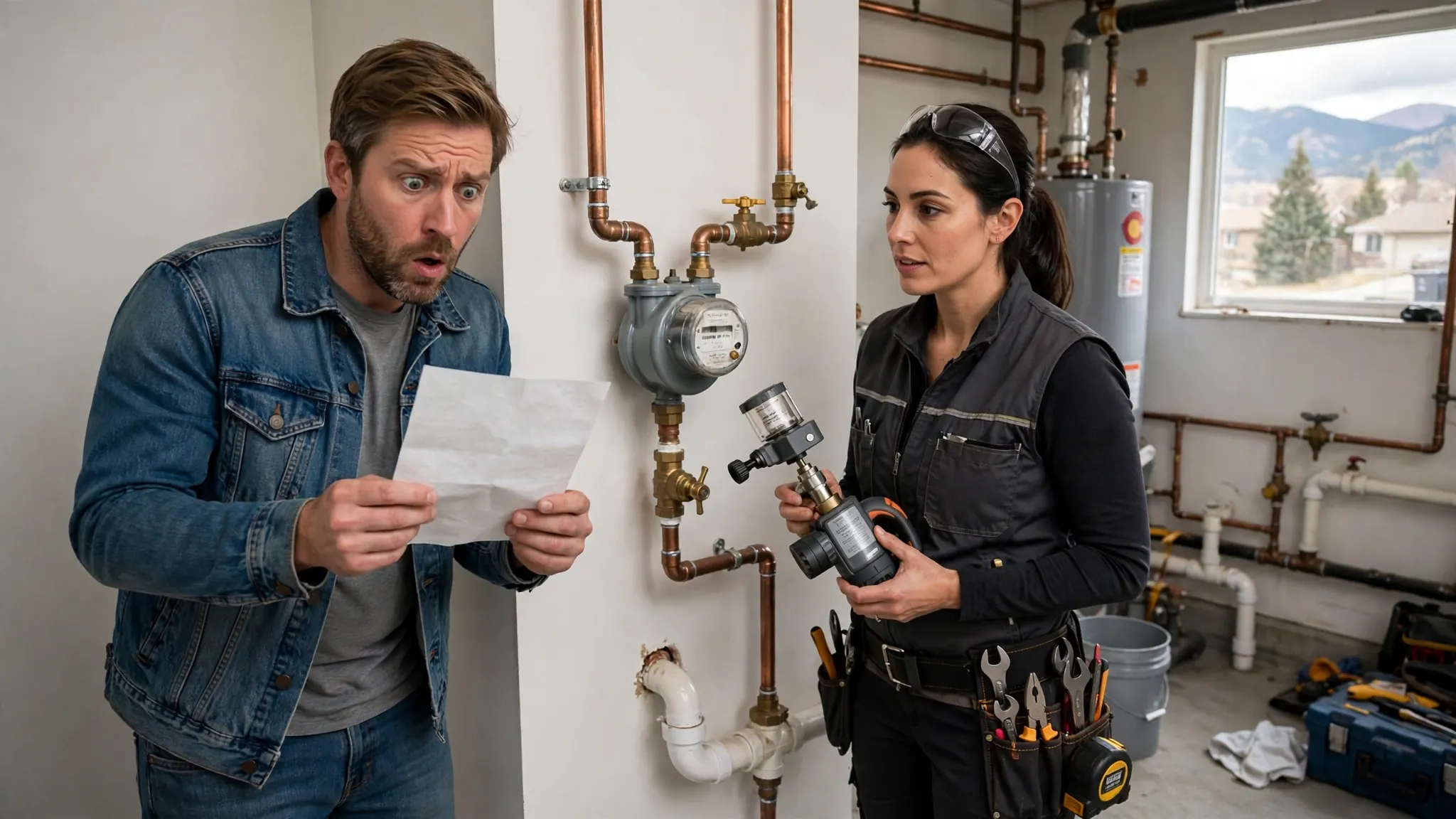
Every leak detection company in the Broomfield area will tell you they're the best. Very few will prove it before you hire them — but the proof is available if you know what to ask. Choosing well matters more here than in most trades, because a wrong diagnosis doesn't just waste the diagnostic fee: it sends a repair crew cutting into the wrong wall, the wrong slab section, or the wrong stretch of yard. The difference between a professional diagnostician and a guesser with a van comes down to three things you can verify on a single phone call: the questions they ask you, the equipment they name, and the documentation they promise. This guide gives you the exact questions, the equipment list that separates pros from pretenders, and how guarantees and local experience should factor into your decision. When you're ready to run the checklist on us, our 80023 leak detection team answers 24/7 — and we welcome the hard questions.
Start With The Phone Call
The phone call is the interview, and most homeowners don't realize they're conducting one. A strong company uses the call to understand your situation; a weak one uses it to book a slot. Here's what to ask — and what good answers sound like:
- "How will you find my leak?" Good answer: a description of method — acoustic listening for pressurized lines, thermal imaging for hot-water leaks, pressure testing to isolate sections. Bad answer: "Our tech will take a look when he gets there."
- "What equipment does the technician bring?" Good answer: specific tools named without hesitation. Bad answer: vague references to "our equipment" or "the latest technology" with no details.
- "What do you need from me before the visit?" Good answer: questions about your symptoms — where you see or hear water, what the meter does, how long it's been happening. A company gathering facts before dispatch is a company that plans its diagnostics.
- "What will I receive when the visit is done?" Good answer: a pinpointed location plus written findings. Bad answer: "The tech will tell you what he found."
- "What is the price, and what does it include?" Good answer: a firm number with the scope attached. Bad answer: a range, a shrug, or "it depends" with no further detail.
Notice what you're really testing: specificity. Professionals are specific because they do this every day. Evasive answers aren't modesty — they're the sound of someone who doesn't have a real process.
Equipment Is The Differentiator
Leak detection is one of the few trades where the toolkit tells you almost everything about the operator. Here's the equipment that matters and what each one does:
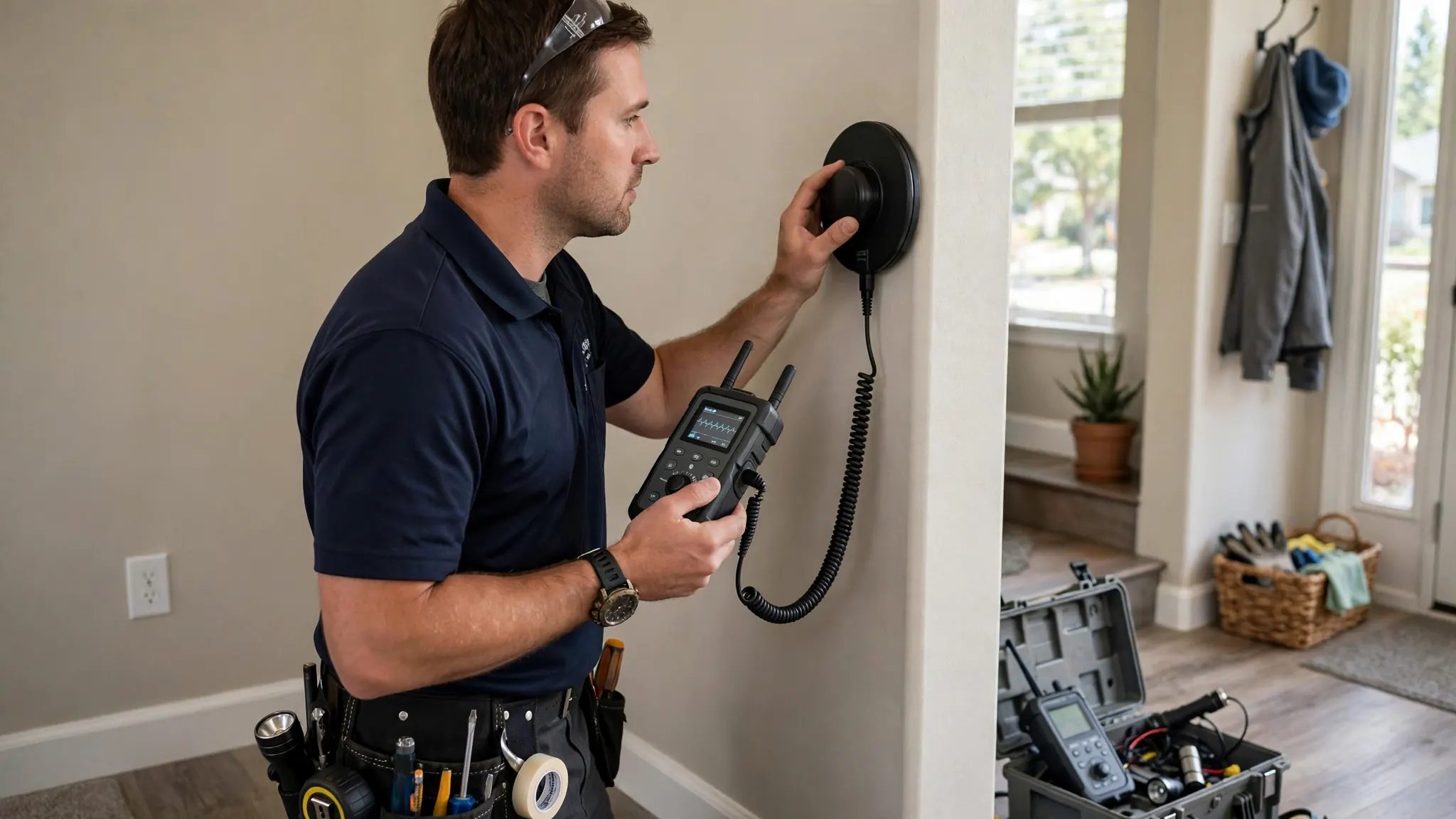
- Acoustic listening equipment. The core tool for pressurized leaks — sensitive microphones and ground sensors that hear water escaping a pipe inside walls, slabs, and soil. How acoustic detection works explains the physics; on the phone, you just need to hear the company name it confidently.
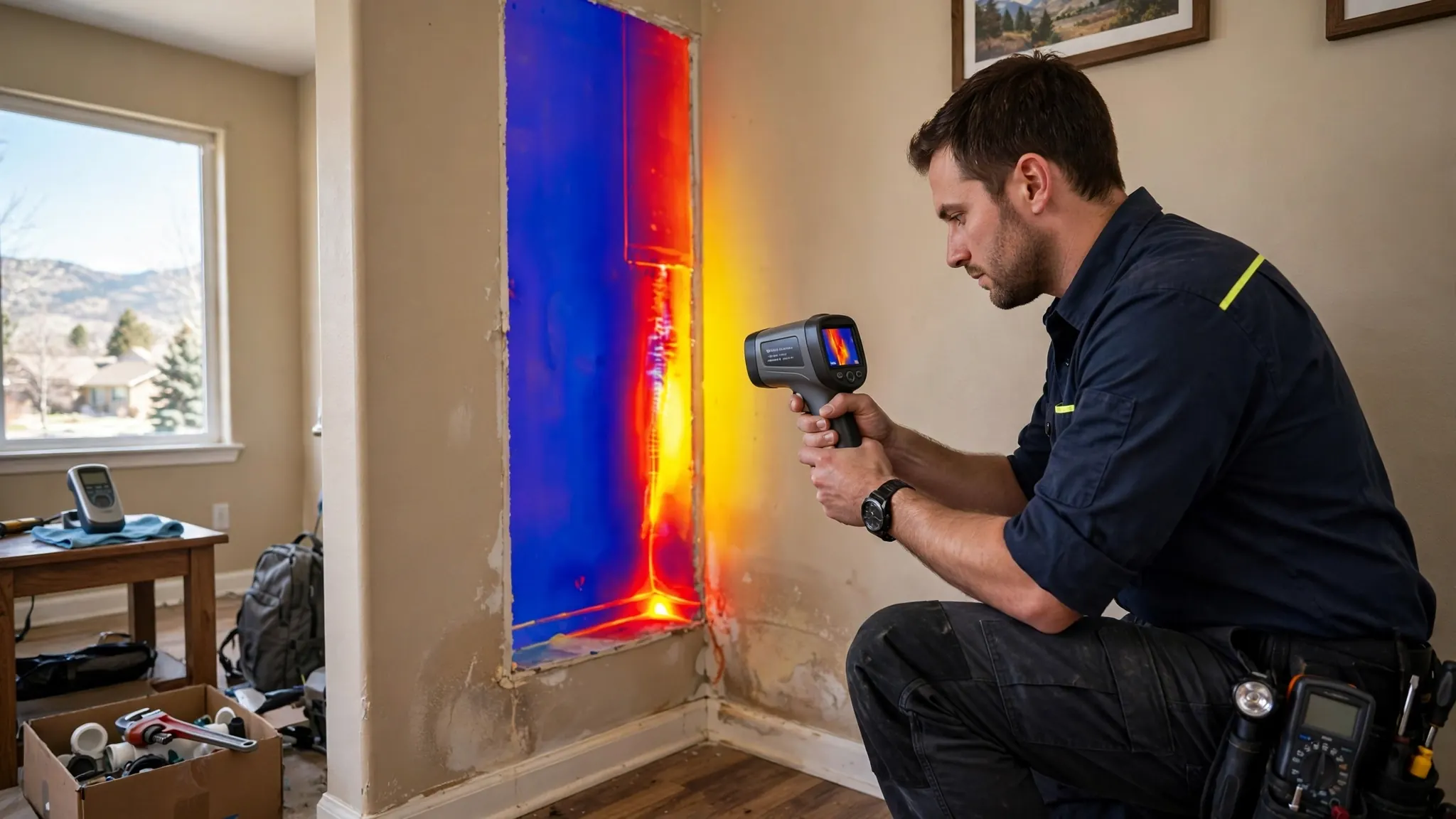
- Thermal imaging cameras. Essential for hot-water line leaks, which show up as heat signatures through floors and walls. Thermal imaging for leaks maps the leak's extent without opening anything. A company without a thermal camera is missing half the picture on hot-side leaks.
- Pressure testing gauges. Used to isolate sections of plumbing and confirm which segment is losing pressure — the methodical way to narrow a search before listening begins.
- Moisture meters. Useful for mapping how far water has traveled through materials, but a moisture meter alone cannot pinpoint a leak's source. It's a supporting tool, not a diagnostic method.
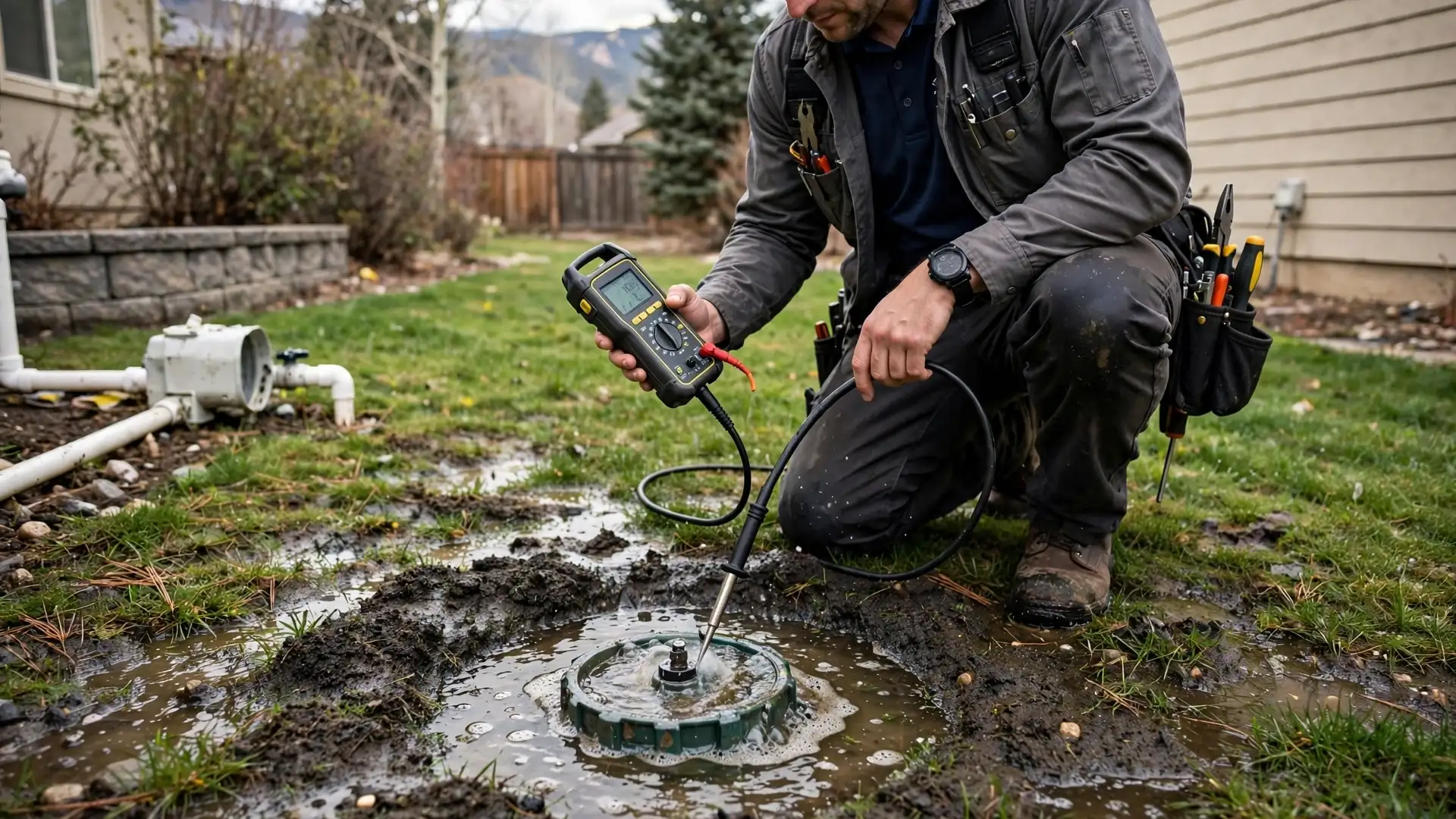
- Leak correlators. For long underground runs like service lines, correlators measure the leak's sound from two points and calculate its position between them. This is specialized gear — its presence signals a company equipped for yard and main-line work.
The key question isn't whether a company owns tools — it's whether they can explain when each one is used. "We bring acoustic and thermal on every visit and add pressure testing when the symptoms point to a specific zone" is the sound of a real process. For larger properties, the same toolkit scales up — see our commercial detection service for how these methods apply at building scale.
Documentation Separates Pros From Guessers
Here's a test almost nobody runs: ask what you'll hold in your hand when the technician leaves. A professional diagnosis produces a written record — what was tested, what the readings showed, where the leak was pinpointed, and photos of the evidence. This document is what a repair plumber works from, what an insurance adjuster reviews, and what protects you if anyone later questions the diagnosis.
A verbal "it's under the kitchen sink, good luck" is not a diagnosis — it's an opinion with a truck. The written report is also where accountability lives: a company willing to put its findings in writing is a company confident in its methods. When a company treats documentation as standard rather than an upsell, that's a strong signal. And if you're heading toward an insurance claim, that report becomes the foundation of your file.
How Guarantees Should Work
A guarantee on a pinpointed location is the single strongest trust signal in this business — and the terms should be concrete. The standard professional guarantee works like this: if the marked location proves wrong when opened, the company returns and re-tests at no additional charge until the actual leak is found. That's it. No fine print about "best efforts," no diagnostic fee for the second visit.
Ask for the terms before booking, in plain language: "If the leak isn't where you marked it, what happens?" The right answer is immediate and specific. Hesitation, qualifiers, or "well, that never happens" are all versions of no guarantee at all. Also worth asking: does the guarantee cover just the location, or does it extend to the written findings if a second opinion contradicts them? The best companies answer both without blinking.
Equipment named, price stated, written report promised, guarantee explained. If a company clears all four in one short call, you've almost certainly found a professional. If it stumbles on two or more, keep dialing — the next company on your list will be glad you called.
Local Experience Matters In 80023
Leak patterns aren't generic — they follow local construction, local soil, and local weather history. A technician who works Broomfield daily recognizes patterns a newcomer has to discover from scratch: which area builders ran irrigation mains in predictable layouts, where service lines typically enter homes in 80023 neighborhoods, how the local soil shifts with freeze-thaw cycles, and which era of housing stock hides which pipe materials behind its walls.
This isn't trivia — it's diagnostic speed. Pattern recognition tells an experienced local tech where to listen first, which shortens the search and sharpens the pinpoint. When you're comparing companies, ask how long they've served Broomfield specifically, not just how long they've been in business somewhere. Twenty-five years of leak detection means the most when those years were spent on the same streets, the same soil, and the same housing stock as your home.
Red Flags When Shopping Around
Finally, the warning signs — any one of these is reason to keep looking:
- Demolition recommended before testing. "We'll open up the wall and have a look" is the most expensive and least accurate diagnostic method. Non-invasive detection exists precisely to avoid this.
- Equipment can't be named. If the person booking your visit can't say what tools the technician carries, the company isn't organized around diagnostics.
- No written findings. A diagnosis that exists only in the technician's head can't be verified, quoted against, or submitted to an insurer.
- No location guarantee. Without one, you carry all the risk of a wrong pinpoint — including the cost of opening the wrong spot.
- Price fog. Ranges without explanation, hourly rates without hour estimates, or numbers that change between the call and the doorstep.
- High-pressure upselling on arrival. Finding the leak and fixing it are two different jobs. Anyone who locates the leak then insists you must authorize the fix immediately is selling, not diagnosing.
The best company isn't the cheapest or the fastest-talking — it's the one that's specific about methods, transparent about price, and willing to put both its findings and its guarantee in writing. Run the checklist, trust the specific answers, and you'll end up with a diagnosis you can build a repair on. Our leak detection service is built to pass exactly this test — call and see.
Want pricing context before you call around? leak detection costs in 80023 explains the cost factors, and the insurance claim guide covers the documentation side.