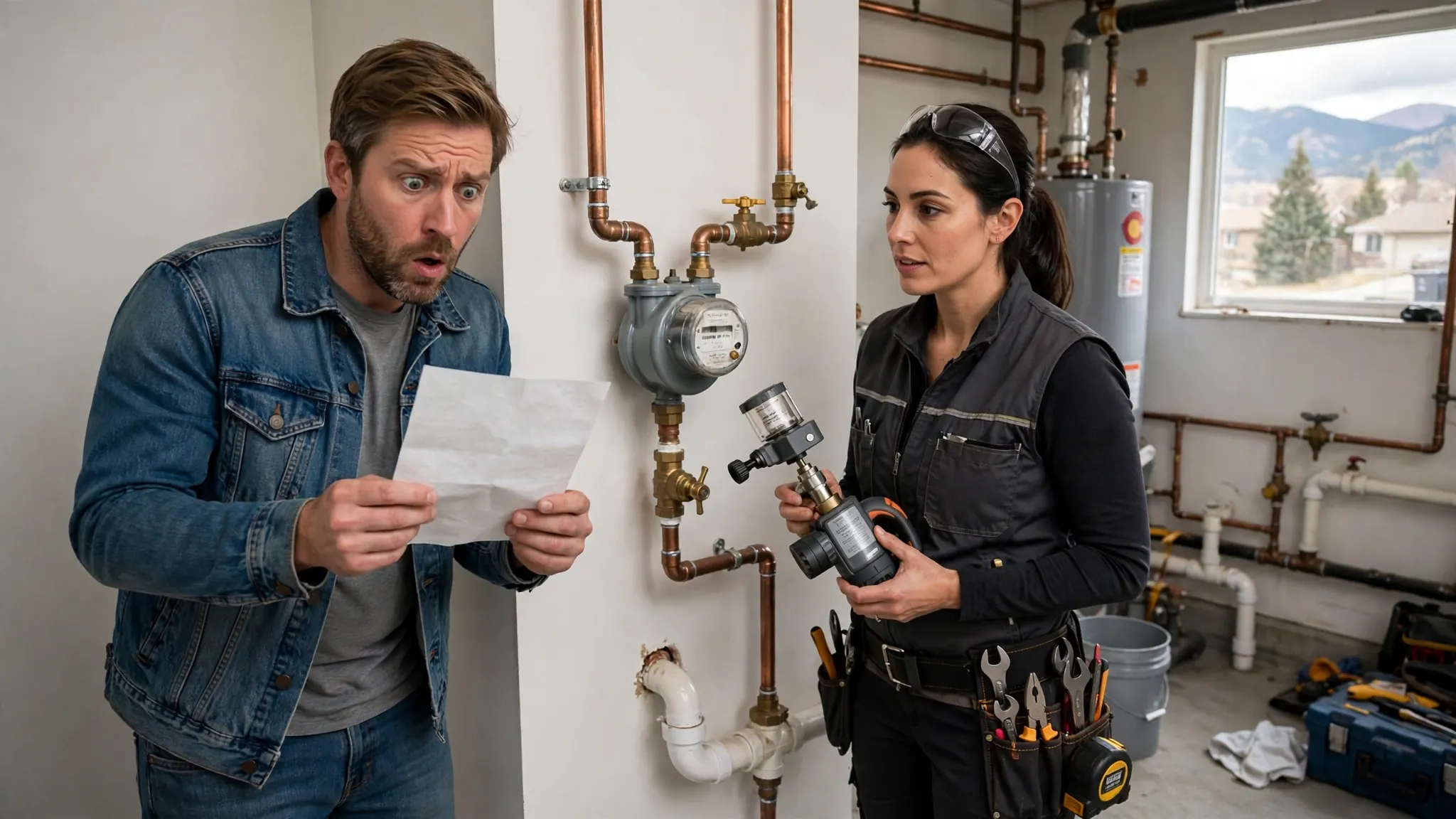
The envelope from the water utility arrives, you open it expecting the usual, and the number is nearly double. Nothing in the house looks different. No puddles, no hissing walls, no soggy yard. Just a bill that says you're using far more water than you should be. This is one of the most common ways hidden leaks get discovered in 80023 — not by sight or sound, but by arithmetic. The good news: a spiking bill narrows the suspect list dramatically, and a simple meter test you can do yourself will tell you whether the water is escaping inside the house, in the yard, or underground. This guide walks through the usual suspects in order of likelihood, the step-by-step meter test, how to read your billing cycle for clues, and when it's time to bring in professional leak detection in 80023 to finish the job.
The Usual Suspects, Ranked By Likelihood
When a bill spikes without explanation, the causes line up in a fairly consistent order. Start at the top — the most common and cheapest to check — and work down:
- Toilet flapper leaks. The runaway leader. A degraded flapper lets tank water slip silently into the bowl, wasting hundreds of gallons a day with no visible evidence. Check every toilet in the house first.
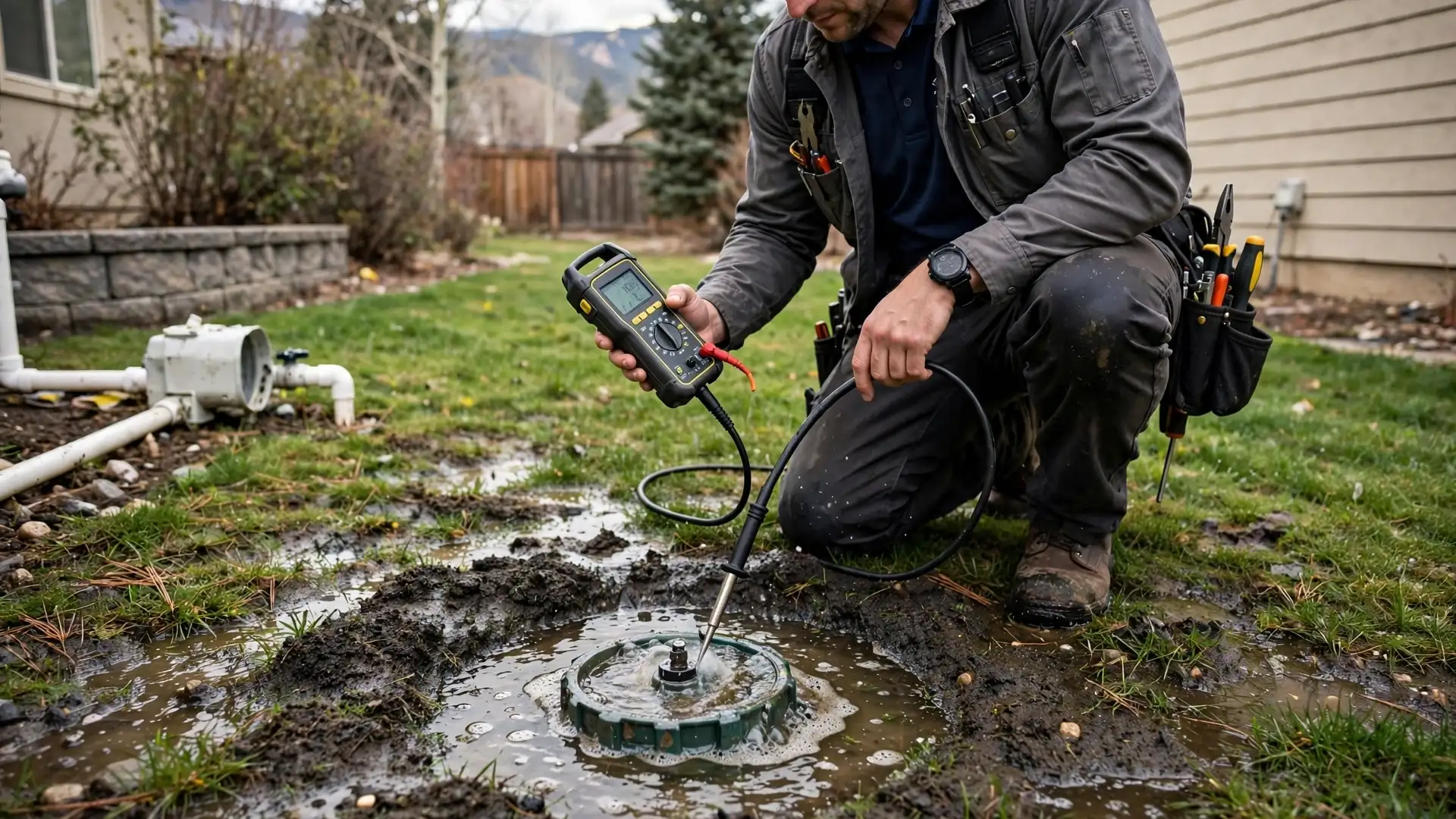
- Irrigation system leaks. A valve that won't fully close or a cracked lateral line can waste thousands of gallons per cycle, all of it underground. Prime suspect for summer spikes.
- Service line breaks. The pipe from the meter to your house can crack from soil movement, age, or freeze damage. These leak continuously and show up as steady, unexplained usage.
- Slab or wall line leaks. Pressurized lines under the slab or inside walls can seep for weeks before producing a visible symptom — but the meter catches them immediately.
- Running fixtures and appliances. A water softener stuck in regeneration, a humidifier with a failed valve, or an outdoor spigot left dripping. Less common, but worth a walk-through.
This ranking is also your investigation order. The top two are homeowner-checkable in under an hour; the middle two are where professional equipment earns its keep. Our high-bill leak service follows exactly this sequence — rule out the simple causes first, then deploy the serious toolkit.
Silent Toilet Leaks: The Number-One Cause
It surprises most people that the humble toilet beats every dramatic pipe burst as a bill-spiker. Here's why: a worn flapper doesn't fail loudly. It warps, hardens, or gets coated in mineral deposits until it no longer seals the tank's flush opening. Tank water then trickles into the bowl continuously — straight down the drain, invisible, often inaudible. A single bad flapper can waste 200+ gallons a day. Multiply by 30 days and you have a bill that looks like you filled a swimming pool.
The test is almost embarrassingly simple. Put a few drops of food coloring in the toilet tank (not the bowl), wait 15 minutes without flushing, then look at the bowl water. Color in the bowl means the flapper is leaking. Do this for every toilet in the house — it's common to find more than one offender, especially in homes where the toilets are the same age. Replacement flappers are inexpensive and the fix takes minutes, which is why this check always comes first: it's the highest-probability, lowest-cost answer on the list.
Replacement flappers are inexpensive and the fix takes minutes, which is why this check always comes first.
The Water Meter Test, Step By Step
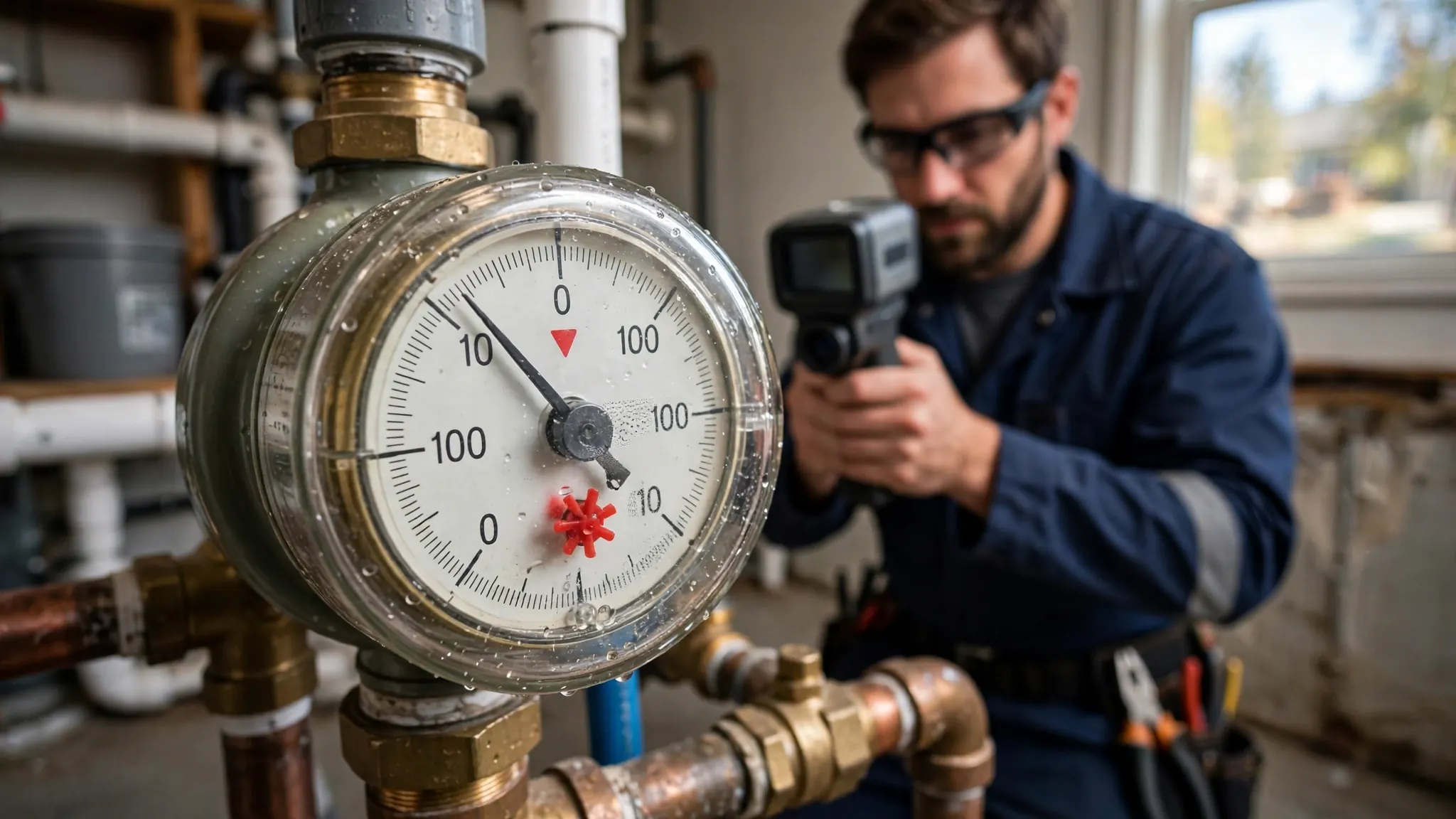
The water meter is the most honest witness in your plumbing system. It measures every gallon that enters your property, so if it's moving when nothing is running, water is escaping. Here's the definitive version of the test:
- Shut everything off. All faucets, toilets (don't flush during the test), dishwasher, washing machine, ice maker, and — critically — the irrigation controller. The house must be using zero water.
- Find your meter and read it. Most residential meters are in a ground-level box near the curb or sidewalk. Lift the lid, note the numbers, and check the low-flow indicator — usually a small triangle or dial that spins with even tiny flows.
- Watch for about twenty minutes. If the low-flow indicator moves at all, water is escaping somewhere on your side of the meter. The faster it moves, the bigger the leak.
- For slow leaks, do the overnight version. Record the reading before bed, use no water overnight, and compare in the morning. Any increase confirms a leak too slow to see in a short watch.
One important nuance: the meter only tells you that water is escaping, not where. A moving meter with the irrigation controller on could be a valve; with it off, the leak is in the house plumbing or the service line. That single distinction — irrigation on versus off — is the fork in the road for the whole investigation. Our walkthrough on reading your water meter covers meter types and indicator details if yours looks unfamiliar.
Reading Your Billing Cycle For Clues
Your bill history is a diagnostic tool most people ignore. Pull up the last 12 months and look for patterns:
- Sudden jump, one month to the next. A sharp step-change points to a new failure — a flapper that gave out, a valve that stuck, a line that cracked. Something broke; the timeline tells you roughly when.
- Gradual climb over several months. A slow increase suggests a deteriorating seal or a growing crack — a flapper wearing out progressively, or a small lateral break widening with each cycle.
- Summer-only elevation. Compare against the same month last year, not against winter. If this July dwarfs last July, the irrigation system is the prime suspect — normal seasonal watering doesn't double year over year.
- Elevated across all seasons. A bill that's high in January too points away from irrigation and toward indoor plumbing or the service line — something that leaks regardless of the watering schedule.
Bring this history when you call a professional. "It jumped in March and never came back down" tells a technician more than any symptom description — it dates the failure and rules out seasonal causes in one sentence.
When The Meter Says The Leak Is Underground
Here's the scenario that needs professional help: toilets pass the dye test, the irrigation system checks out with the controller off, and the meter still moves. That combination means a pressurized leak in a pipe you can't see — the service line from the meter to the house, a line under the slab, or a buried yard line.
Underground leaks have their own subtle signatures worth looking for while you wait for the technician: an area of yard that's greener or softer than its surroundings, a patch of pavement that's always damp, the sound of running water near the meter box, or water pooling where the service line enters the house. But don't excavate hopefully — underground lines are exactly where acoustic equipment proves its worth. Pressurized water escaping a buried pipe creates a distinct sound signature that listening gear and correlators can trace to within feet, turning a yard-wide mystery into a single marked spot. That's the core of our water meter investigation service: confirm the loss at the meter, then follow the sound to the break.
When you run the meter test, photograph the reading at the start and end with your phone. Those timestamped photos are useful twice: they prove the leak's existence to the utility if you dispute a bill, and they give the technician a measured flow rate to work with.
What To Do With The Information
By now you know which category you're in. If the dye test found a bad flapper, fix it and watch the next bill — problem solved for the price of a part. If the irrigation-off meter test cleared the house but the controller-on test showed movement, the irrigation system needs zone-by-zone attention. And if the meter moves with everything off and the toilets are clean, you've confirmed a hidden pressurized leak — which is exactly what professional detection exists to find.
One more practical note: if the bill is dramatically high, call your utility. Many water providers offer leak adjustments or payment plans for documented leaks, and some will flag continuous-usage alerts if you ask. They can't find the leak for you, but they can soften the financial blow while you do. Then call us — leak detection for 80023, 24/7, with the acoustic and thermal equipment to turn your meter's bad news into a marked spot and a written report.
Confirmed a leak with the meter test? emergency next steps covers urgent situations, and irrigation leak detection rules out the sprinkler system.