It's 11:40 p.m., water is spreading across your kitchen floor in 80023, and you don't know where it's coming from. Here's what matters right now: you don't need to diagnose anything. You need to slow the water down, keep everyone safe, and get a professional on the way. This guide covers exactly that — the first five minutes, the night-and-weekend scenarios we see most often in Broomfield homes, what our dispatcher will ask when you call, and how emergency dispatch actually works behind the scenes. No fluff, no lectures — just the sequence that protects your home. And if water is spreading as you read this, skip ahead: call (720) 715-9734 now. A real dispatcher answers 24/7, and our 80023 emergency response is built for exactly this moment.
The First Five Minutes
Forget finding the leak for now. Your only job in the first minutes is to limit the water and keep people safe:
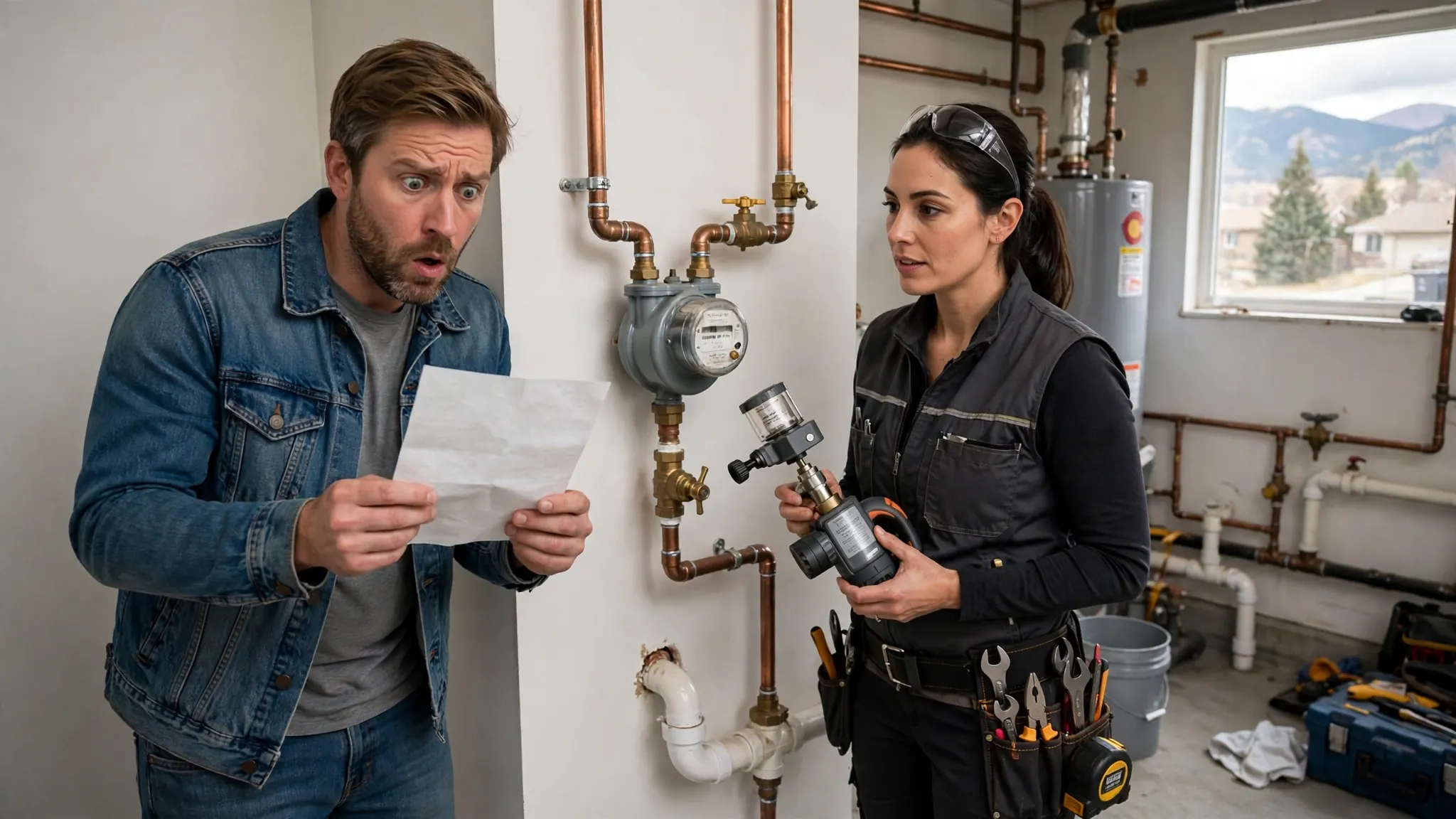
- Shut off the water if you can do it safely. Your main shut-off valve is usually near the water meter, in the garage, or where the line enters the house. Turn it clockwise until it stops. If you can't find it or can't reach it safely, skip this step — tell the dispatcher and move on.
- Respect electricity. Water and electricity are the one combination that turns a plumbing problem into a safety problem. If water is near outlets, the breaker panel, or appliances, don't wade through it. Shut off the breaker for the affected area from a dry location, or leave it alone and wait for guidance.
- Contain what you can. Towels, buckets, and a wet-dry vacuum buy time. Move rugs, electronics, and anything irreplaceable out of the water's path. Don't bother mopping the whole floor — just slow the spread.
- Call now, not after you've "handled it." Every minute of active flow adds damage. Calling while you contain is the right order — the dispatcher can also talk you through the shut-off while the technician is already rolling.
That's it. You don't need to open walls, don't need to guess which pipe failed, and definitely don't need to wait until morning "to see if it gets worse." It will get worse — that's what water does.
Night And Weekend Scenarios We See Most
Emergencies cluster into patterns, and knowing which one you're looking at helps the dispatcher prioritize your call:
- Burst supply line. Sudden, high-volume water — often from a failed connector under a sink, behind a toilet, or at the washing machine. Shutting the main valve stops it cold. These are the most common midnight calls.
- Water heater failure. A tank that lets go can release dozens of gallons fast. You'll see water pooling around the heater itself. Shut off the water supply to the heater and, for gas units, don't touch the gas valve yourself — tell the dispatcher.
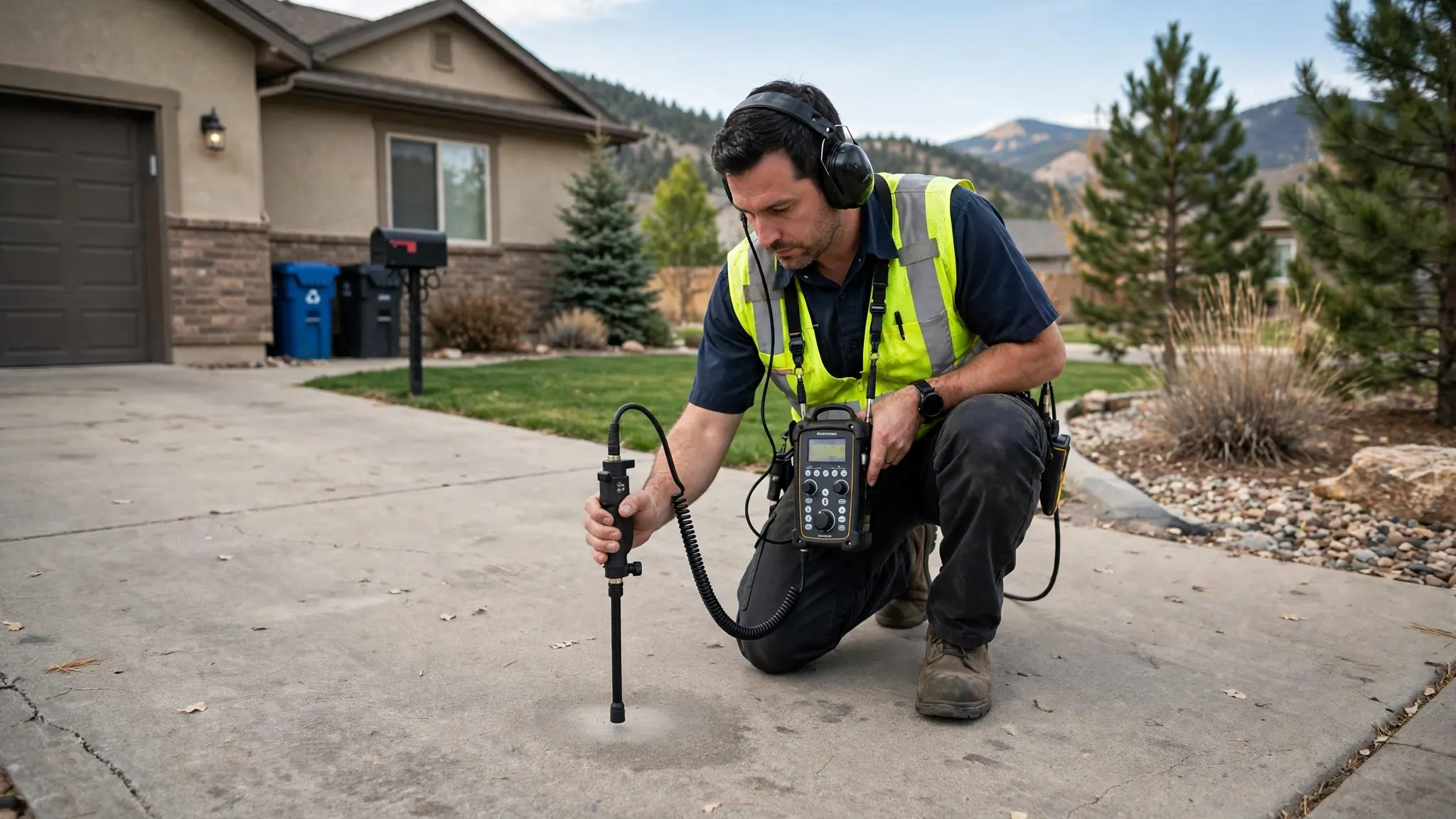
- Slab leak surfacing. Warm or wet spots spreading across a ground-floor slab, sometimes with the sound of running water when nothing is on. These don't gush, but they don't stop either — and they undermine flooring and foundations the longer they run.
- Irrigation main break. A geyser in the yard or a suddenly swampy section of lawn, often discovered on a weekend morning. The irrigation shut-off (usually a separate valve near the meter or backflow preventer) stops it without killing water to the house.
- Ceiling leak from above. Water dripping or staining a ceiling means a supply or drain line above has failed. Place a bucket, and if the ceiling is bulging, don't poke it — a bulging ceiling is holding water, and puncturing it releases it all at once.
None of these wait well. A burst line can put hundreds of gallons into a home overnight; even a slow slab leak does its worst damage in the hours nobody's watching. Our emergency leak detection line exists because water damage is measured in minutes, not business hours.
What The Dispatcher Will Ask You
When you call, the dispatcher isn't making small talk — every question routes the right help to you faster. Expect these, and don't worry about having perfect answers:
- Your address in 80023. Street address first, so the technician can be routed while you keep talking.
- Where the water is and how fast it's spreading. "Kitchen floor, spreading toward the hallway" is a perfect answer. Photos help if you can send them safely.
- Whether the water is off. If you shut the main valve, say so — it changes the urgency tier. If you couldn't, the dispatcher will talk you through it or flag it for the technician.
- Any safety concerns. Water near the electrical panel, outlets, or the furnace gets flagged immediately so the technician arrives prepared.
- What you hear or see. Hissing inside a wall, a spinning meter, a warm floor — these clues tell the technician which equipment to bring.
You will not be asked to diagnose the leak, name the pipe, or decide what service you need. Describing what you observe is the entire job. A good dispatcher translates your description into a dispatch plan in under two minutes.
How Emergency Dispatch Actually Works
Here's what happens after you hang up — the part most companies never explain:
- Triage. Your call is ranked by severity: active uncontrolled water and safety hazards go first, contained situations next. This isn't about who called first; it's about where the damage is growing fastest.
- Routing. The nearest available technician is dispatched directly — not from a shop across town, but from wherever the on-call tech is staged. Our coverage across Broomfield is what makes the 30–45 minute arrival window realistic at 2 a.m., not just at 2 p.m.
- Briefing. The technician gets your address, your description, the shut-off status, and any safety flags before arriving — so the first minutes on site are productive, not exploratory.
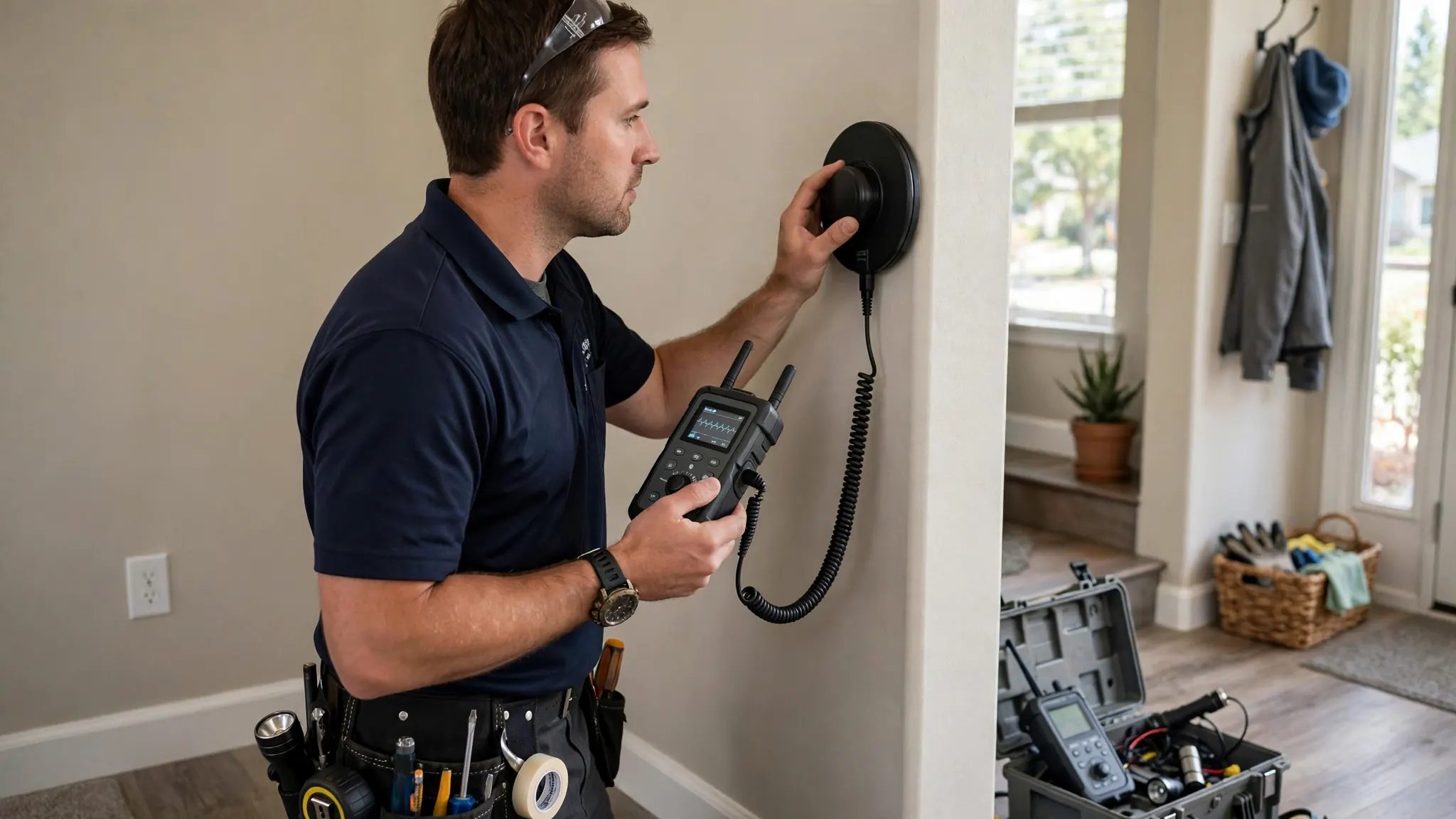
- Arrival and assessment. The tech confirms the water is stopped (or stops it), then begins non-invasive location work: acoustic listening, thermal scanning, moisture mapping. No demolition during the diagnostic phase — walls stay closed until the leak's position is certain.
The whole sequence is designed around one principle: the damage happening right now matters more than the repair happening tomorrow. Stopping the water comes first; everything else follows. For the full picture of our round-the-clock coverage, see our emergency services overview.
The single highest-value five minutes of home maintenance is finding your main water shut-off and making sure it turns. In an emergency, that knowledge is worth more than any tool we carry. Go find it this weekend — before you need it at midnight.
What Happens When The Technician Arrives
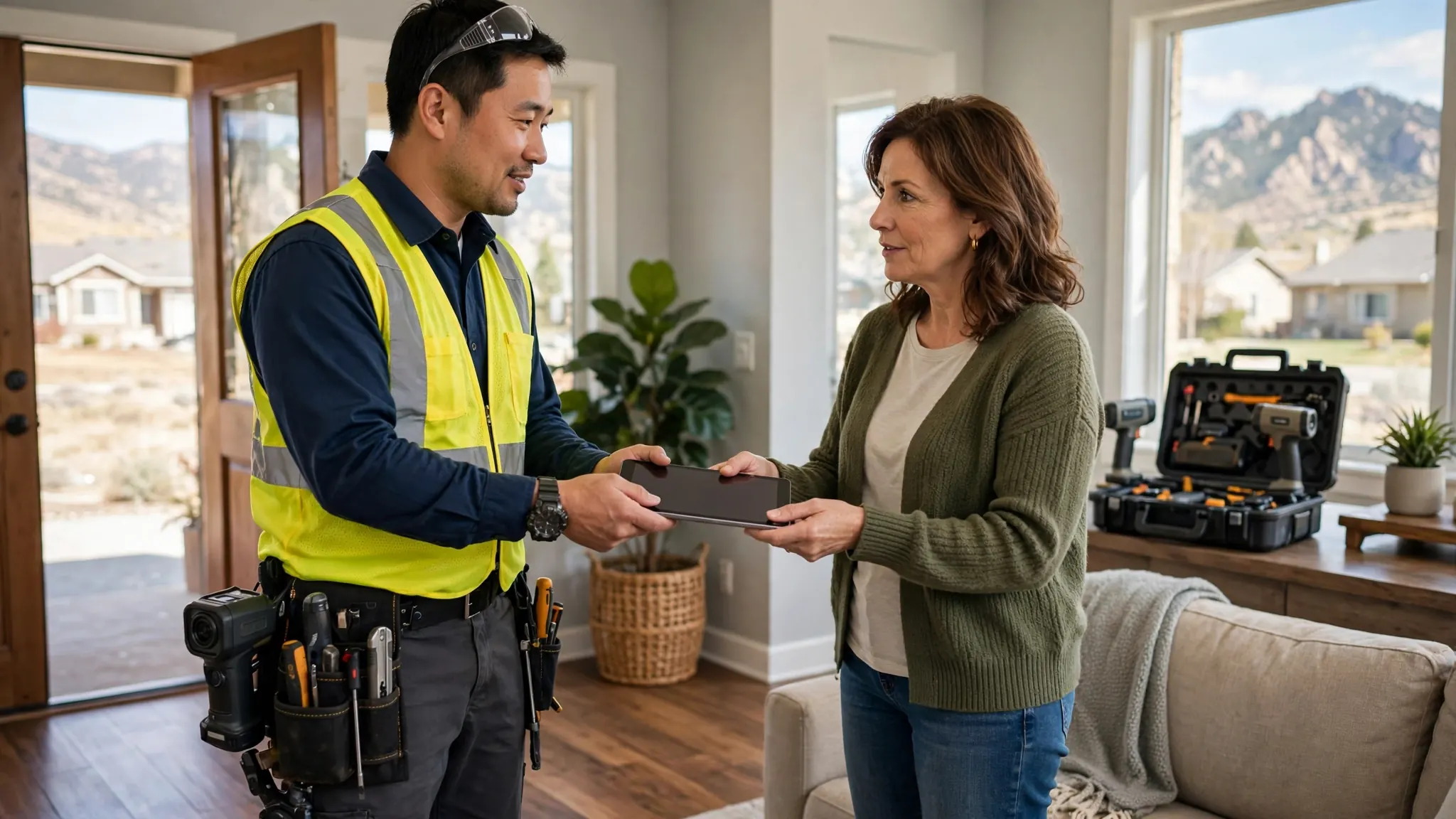
The emergency visit has a strict order of operations. First, the technician verifies the water is fully stopped and the area is safe — no live electrical hazards, no structural concerns. Second comes the location work: acoustic equipment to hear pressurized leaks inside walls and slabs, thermal imaging to map temperature anomalies from hot-water lines, and moisture meters to trace how far the water has traveled. Third, the findings are documented — photos, readings, and a marked location — because what happens at 2 a.m. still needs a clear record in the morning.
Where possible, the technician will also stabilize the situation: capping a failed line, isolating a section of plumbing, or setting up the home so water can be safely restored to unaffected areas. The goal of the night visit is always the same — leave the home safe, dry-ish, and with the leak's exact location known. The permanent repair, scheduled in daylight with full access, comes next.
After The Emergency: What Comes Next
Morning after an emergency call, three things need attention. First, the repair itself — now that the leak is pinpointed and documented, a repair quote is straightforward and the work can be scheduled promptly. Second, drying: anything that stayed wet for hours (drywall, flooring, baseboards) needs proper drying to prevent mold, and your documentation photos from the night help here. Third, if the damage is significant, your insurance claim — the written findings, photos, and readings from the emergency visit are exactly the documentation an adjuster asks for.
The through-line is simple: the emergency visit isn't just about stopping water. It's the foundation for everything that follows — the repair, the drying, and the claim all build on what was found and recorded that night. That's why professional documentation matters even at 2 a.m., and why "we'll figure it out in the morning" is the most expensive sentence in plumbing. Our standard leak detection service picks up where the emergency visit leaves off, with the full diagnostic toolkit and reporting.
After the emergency passes, confirming nothing is still leaking via the meter test is smart, and choosing a company in 80023 guides the follow-up choice.