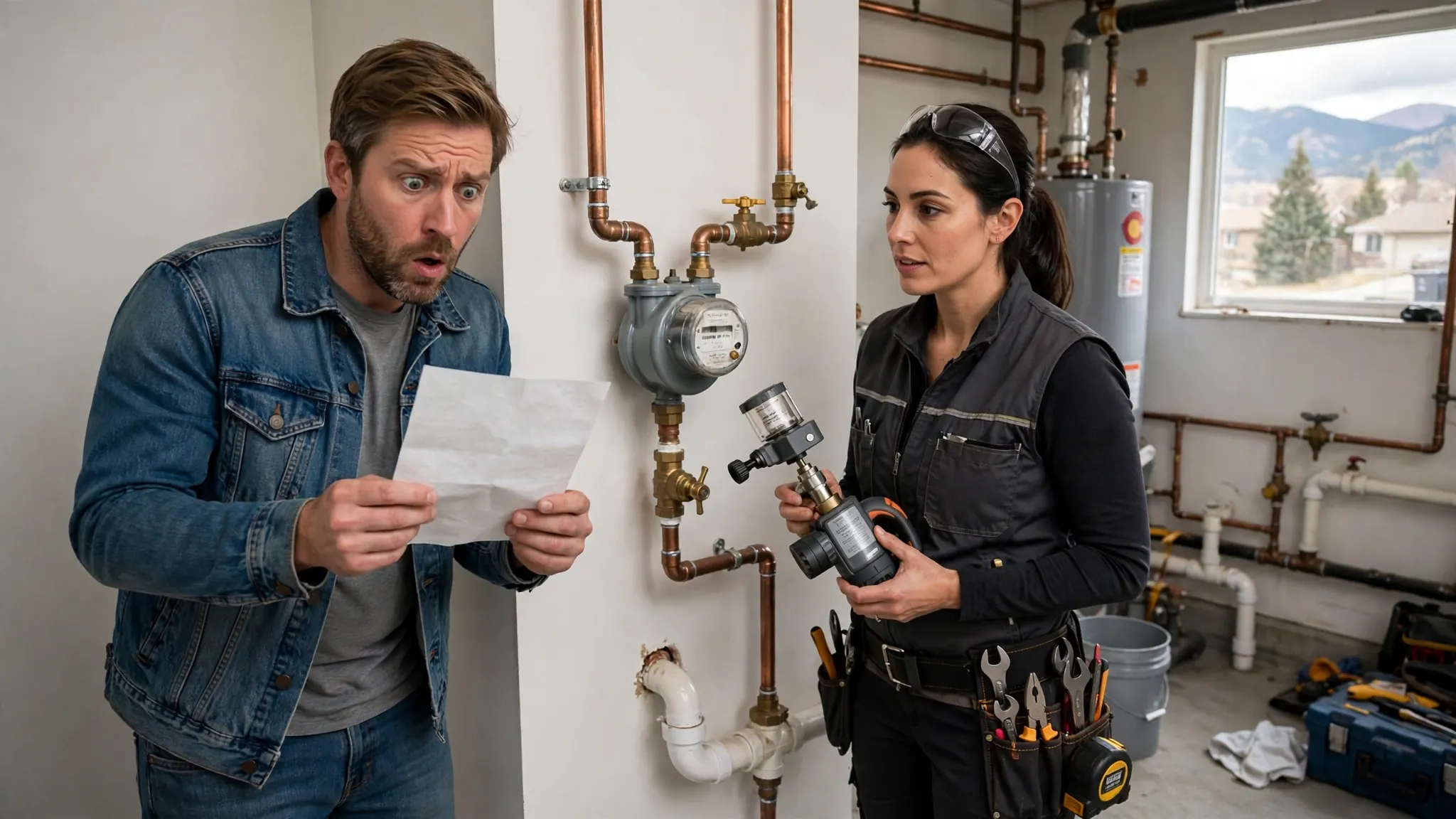
A slab leak sounds expensive because the pipe sits under concrete — and it can be, if the repair crew has to guess where to dig. That is exactly why detection comes before repair: one precise, marked location turns a big exploratory job into a small targeted one. This guide explains how slab leaks get pinpointed in 80021 homes, what the three repair paths actually involve, what makes one repair bigger than another, who does what between detection and repair, and the smart next steps once the leak is found.
Why Detection Comes Before Repair
Imagine two versions of your slab leak repair. In the first, the plumber knows the leak sits within a marked square foot of concrete: one precise opening, one pipe section replaced, one patch. In the second, nobody knows exactly where the break is: exploratory cuts across the room, each one a gamble, with flooring and concrete restoration multiplying at every miss. The difference between those two jobs is a detection visit. Pinpointing first also changes the bidding: repair contractors quote accurately against a marked location instead of padding for uncertainty, and you can compare bids apples-to-apples because every bidder is pricing the same marked spot. Insurance adjusters think the same way — a professional detection report with the location documented carries far more weight than a plumber's estimate that starts with "we think it's around here." Our leak detection service for 80021 exists to create that certainty before anyone picks up a saw.
How Slab Leaks Get Pinpointed
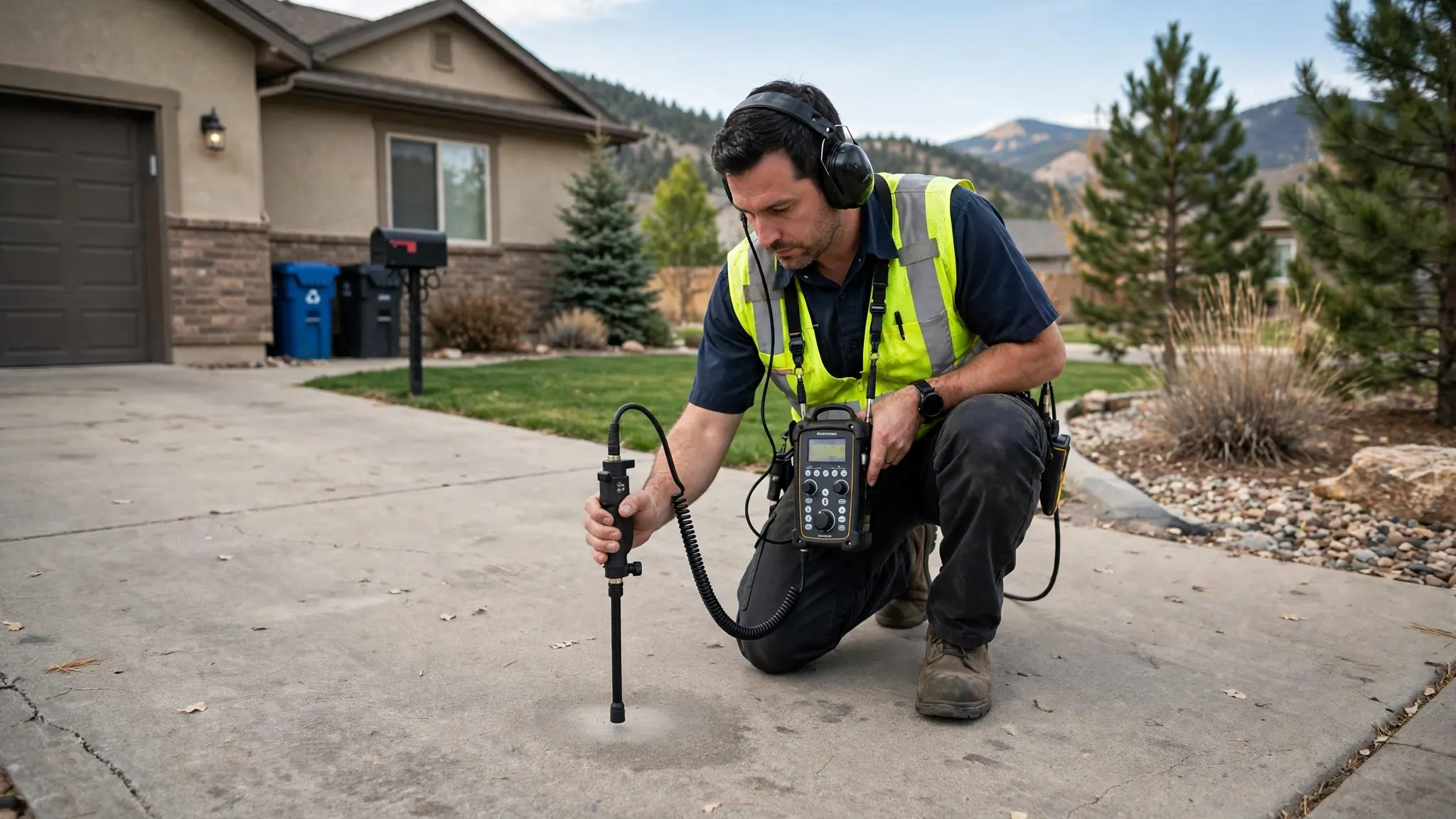
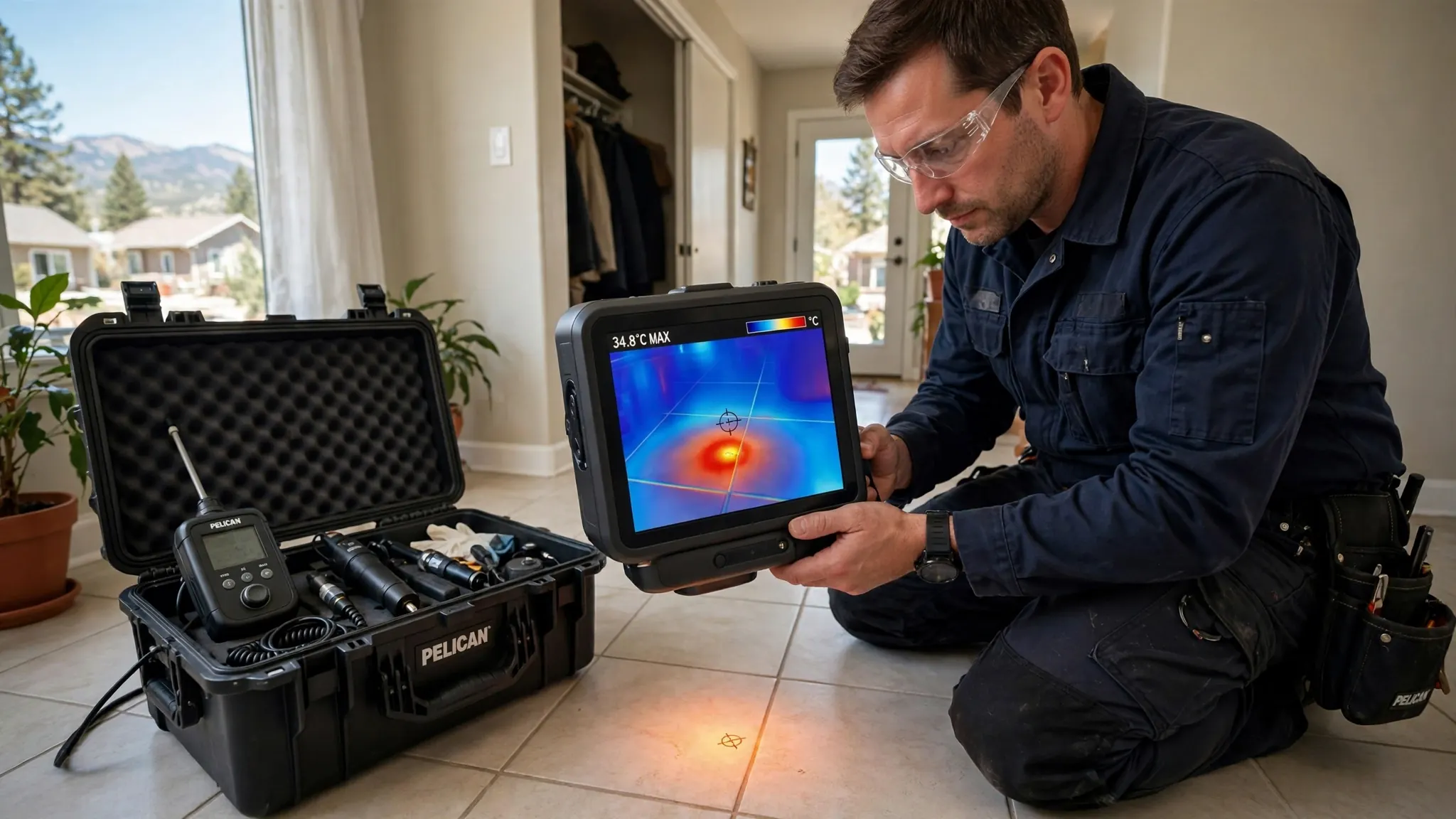
Finding a leak under concrete is a listening problem, and the instruments are built for it. Acoustic ground microphones — far more sensitive than the human ear — pick up the hiss of pressurized water escaping through the break, and the technician sweeps the slab systematically to find where the sound peaks. Correlators take it further: sensors placed at two contact points measure the tiny time difference of the leak's sound arriving at each, triangulating the position mathematically. For hot-water slab leaks, thermal imaging cameras see the heat blooming through the slab from above, often narrowing the search to a small area before anyone listens. Pressure testing with isolation valves first proves whether the failed line is hot or cold, supply or otherwise — so the acoustic search starts in the right system. The result gets marked directly on the floor: this is the spot. Our slab leak detection page walks through the full method in detail.
A warm spot on the floor is the classic signature of a hot-water slab leak — and it tells us to bring the thermal camera to the front of the plan. Mention it on the call and the visit gets faster.
The Three Repair Paths
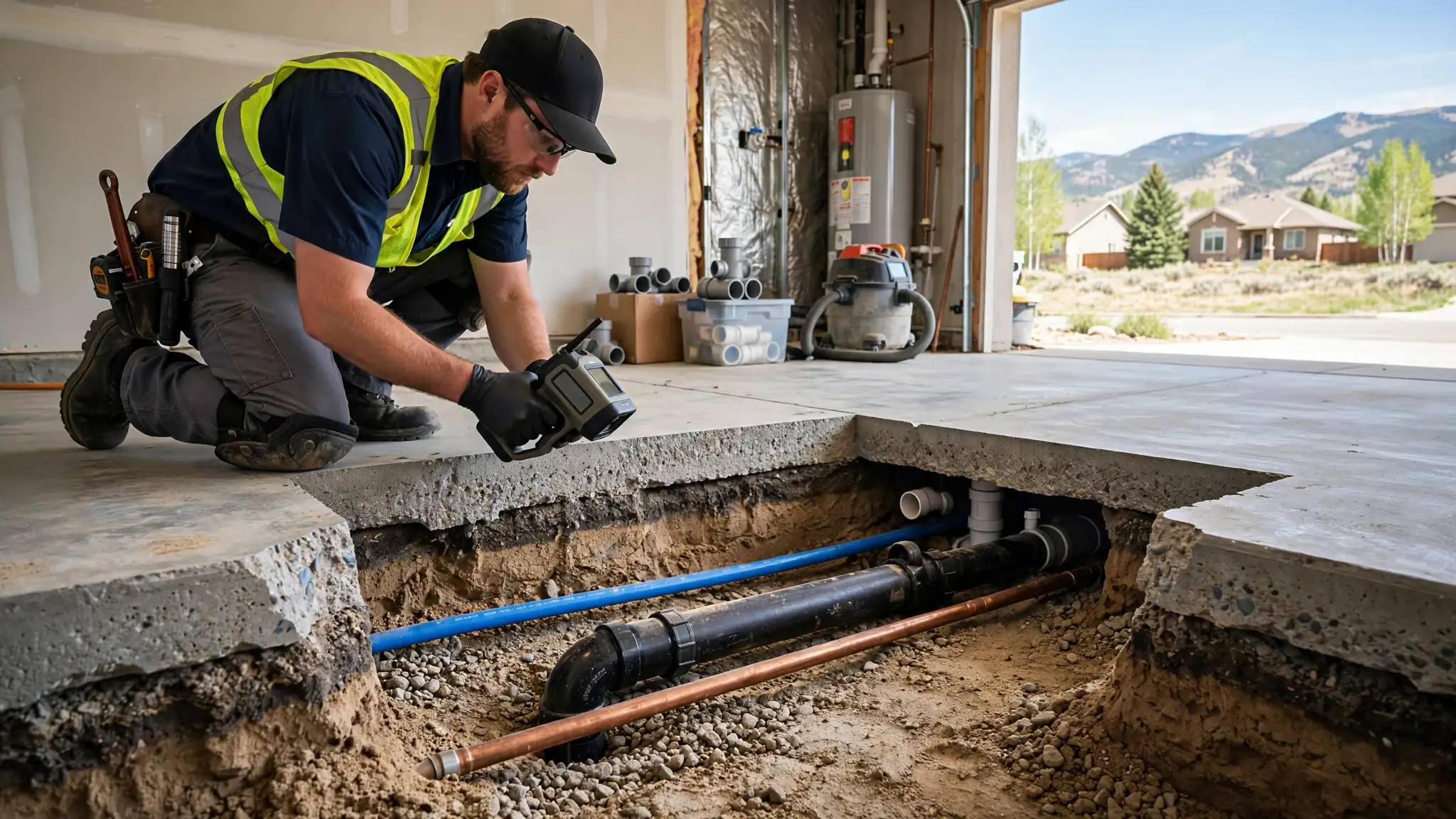
Once the leak is marked, repair generally follows one of three paths. Spot repair opens the slab at the marked location, exposes the failed pipe section, and replaces it — the most direct fix when the rest of the line is in good shape. Reroute (or repipe) abandons the under-slab line entirely and runs a new line overhead through walls or the attic, bypassing the concrete; this is often chosen when the existing piping is aging and more breaks are likely. Epoxy lining applies to drain and sewer lines under slab rather than pressurized supply — a resin-saturated liner is cured inside the old pipe, creating a new pipe within it without excavation; see our sewer line epoxy lining under slab page for how that process works. Each path suits different situations: a single pinhole in otherwise sound copper favors spot repair, while a corroded line with multiple weak points favors reroute. Your detection report gives the repair contractor the facts needed to recommend honestly.
What Makes One Slab Repair Bigger Than Another
Not all slab repairs are equal in scope, and the variables are worth understanding before you approve anything. Location matters enormously: a leak under an unfinished utility room is a different project than one under a tiled bathroom or hardwood living room, because flooring restoration scales with the finish. Depth and soil conditions affect how much concrete must be opened and how the excavation behaves. Pipe material and age influence whether a spot fix is sensible or a reroute is smarter — patching one pinhole in a line full of them buys months, not years. And a single confirmed leak is a smaller job than multiple breaks, which is another reason thorough detection matters: a good visit characterizes the whole line, not just the loudest leak. When contractors explain their recommended path, these are the factors their reasoning should reference.
Detection Vs. Repair: Who Does What
The division of labor is clean, and keeping it clean protects you. We detect: our visit pinpoints the leak, marks it, and produces the written report with photos, thermal images, and pressure readings. A qualified plumber or contractor repairs: opening the slab at the mark, fixing or rerouting the line, and restoring concrete and flooring. The report is the handoff document between the two — it lets you collect multiple repair bids against the same marked location, which is the only way to compare pricing fairly. Be wary of anyone who wants to merge the roles by "finding" the leak with a jackhammer; diagnosis by demolition is the most expensive detection method ever invented. If a repair contractor questions the marked location, a reputable one re-tests rather than re-guesses — and our report gives them the readings to do it.
Questions To Ask Before Approving Repair
With the detection report in hand and bids on the table, these questions separate careful contractors from careless ones:
- What exactly will be opened, and how will the concrete and flooring be restored afterward?
- Is this a spot repair, a reroute, or lining — and why is that path right for my pipe's condition?
- What warranty covers the repair work, and what does it exclude?
- Are permits required, and who pulls them?
- What is the realistic timeline, including concrete cure and flooring restoration?
- If you find additional breaks once opened, how is that handled and priced?
A contractor who answers these directly, referencing your detection report, is one you can trust with the concrete.
After The Repair: Verify
The job is not done when the concrete is patched — it is done when the system proves itself. Ask for a pressure re-test of the repaired line before the contractor leaves; a line that holds pressure is a line that is fixed. Keep your detection report and the repair invoice together — that pair is your documentation for insurance, for future buyers, and for your own records if another issue ever appears. Then monitor: watch your water meter over the next two billing cycles and confirm usage returns to its old baseline. A bill that stays elevated after a slab repair deserves a follow-up call, not wishful thinking. And if your home has aging under-slab plumbing beyond the repaired section, discuss a monitoring plan — catching the next pinhole early, with our water leak detection process, beats discovering it through the bill.
Still in the diagnosis phase? detection pricing in 80021 explains the costs, and the bill-spike symptom guide covers where it usually starts.