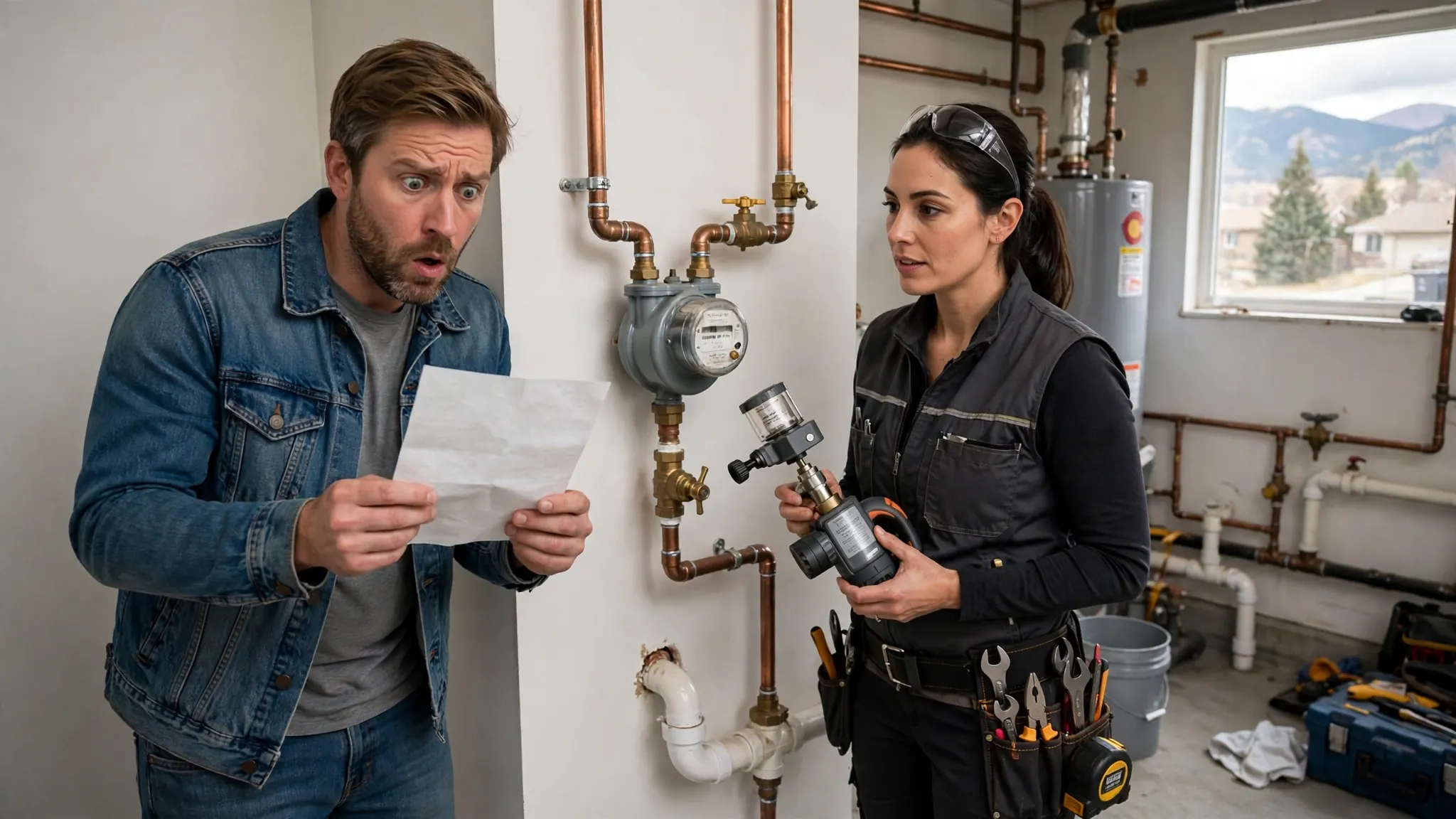
Not every company that advertises leak detection actually specializes in it. Many are general plumbers who will look around your 80021 home and then start opening walls. A true leak detection specialist finds hidden leaks with instruments — without demolition — and hands you a precise location plus documentation you can use. If you want the best company for the job, here is how to vet providers the way an insider would: the criteria that actually matter, what to ask on the phone, what strong answers sound like, and the red flags that should end the call.
Leak-Only Focus Beats General Plumbing For Diagnosis
Plumbers fix pipes; leak detection specialists find leaks. Those are different crafts. A general plumber diagnoses by experience and then repairs what they find — which works fine when the problem is visible, but hidden leaks demand a different approach: systematic isolation, acoustic interpretation, thermal analysis. A company whose daily work is detection has run those sequences hundreds of times across every housing style in Broomfield, from 80021 ranches to two-story builds. Ask directly whether leak detection is their specialty or a side service. You want the outfit that does this all day, because the most expensive outcome is not the detection visit — it is a misdiagnosed leak that gets "repaired" in the wrong place. Our leak detection service for 80021 is built entirely around diagnosis, which is why repair plumbers work from our reports.
Ask What Instruments They Own — And Listen For Specifics
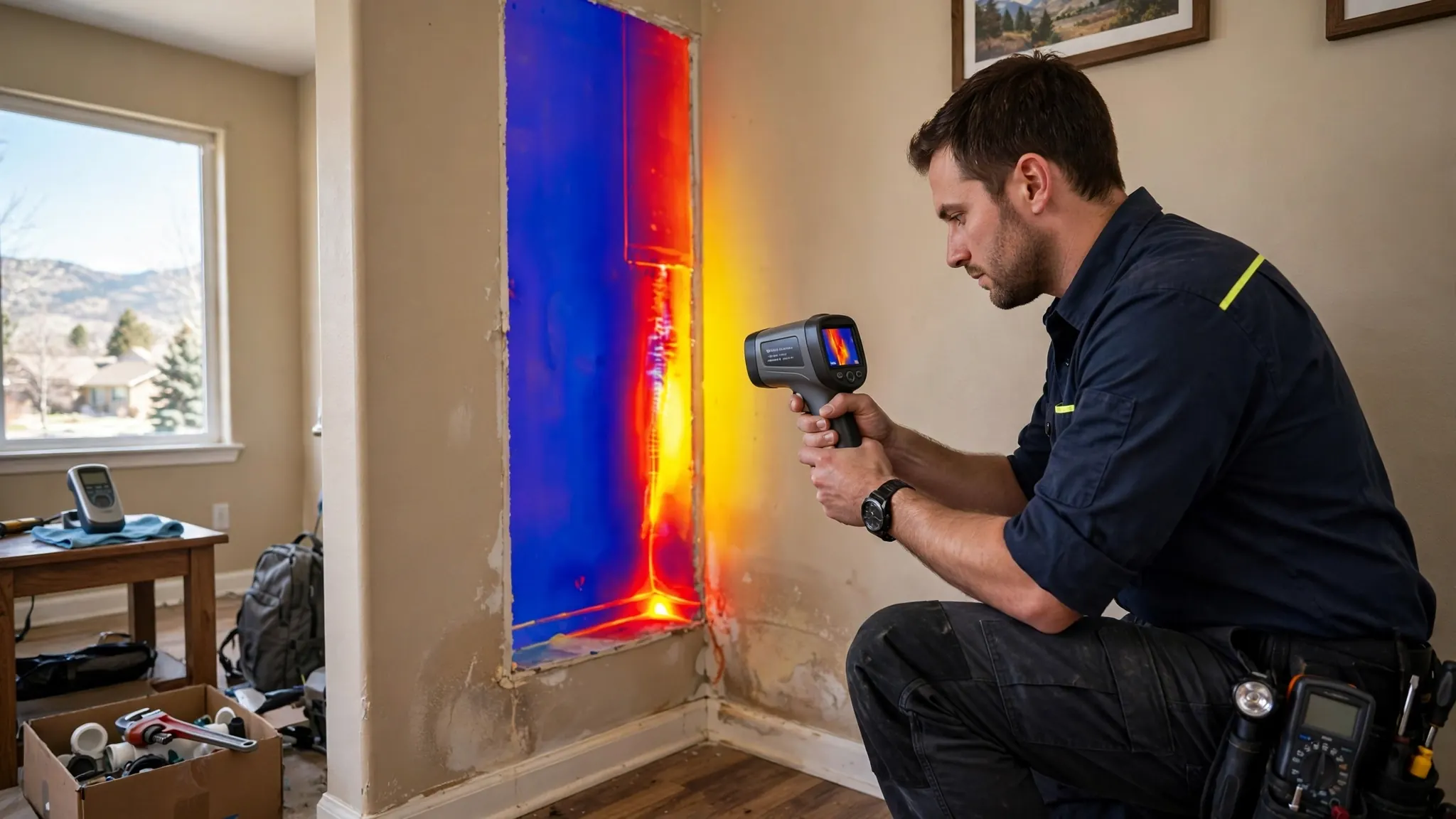
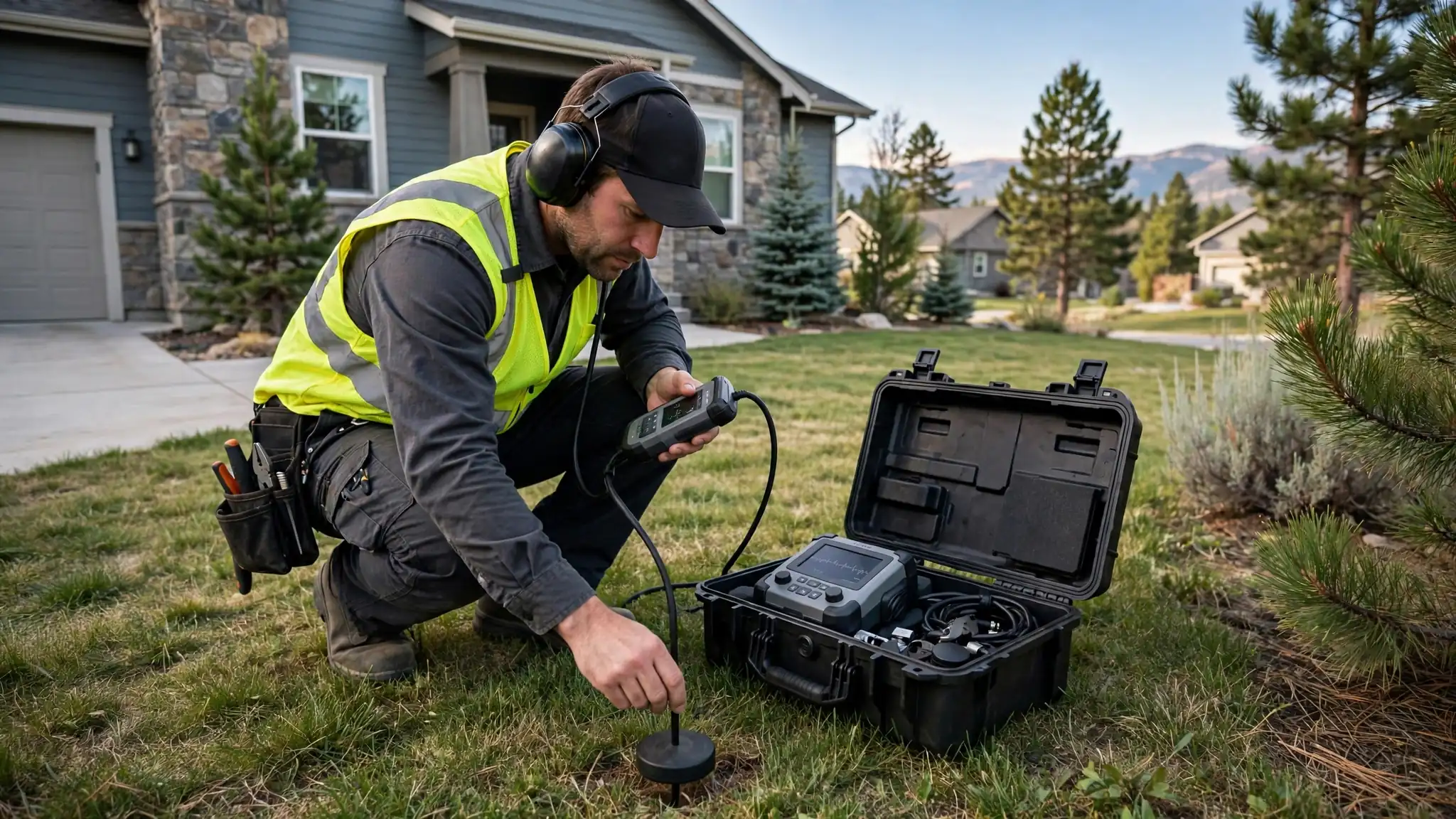
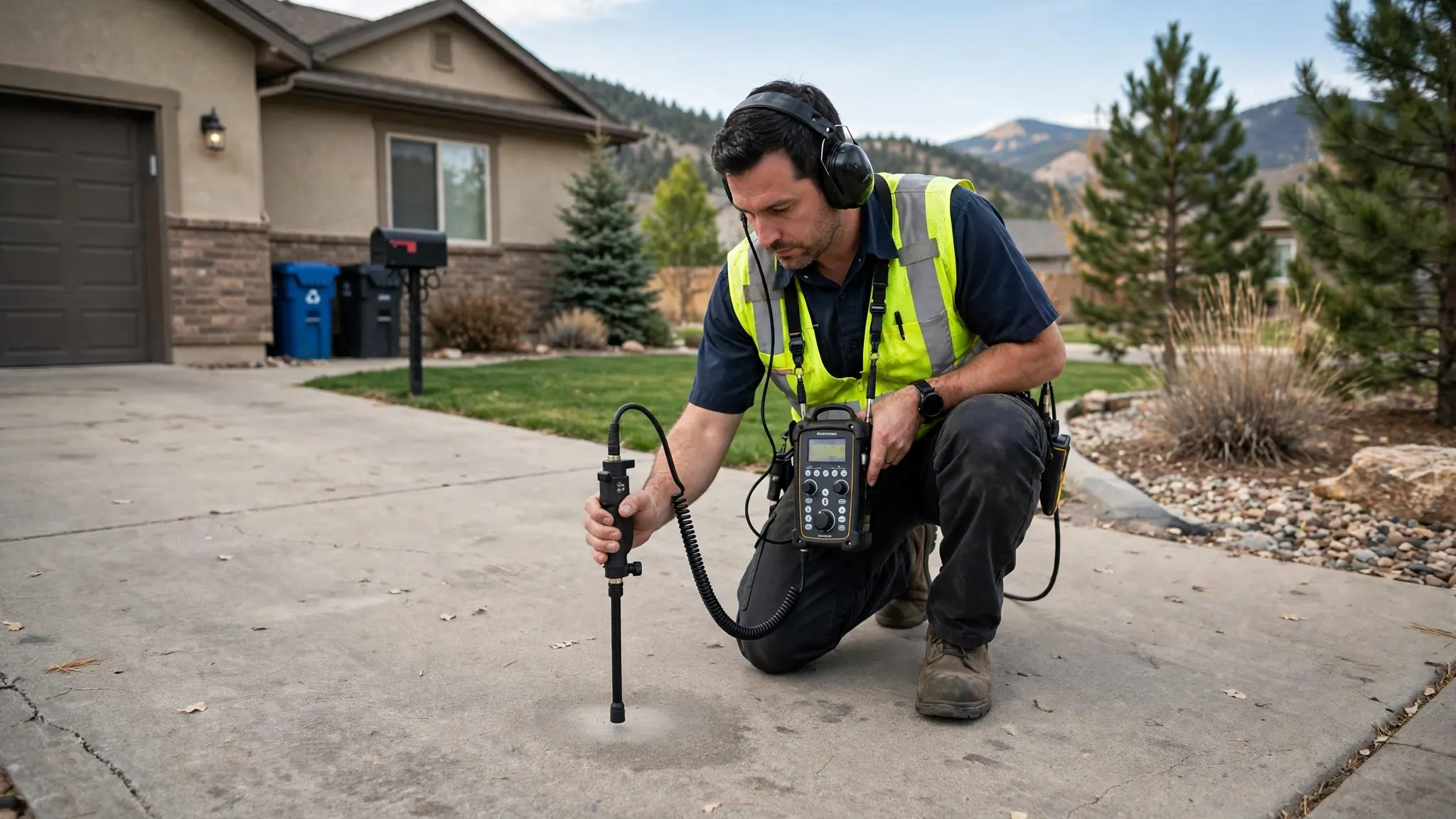
This is the single most revealing question you can ask. A serious detection company owns professional acoustic listening equipment — ground microphones, headphones, and correlators that triangulate a leak's position between two listening points. They own a thermal imaging camera for hot-water leaks and moisture mapping. They carry pressure-testing rigs with gauges for zone isolation, and for the stubborn cases, tracer-gas equipment. Listen for those specifics. Vague answers like "we have all the latest tools" or "our guys are very experienced" without naming a single instrument are a warning sign. Also ask whether the equipment is theirs or rented — a company that rents a thermal camera twice a year does not read thermal images the way a daily practitioner does. For under-slab work specifically, our slab leak detection page shows what a properly equipped visit looks like.
Non-Invasive Methods Only
Here is a bright line: diagnosis should never require demolition. If a company's "detection process" involves cutting open drywall to take a look, that is not leak detection — that is exploratory surgery on your house, and you pay for the patching whether they find anything or not. Professional detection pinpoints the leak first, marks the exact location, and only then does anyone open anything — surgically, during the repair, at the marked spot. Ask outright: "Will you need to open any walls or floors to find my leak?" The right answer is no, with an explanation of which instruments will do the finding instead. Any hedging on this point tells you everything about how the visit will go.
Demand Documentation You Can Actually Use
A verbal "it's under the hallway, about here" is not a finished job. The best companies deliver a written report: the pinpointed location marked and photographed, thermal images where relevant, pressure-test readings, and a clear description of findings and recommendations. This document does real work for you — repair plumbers quote accurately against it instead of padding for uncertainty, and insurance adjusters treat a professional report as evidence rather than anecdote. Ask before booking: "Do I get a written report with photos?" If the answer is no, or if reporting costs extra, factor that into your comparison. A cheap visit without documentation frequently costs more overall, because the next professional has to re-do the diagnosis from scratch.
Response Time Tells You Who Is Really Local
Ask how fast they can be at your 80021 address, and listen to how the answer is framed. A genuinely local company dispatches from Broomfield and quotes a real window — we answer 24/7 and arrive in 30–45 minutes. A national call center or lead broker says "we'll have someone call you back" or "a local partner will reach out," because your call is being shopped to whoever is available. Local dispatch matters beyond speed: technicians who work Broomfield daily know its housing stock, its soil behavior, its freeze patterns, and its water chemistry quirks — context that shortens every diagnosis. For active leaks, our emergency leak detection line connects you straight to dispatch, not a phone tree in another state.
Ask for the company's street address and check it on a map. A real Broomfield address with a local phone number beats a toll-free number and a "serving your area" claim every time.
Reviews And History Worth Trusting
Review counts are easy to inflate, so read them the way an investigator would. Look for reviews that mention leak detection specifically — not just "great plumber" — and that describe the process: found the leak, no unnecessary damage, clear report. A pattern of leak-specific praise across many reviews is worth more than a perfect score on a handful. Longevity matters too: 25 years in the trade means thousands of leaks found across every scenario, while a company founded last spring is still building its pattern library. Our record — an average rating from 250+ customer reviews at 4.9 out of 5, built over 25 years — is public and specific to the work. If a company's reviews are thin, generic, or entirely about other services, keep looking.
Five Questions To Ask On The Phone
You do not need to be technical to vet a detection company — these five questions separate the specialists from the pretenders:
- Is leak detection your specialty, or one service among many? You want a specialist's pattern recognition, not a generalist's best guess.
- What instruments will you bring to my home? Expect acoustic, thermal, and pressure-testing named specifically — not "our professional equipment."
- Is your detection process completely non-invasive? The answer must be yes, with no demolition during diagnosis.
- Do I receive a written report with photos? Included in the visit, not an upsell afterward.
- How fast can you be at my 80021 address, and are you dispatching from Broomfield? A real window from a real local address.
A strong company answers all five without hesitation. Evasion on any of them is your cue to call the next number.
Red Flags That Should End The Call
Some signals are disqualifying on their own. A quote with no questions about your symptoms means they are not scoping the job — they are guessing at a price. Any plan to open walls or floors "to take a look" during detection means demolition-first thinking. Inability to name their instruments means they may not own any. High-pressure tactics — "this price is only good today" for a diagnostic visit — have no place in professional services. And no verifiable local address, after the address test above, means you are likely talking to a broker, not the company that will show up. The best company for your 80021 home is the one that is easy to vet: local, specialized, equipped, documented, and transparent. Learn about our full leak detection process, then put us through the five questions — we welcome them.
Comparing on price too? leak detection costs in 80021 breaks down the factors, and booking an appointment in 80021 shows how simple scheduling should be.