Water spreading across your floor does not wait for business hours, and neither should your response. The first thirty minutes after you discover a leak decide how much damage your 80021 home takes — and the most important steps are simple, free, and entirely in your control. Shut off the water, make the area safe, document what happened, then call for emergency leak detection. This guide walks through exactly what to do in order, what to tell the dispatcher so help arrives ready to work, and the mistakes that turn a bad morning into a much worse week.
Minutes 0–5: Stop The Water
Nothing else matters until the flow stops. Your main shutoff valve is usually where the water line enters the house — near the water heater, in the garage, in a basement utility area, or in a crawlspace access. Turn it clockwise until it stops; a quarter-turn ball valve only needs ninety degrees. If the leak is clearly from one fixture — a supply line under a sink, a toilet — use that fixture's individual shutoff first and leave the rest of the house running. When only hot water seems involved, the shutoff on top of the water heater buys you time. If you cannot find any indoor valve, the meter box near the street has a shutoff on the house side of the meter (a meter key or crescent wrench opens most lids). Do not spend twenty minutes hunting: if the valve is not obvious, call (720) 715-9734 right away and tell us — our technician can shut the water off at the meter on arrival.
After the emergency is handled, ask our technician to show you your main shutoff and label it. The five calm minutes you spend learning it now save a frantic search during the next one.
Minutes 5–15: Make The Area Safe
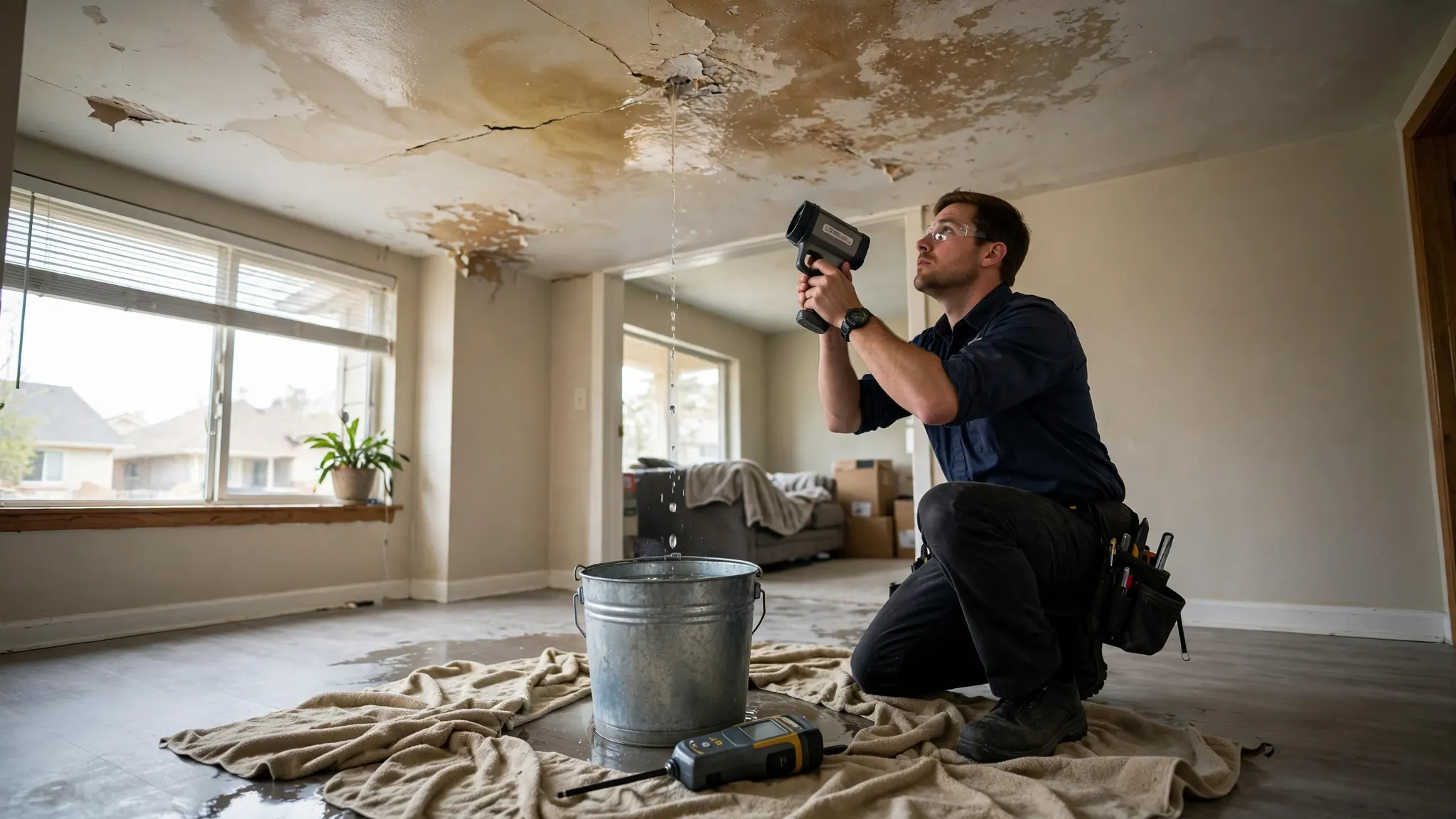
With the water off, think about electricity. Do not touch light switches, outlets, or appliances in or near the wet area, and if water is approaching the breaker panel, stay clear of it entirely. If you can reach the breaker for the affected area without walking through water, switching it off is a reasonable precaution — if you cannot, leave it alone and mention it when you call. Next, move what matters: electronics, important papers, rugs, and anything on the floor in the water's path. Contain what you can with towels, buckets, and a wet-dry vacuum if you have one. A ceiling that is bulging with trapped water deserves respect — put a bucket under the lowest point and do not stand beneath it. And watch your footing: wet tile and hardwood are slip hazards, especially on stairs.
Minutes 15–30: Document Everything
Once people are safe and the water is off, your phone becomes your most valuable tool. Take photos and short videos of everything: the source if visible, the spread of water, damaged belongings, stains on walls and ceilings. Capture wide shots for context and close-ups for detail, and make sure timestamps are on. Photograph your water meter reading too — it establishes how much water moved. Jot down a few notes while they are fresh: when you first noticed the leak, what was running at the time, anything unusual in the days before (sounds, odors, a warm floor spot). This record serves two purposes: it helps our technician understand what happened before arrival, and it becomes the backbone of any insurance claim. Our guide to leak detection reports for insurance claims explains what adjusters look for and why professional documentation carries weight.
What To Tell The Dispatcher
A good emergency call takes about two minutes and gives us everything needed to arrive prepared. Have this ready:
- Your exact address in 80021, plus the nearest cross street and any gate code or access instructions.
- What you see and where — "water coming through the kitchen ceiling," "flooding from under the water heater," "wet carpet along the hallway wall."
- Whether the water is off or still flowing, and where your shutoff is if you found it.
- Any electrical concerns — water near outlets, the panel, or appliances.
- Pets in the home and where they are, plus the best callback number.
Each detail changes what we bring and how fast we move. "Water still flowing, can't find the shutoff" means the technician heads straight for the meter box with the right tools. "Ceiling bulging over the living room" means we plan for overhead work. For active emergencies, our emergency leak detection line is answered 24/7 — you will speak with dispatch, not a phone tree, and you will get a straight arrival estimate.
What Happens When Our Technician Arrives
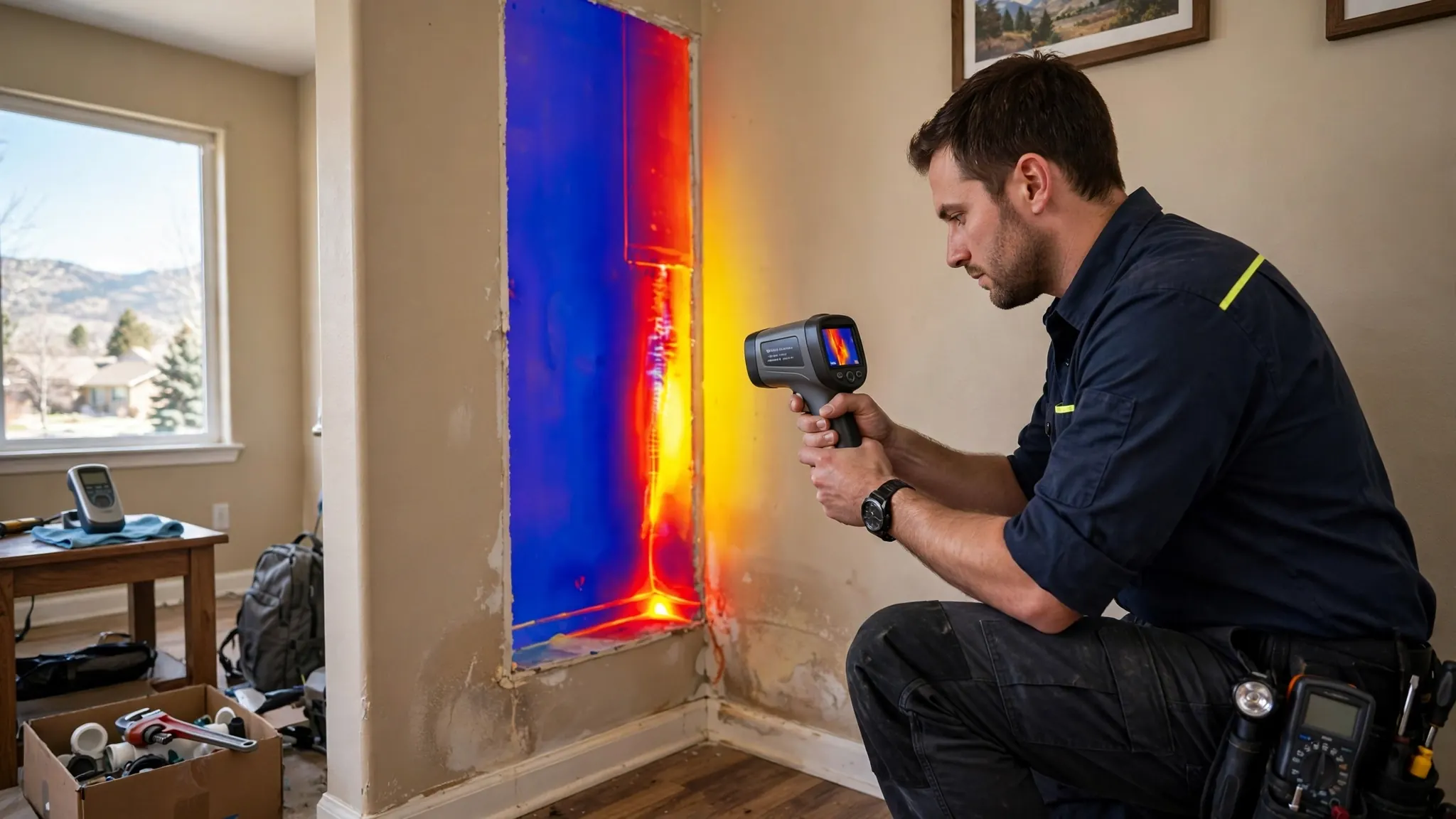
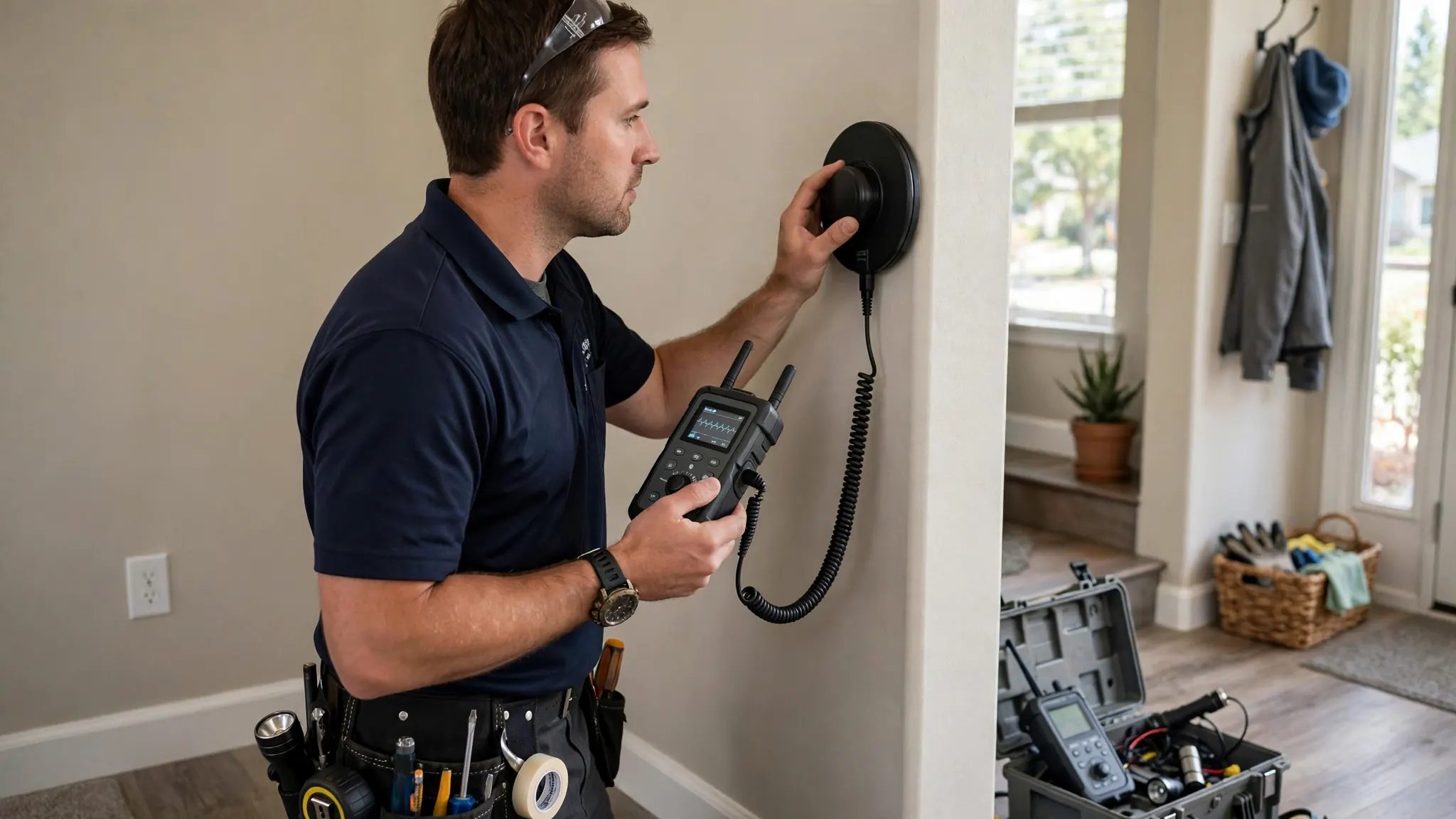
Expect us in 30–45 minutes anywhere in 80021, day or night. The visit starts with a safety sweep — confirming the water is off, checking for electrical hazards, and making sure the area is stable. Then comes the diagnostic sequence: a meter check to confirm whether water is still moving somewhere, zone isolation to determine whether the leak is in the house plumbing, the irrigation, or the service line, and then pinpointing with acoustic listening and thermal imaging. Every method is non-invasive — we find the leak without opening walls or floors. Once located, the spot is marked clearly, the findings are explained to you in plain language, and you receive a written report with photos and readings. That report is what a repair plumber works from and what your insurer asks for, so the emergency visit sets up everything that follows.
What Not To Do While You Wait
Panic causes most of the secondary damage we see. Do not tear open drywall or pull up flooring to "find" the leak yourself — exploratory demolition destroys the evidence our instruments read and turns a targeted repair into a reconstruction project. Do not touch anything electrical in a wet area, even to unplug something valuable. Do not run more water "to test" where it is coming from; you already know water is the problem. Do not assume a slow drip can wait until morning — slow drips inside walls do their worst work silently, and by morning the damage footprint is larger. And do not pour drain cleaner or sealants into anything hoping for a miracle fix; they complicate the real diagnosis. The best thing you can do while waiting is keep documenting and keep people and pets clear of the wet area.
After The Emergency Visit
Once the leak is pinpointed and the immediate crisis is over, three things happen. First, you have a precise location and a written report — hand that to any qualified plumber for a repair quote, and keep a copy for your insurance file. Second, the water stays off (or the affected zone stays isolated) until the repair is done; if the rest of the house can run safely, our technician will tell you exactly which valves to leave alone. Third, think about drying: standing water and soaked materials need airflow and dehumidification within a day or two to prevent mold, so open things up and get air moving. Our standard leak detection service for 80021 covers the full diagnostic process behind every emergency call — the only difference at 2 a.m. is how fast we get there. If the emergency reveals a pressurized supply issue, our water leak detection process is what pinpoints it.
Dealing with a pool emergency instead? pool leak detection in 80021 covers pool leaks, and choosing a company in 80021 helps you pick who to call next.