A pool that drops a little each week in July might just be evaporating. A pool that drops overnight has a leak. Telling the difference matters because pool leak detection is its own specialty — pressure-testing underground plumbing, dye-testing fittings, and inspecting the equipment pad — and knowing what to expect keeps the whole process smooth. This guide covers the evaporation question for Broomfield's dry climate, where 80021 pools actually lose water, how professional detection works step by step, what shapes the cost of the visit, and when in the season to schedule it.
Evaporation Or Leak? Start With The Bucket Test
Before calling anyone, run the bucket test — it is free and surprisingly decisive. Fill a bucket with pool water, set it on a pool step so the water levels inside and outside the bucket start even, and mark both levels. Wait 24 hours with the pump running normally, then compare. If the pool dropped more than the bucket, water is leaving somewhere other than the sky. In Broomfield's dry, windy climate, normal evaporation runs higher than in humid regions, so do not panic over modest losses in peak summer — but a pool outperforming the bucket by a clear margin is a leak until proven otherwise. Note your results, because the first question any detection professional asks is how much water you are losing and how you measured it. Our leak detection service for 80021 covers pools alongside household plumbing, and the bucket test is where every pool diagnosis begins.
Where Pools Actually Lose Water
Pools leak at predictable weak points, and knowing them focuses the search. The skimmer throat — where the skimmer meets the pool wall — cracks and separates with age and ground movement. Return fittings and the main drain work loose. The light niche and its conduit are classic culprits, especially in older pools. At the equipment pad, pumps, filters, heaters, and their unions drip under pressure, and multiport valves weep in ways that look minor but add up. Underground, the plumbing runs between the pool and the pad can crack from soil shifting or freeze damage. One sneaky mask: a stuck or misadjusted autofill that keeps topping the pool off, hiding a real leak behind a soaring water bill. A thorough detection visit checks the structure, the fittings, the pad, and the buried lines — because the leak is only ever in one of those places, and guessing wrong is expensive.
Walk your pad with the pump running and look at every union, valve, and connection with a dry hand — drips are easiest to spot before they evaporate. Finding an obvious pad leak yourself can save the cost of a full detection visit.
How Professional Pool Leak Detection Works
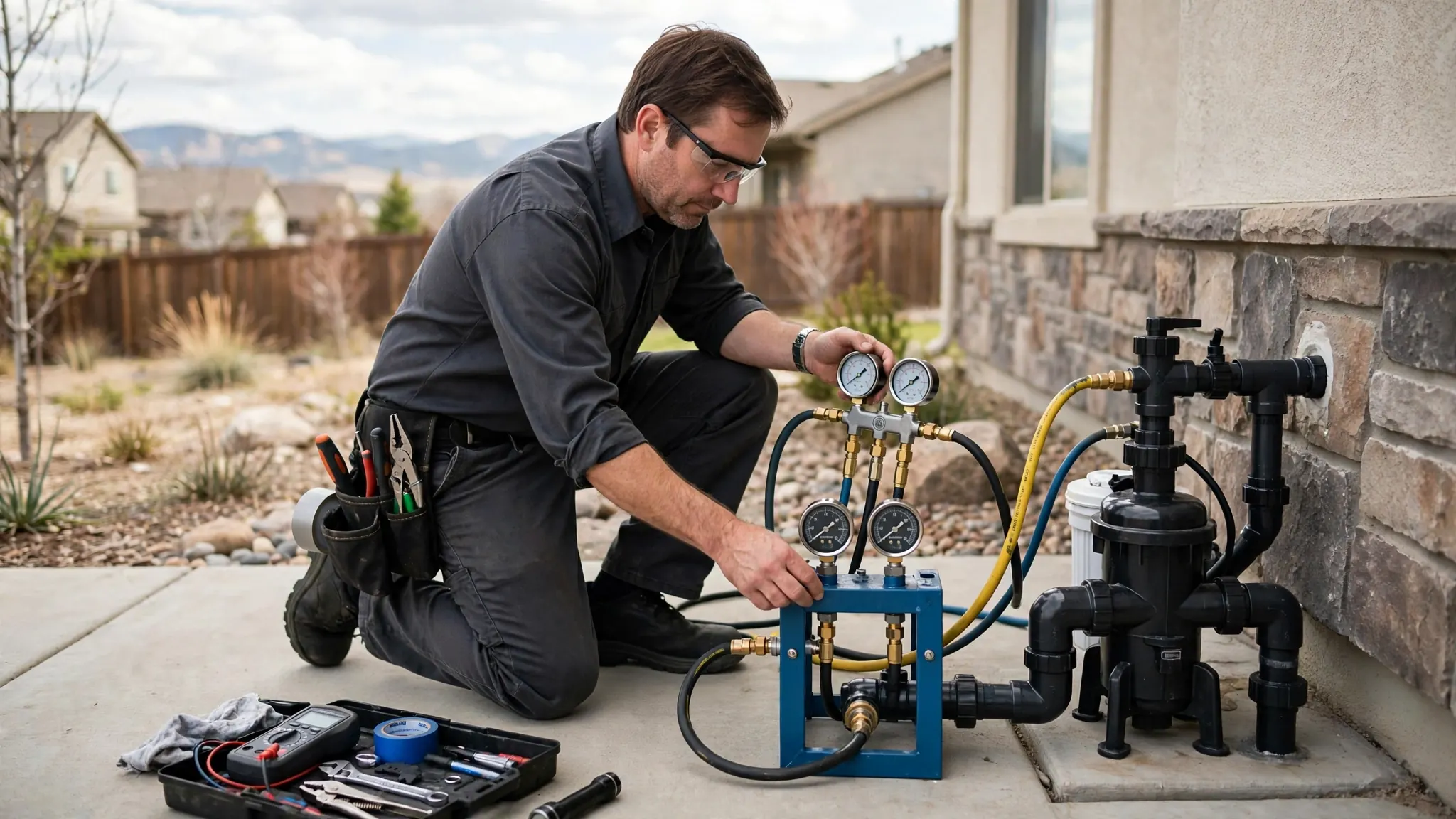
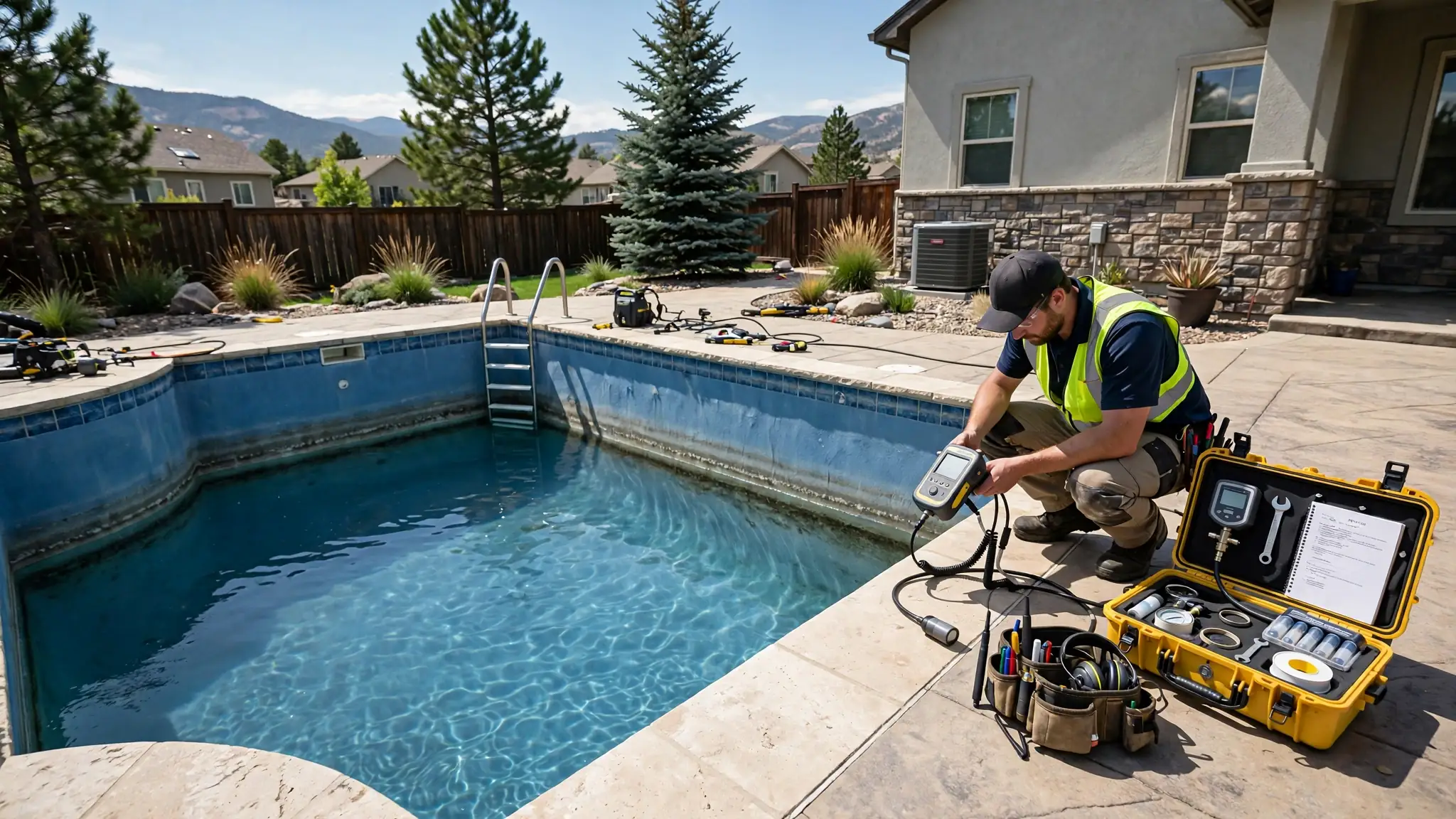
Pool detection follows a disciplined sequence. It starts with a visual and tactile inspection of the skimmer, fittings, light niche, and tile line, then moves to the equipment pad — pump, filter, heater, valves, and every connection under pressure. Next comes dye testing: with the pump off and the water still, a syringe releases dye near suspect fittings, and the dye gets pulled visibly toward any leak. Then the underground plumbing gets pressure-tested: each line (skimmer, main drain, returns) is plugged and pressurized with a gauge attached, and a line that will not hold pressure is a line with a break. Acoustic listening around the deck can narrow a confirmed line break to a dig location. None of this requires draining the pool — in fact, a full pool is necessary for dye testing. Our pool leak detection page details the full process and the equipment involved.
What Shapes The Cost Of A Pool Detection Visit
Pool detection pricing follows the work involved, and several factors move it. The number of underground lines to pressure-test matters most — a simple pool with one skimmer and two returns is quicker than a pool-and-spa combo with half a dozen lines, each needing individual plugs and pressure holds. Equipment-pad complexity counts too: heaters, salt systems, and automation add connections to inspect. Access affects the job — a pad buried behind landscaping or a deck with no listening points slows everything down. Whether the leak turns out structural (dye-test territory) or plumbing (pressure-test territory) changes which methods dominate the visit. And if the pool shares plumbing with a spa, both systems enter the scope. When you call (720) 715-9734, describing your setup — pool only or pool-plus-spa, equipment list, how much water you are losing — lets us quote the visit exactly rather than ballparking it.
The Best Time Of Year In Broomfield
Timing a pool detection visit strategically saves water and money. Spring opening is ideal: the pool is being serviced anyway, temperatures are moderate for working around the deck, and finding a leak before swim season means you are not topping off thousands of gallons through the hottest months. Late fall, during winterization, is the second-best window — a leak found then can be repaired in the off-season without cutting into swim time. Mid-summer detection works fine technically, but every week of waiting is a week of maximum evaporation masking the leak and maximum water loss if it is real. One more seasonal note for 80021: Broomfield freeze-thaw cycles punish underground pool plumbing, so a pressure check after any winter with deep freezes is cheap insurance even if you have not noticed water loss yet.
Structural Leaks Vs. Plumbing Leaks
The distinction matters because each type leads to a different repair trade. Structural leaks are breaches in the pool shell itself — cracks in plaster or concrete, separated skimmer throats, failed light-niche seals. They are found with dye testing and repaired by pool-surface specialists. Plumbing leaks are breaks in the buried lines between the pool and the equipment pad — found by pressure testing and repaired by excavation at the marked location. A good detection visit tells you which one you have, and exactly where, so you hire the right repair trade the first time. If your pool and spa share equipment, note that spa leak detection follows the same methods on a smaller, hotter, more chemically aggressive system — worth checking together while we are there.
What You Get After The Visit
A finished pool detection visit leaves you with certainty: which component is leaking, the marked location, pressure-test readings for each line, and clear guidance on the right repair path. That documentation goes straight to your pool repair contractor — no re-diagnosis, no exploratory digging across the yard. If the news is good and the bucket test was just evaporation anxiety, you get something equally valuable: confirmation that the system holds pressure, so you can stop worrying and start swimming. Either way, keep an eye on your water meter through the season; a pool that was tight in spring can develop a leak by fall, and the meter catches it before the bill does.
Not sure it is the pool and not the plumbing? isolating the source via the water bill helps narrow it down, and general detection costs in 80021 covers pricing.