Few household mysteries are as quietly expensive as a water bill that doubles for no reason you can name. The uncomfortable truth behind most unexplained spikes is simple: water is leaving your plumbing somewhere you can't see, and the meter is faithfully recording every gallon of it. Before you call anyone, two things are worth establishing — whether the spike is real or seasonal, and whether your meter confirms ongoing loss. Since 80038 is a PO-box-only postal zone, our 80038 coverage is the same Broomfield-wide service that reaches every corner of the city, and our leak detection work in the 80038 area starts from exactly the meter test described below. Here's the full picture.
Seasonal Usage Vs. A True Spike
Not every high bill is a leak, and ruling out the innocent explanations first saves everyone time. Summer irrigation is the biggest legitimate driver — a sprinkler system running extra zones during a hot, dry stretch can easily double a bill, especially on larger lots. Houseguests, a new washing machine schedule, filling a pool or hot tub, and a running toilet (which can waste hundreds of gallons a day silently) all show up as higher usage without any hidden pipe failure.
The pattern distinguishes them. Seasonal and behavioral causes track with something you can name: the bill climbs when the sprinklers went to daily watering, or the month the in-laws visited. A leak-driven spike has no such story — usage jumps and stays jumped, month after month, with nothing in your routine to explain it. Pull two or three past bills and look at the usage in gallons or cubic feet, not dollars; rates change, but a true leak shows as a sustained step-change in volume. Our breakdown of sudden high water bill signs and causes walks through the full differential.
One more check before the meter: listen. Walk the house in its quietest hour and listen at walls, floors, and fixtures for hissing or running water with nothing turned on. Check toilets with a few drops of food coloring in the tank — color in the bowl without a flush means a leaking flapper, the cheapest fix on this entire list. If the easy answers come up empty and the usage is still elevated, the meter test is next.
The Meter Test: Two Minutes, Definitive Answer
The water meter is the most honest diagnostic instrument in your home, and the test takes about two minutes. Turn off every water-using fixture and appliance in the house — faucets, dishwasher, washing machine, ice maker, irrigation controller — and make sure nobody runs anything during the test. Then go read the meter and watch the low-flow indicator (the small triangle or star on most residential meters) for a full minute or two.
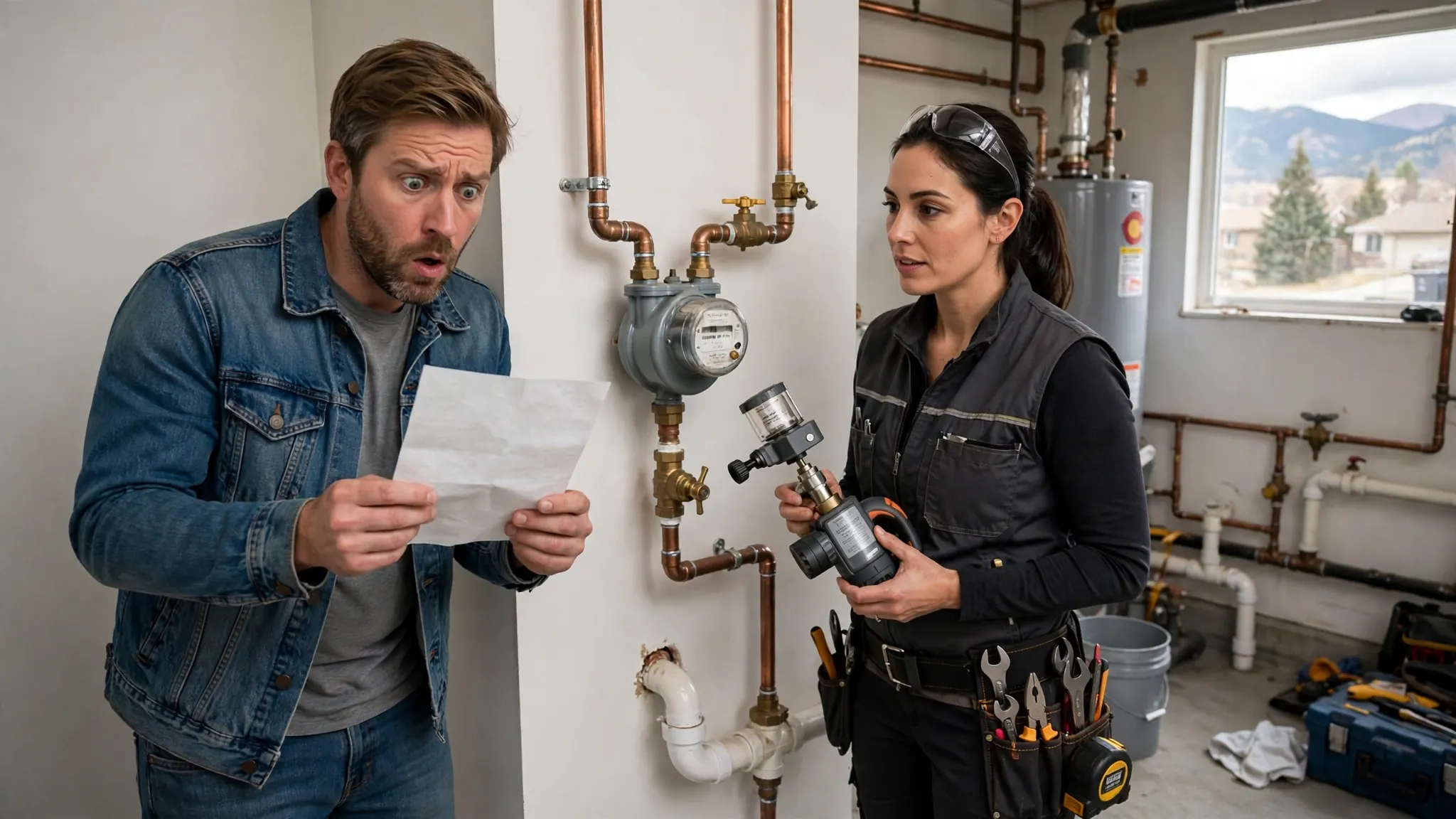
If that indicator moves at all with everything off, water is flowing somewhere it shouldn't be. A steadily spinning dial means a significant leak; a slow, intermittent creep suggests something smaller, like a toilet flapper or a weeping valve. Either way, the meter has just told you the spike is real and the water is going somewhere specific — which is exactly what professional detection is for. Our step-by-step guide to reading your water meter covers meter types and where to find yours if you've never looked.
Reading What The Meter Tells You
The meter test answers the biggest question — leak or no leak — but a second test narrows the location dramatically. Find your home's main shutoff valve (where the line enters the house) and close it, then check the meter again. If the meter stops, the leak is inside the house, past that valve. If it keeps spinning with the house isolated, the leak is in the service line between the meter and the house — underground, invisible, and steadily billing you.
That distinction shapes everything that follows. An inside-the-house leak means high-bill leak investigation with acoustic and thermal instruments working through walls and floors. A service-line leak means underground tracing — correlators and ground microphones following the pipe run from meter to foundation. Both are routine for a detection specialist, but they use different methods, so the meter test genuinely speeds up the visit.
A spinning meter with no visible water anywhere is the classic hidden-leak signature, and it's worth understanding why nothing looks wet: supply leaks under slabs drain into soil or gravel beds, service-line leaks saturate earth that never surfaces, and wall-cavity leaks can run inside insulation for weeks before staining appears. Absence of visible water proves nothing — the meter is the witness that counts.
When A Spike Means A Slab Or Service-Line Leak
Certain clues point specifically at the two most consequential hidden leaks. A slab leak — a pressurized line failing under your concrete foundation — often announces itself with a warm or hot spot on the floor, the sound of running water when nothing is on, or damp carpet edges near the slab. Hot-water slab leaks also show up as a water heater that runs far more than it should. If your spike came with any of these companions, say so when you call; it focuses the survey immediately.
A service-line leak — the buried pipe from meter to house — tends to show subtler signs: an unusually green or soggy strip of yard along the pipe's path, a meter box with standing water in it, or the sound of water near the foundation with dry weather above. Because the leak is outside the house, nothing indoors looks wrong, which is why these leaks run the longest and generate the ugliest bills. The meter-isolation test described above is the definitive home check for this one.
Every day a hidden leak runs is another day of billed water and spreading damage. If your meter confirms ongoing loss, call (720) 715-9734 — we answer 24/7 and arrive in 30–45 minutes across greater Broomfield, including the full 80038 postal zone.
How Detection Pinpoints The Source
Once the meter confirms a leak, professional detection takes over where homeowner triage ends. For inside-the-house leaks, acoustic listening traces the hiss of escaping pressurized water through walls and floors, thermal imaging maps the temperature signature of hot-water leaks and the evaporative cooling of damp areas, and pressure isolation testing confirms which pipe section is compromised before anyone commits to a location.
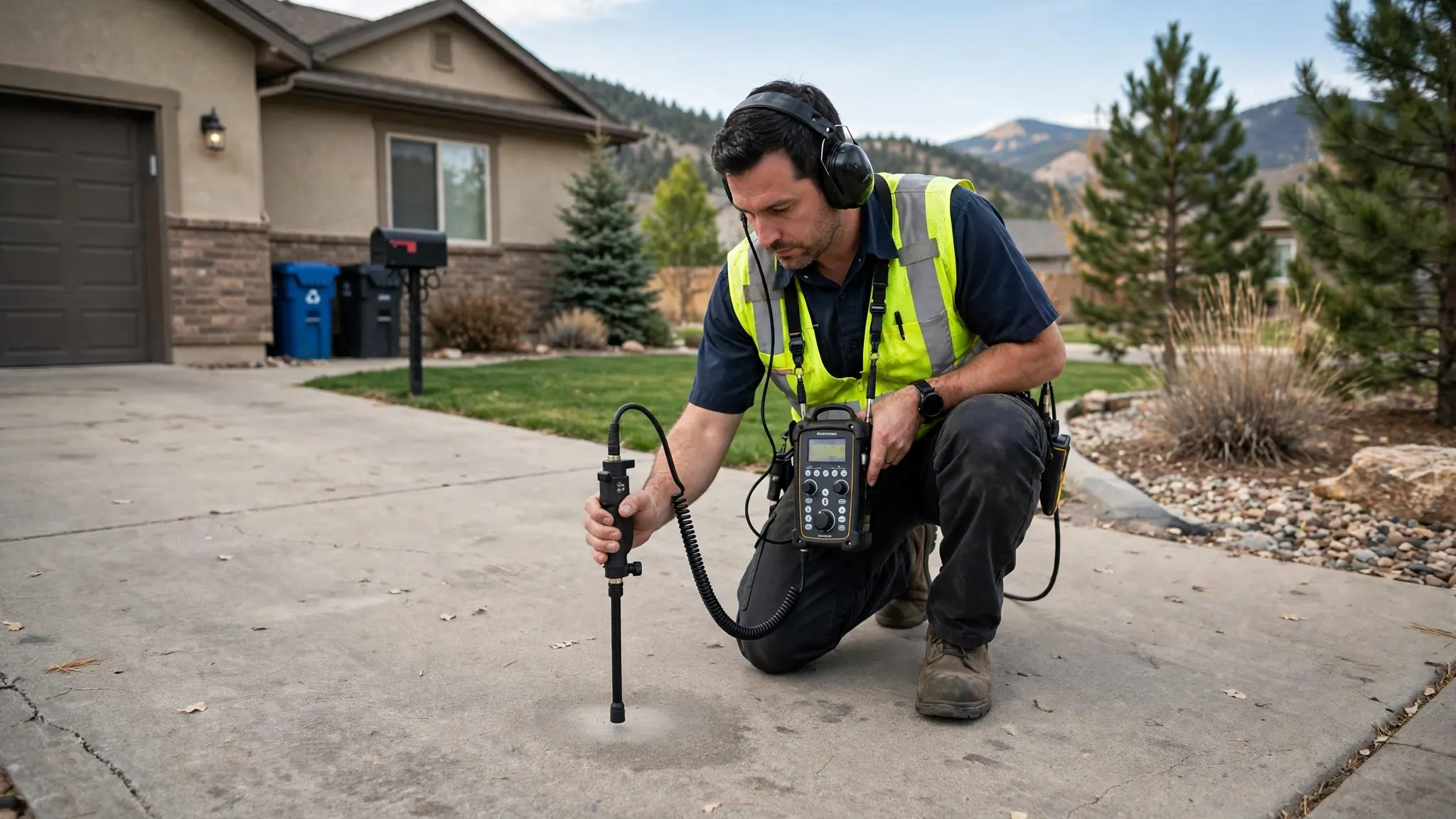
For service-line and underground leaks, correlators — sensors placed at two points on the pipe — triangulate the leak's position by the time difference of the sound arriving at each sensor, accurate to within inches over long runs. Ground microphones then refine the spot for the repair crew. The result in both cases is the same: an exact location, documented with images and readings, that turns the repair into a single targeted job instead of exploratory digging or demolition.
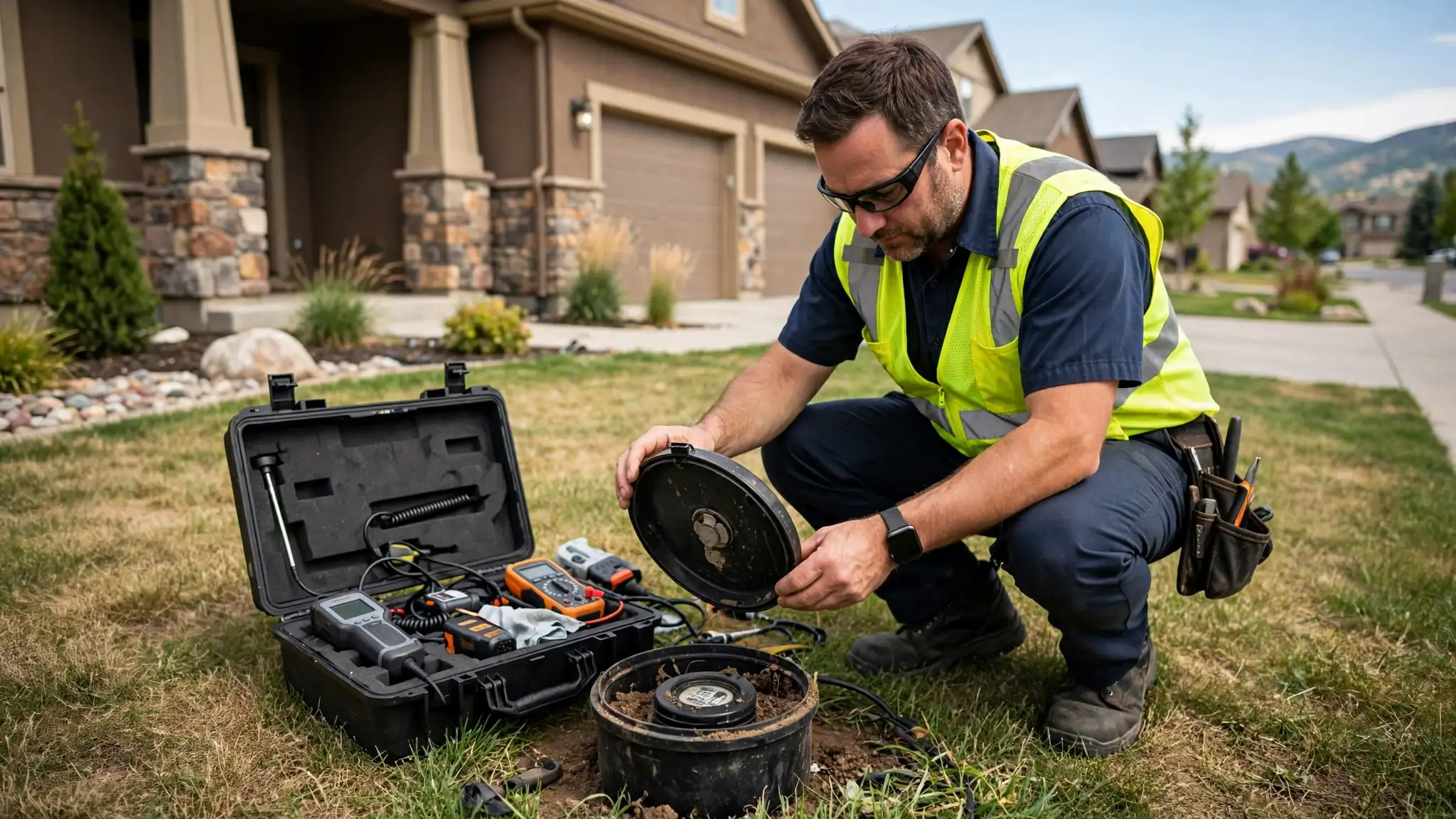
Our water meter diagnostics formalize what the home test starts: logged readings, isolation results, and flow analysis that become part of your written report. That documentation matters beyond the repair — it's what you bring to your water utility if you dispute billed usage, and to your insurer if the leak caused damage.
Acting On The Findings
A confirmed hidden leak calls for prompt action on two fronts. First, the repair: our pinpoint lets your plumber open exactly the right spot — one opening, one fix, one patch. For slab and service-line leaks, ask about all the repair options (spot repair, reroute, lining) before authorizing work; the cheapest repair isn't always the one with the lowest invoice, and the right choice depends on pipe age and condition.
Second, the bill itself. Many utilities offer leak adjustments — partial credits for billed water lost to a verified hidden leak — but they require documentation: proof of the leak, proof of the repair, and usually prompt action once discovered. Our written report is built for exactly this purpose. Keep your pre-repair bills, the report, and the repair invoice together; the adjustment process rewards organized paperwork and punishes delay.
With 25 years of Broomfield detection work and an average 4.9-out-of-5 rating from more than 250 customer reviews, we've traced bill spikes to every hiding place plumbing offers — and the meter test at the start of this article is where nearly all of those jobs began. If yours is spinning, don't wait for the next bill: call (720) 715-9734.