There's no maze between you and a detection appointment: one phone call or one contact form, a few details about what you're seeing, and a crew dispatched from inside Broomfield. The part most people undervalue is the information they bring to the booking — good details let us load the right equipment, quote the visit accurately, and sometimes triage your problem before the truck moves. 80038 is a PO-box-only ZIP, so think of this as greater-Broomfield coverage — the same crews, the same 30–45-minute arrival window, for every property carrying an 80038 mailing address. Here's how booking our leak detection service for the 80038 area works, and how to make your appointment as productive as possible.
Phone Vs. Contact Form: Which To Use
The phone is the fastest path, and for anything urgent it's the only sensible one. Calling (720) 715-9734 reaches our team directly — 24/7, including nights, weekends, and holidays — and a live conversation lets us triage in real time: active water spreading gets priority dispatch with a 30–45 minute arrival target, while a slow-developing stain gets a scheduled slot that suits you. The back-and-forth of a call also surfaces details a form can't ask about, and we can talk you through immediate steps (like the main shutoff) while the crew is rolling.
The contact form on our site suits non-urgent situations and people who prefer writing: a stain you've been watching for a week, a bill spike you're investigating, a pre-purchase inspection question. Describe the symptoms, leave your address and the best callback number, and we'll respond promptly to schedule. Either route lands in the same dispatch queue — the phone just skips the callback step.
One thing the phone does that nothing else can: same-day flexibility. Schedules shift as jobs complete early or run long, and a caller can grab a newly opened slot that a form submission would miss. If timing matters to you, call.
What To Have Ready When You Call
You don't need a professional diagnosis — that's our job — but five pieces of information make the booking dramatically more effective:
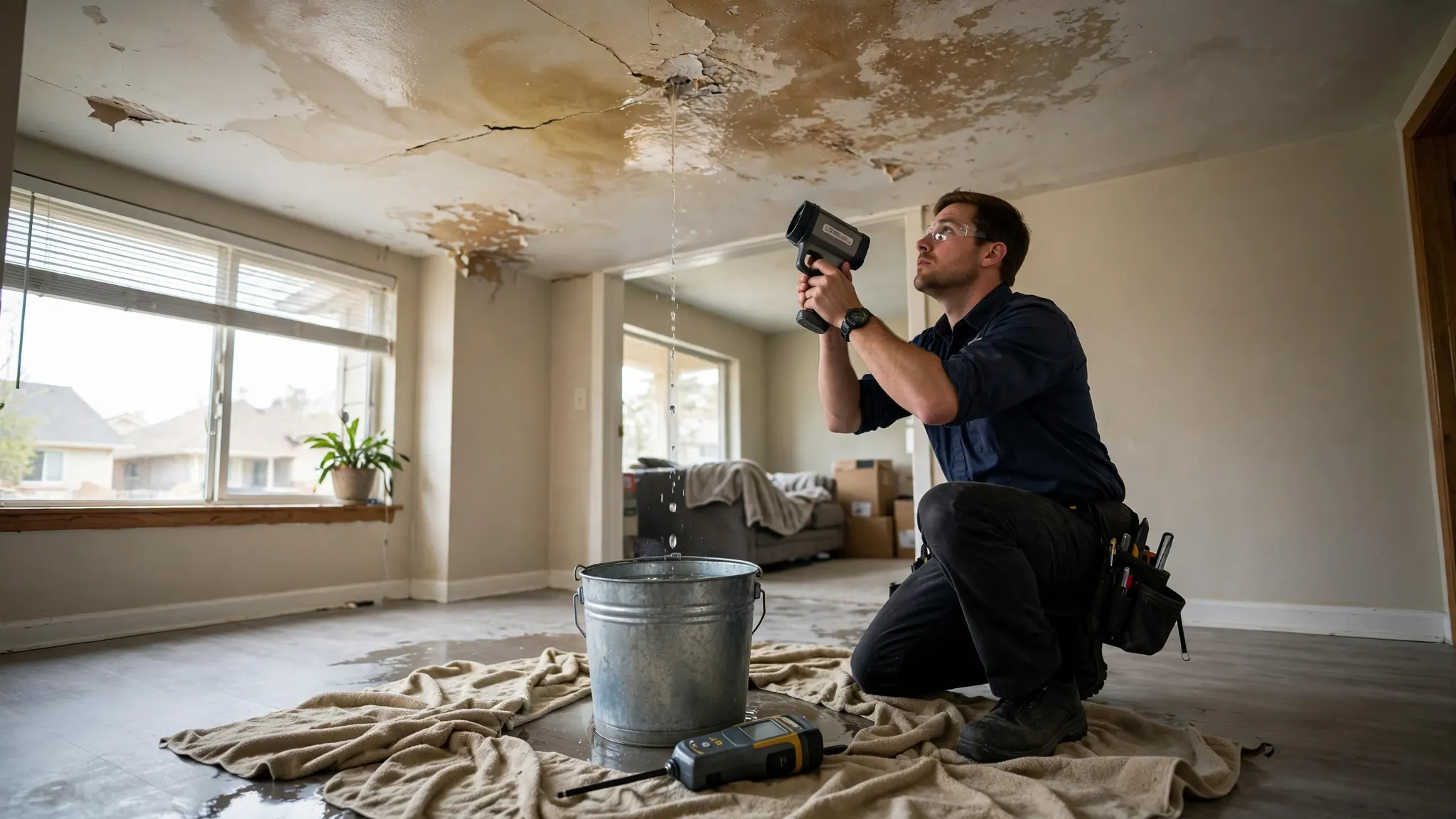
- What you're seeing and where. "Brown stain growing on the living room ceiling under the upstairs bathroom" beats "I think I have a leak." Location relative to fixtures, and whether it's spreading, matters most.
- When it started and how it's changed. Sudden versus gradual tells us whether we're hunting a burst or a weep. Anything that changed around the onset — freeze, remodel, new appliance — is gold.
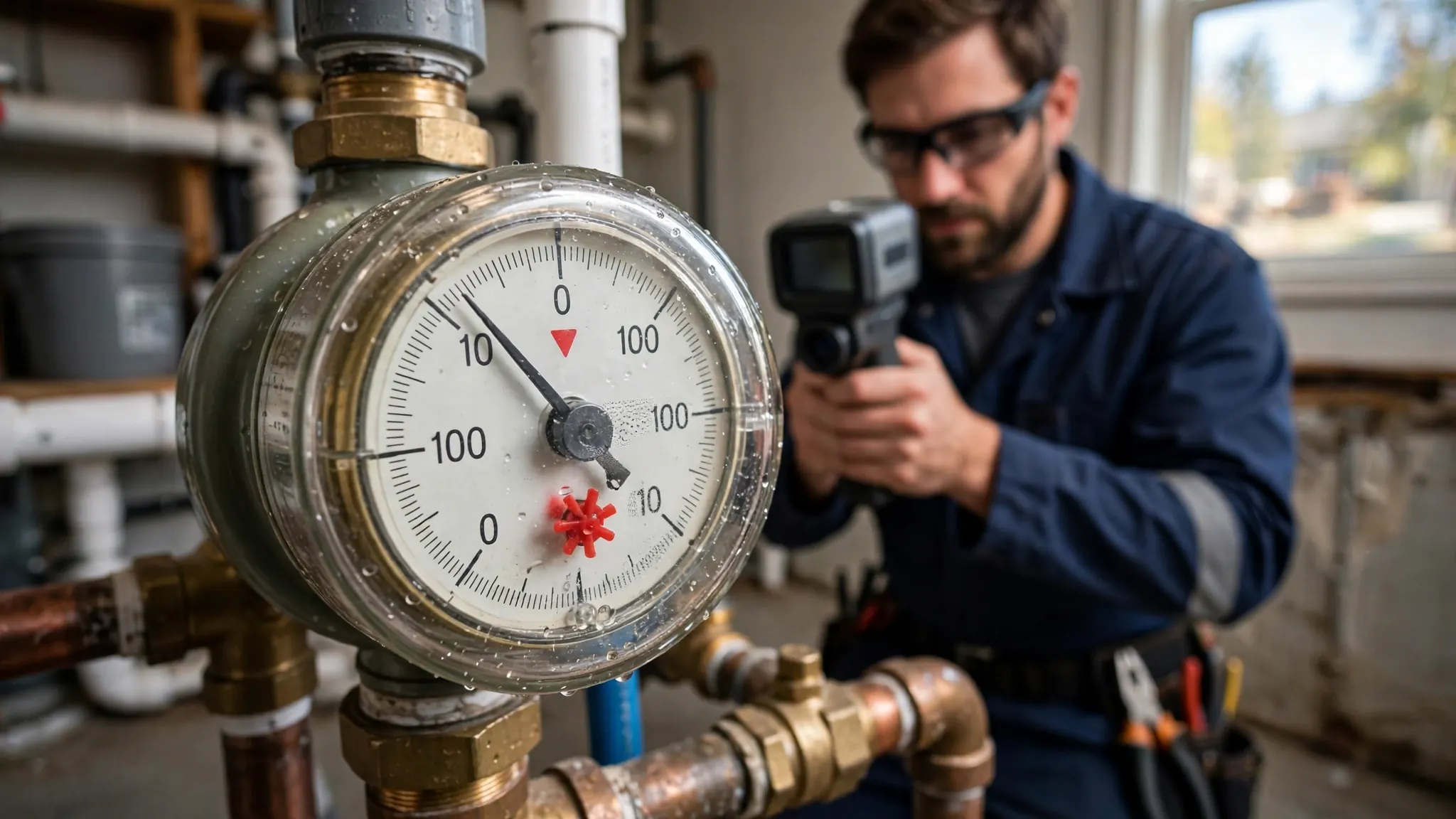
- Your water meter's behavior. If you've done the two-minute meter check from our meter reading guide — everything off, watch the low-flow indicator — tell us the result. A spinning meter versus a still one routes the job differently.
- The property basics. Single-family or multi-unit, slab or basement/crawlspace, approximate age of the home. Each changes which equipment we load.
- Access realities. Locked gates, aggressive dogs, tenant-occupied units, HOA gate codes — anything that could slow the technician. We'll plan around it if we know.
Photos help enormously. A phone picture of the stain, the meter, or the suspicious area, described over the call, lets the dispatcher match the right specialist and the right instruments to your case before anyone leaves the shop.
How Scheduling Works
Emergency calls — active water intrusion, burst lines, sewage concerns — go to the front of the queue with 30–45 minute arrival, 24/7. Our emergency leak detection line is the same number; just say it's urgent and describe what's happening.
Scheduled appointments work around your day. We'll offer windows based on the current route, confirm the address and a callback number, and quote the visit clearly before dispatch — you'll know what the appointment involves and what it costs before anyone rolls. The technician calls when en route, so you're not waiting on a vague four-hour window staring out the window.
If your situation changes between booking and arrival — the stain spreads, water appears where there was none, or conversely everything dries up and the meter stops — call back and tell us. We'd rather re-triage than arrive blind, and a problem that resolved itself still deserves a quick professional opinion about what happened.
The Preparation Checklist
A little preparation converts a good visit into a great one. Before the technician arrives:
- Clear access to the suspected area, the water heater, the main shutoff, and the meter box. Move boxes, unlock gates, clear the utility closet.
- Know your shutoff location — or be ready to learn it. The technician will show you, and it's the single most useful thing a homeowner can know.
- Secure pets in a separate room. Technicians carry sensitive equipment and work with open panels; a curious dog is a hazard to both.
- Don't run water unnecessarily before the visit. A quiet plumbing system gives cleaner acoustic readings.
- Gather paperwork if relevant: recent water bills for spike cases, prior plumber invoices, HOA or insurance correspondence. Context accelerates diagnosis.
- Plan to be present or have a decision-maker available by phone. We'll need someone who can authorize the scope of the survey.
No problem — we handle tenant-occupied and managed properties regularly. We'll need the occupant's contact details for access, your authorization as the decision-maker, and any gate or lockbox codes. The written report goes to you either way.
What Happens During The Visit
The appointment itself follows a consistent arc. It opens with a walkthrough: you show us the symptoms, we ask about history, and we map what you're seeing against the property's plumbing layout. Then comes systematic testing — acoustic listening, thermal scanning, pressure isolation, or meter analysis — selected for your specific case rather than applied as a fixed routine. Our water leak detection process is methodical by design: rule out, narrow down, confirm.
You'll get a verbal finding on site — where the leak is, what failed, and what the repair path looks like — while the evidence is fresh and you can ask questions standing next to it. The written report follows with thermal images, pressure readings, and the pinpointed location, which is what your plumber and your insurer will want. Most residential visits conclude within a single appointment; complex or multi-zone cases are the exception, and we'll tell you if yours looks like one.
After You Book
Once the appointment is set, the most useful thing you can do is nothing — don't run experimental "tests" like pouring water to see where it goes, don't open anything up, and don't hire a second company to race us. Conflicting activity muddies the diagnostic picture and wastes your money twice over.
Do keep an eye on the situation and note any changes, keep the area accessible, and keep our number handy in case something escalates. With 25 years in Broomfield detection, an average rating of 4.9 out of 5 from more than 250 customer reviews, and crews that do this work all day every day, the appointment you're booking is with people who have seen your exact problem before — probably this month. Call (720) 715-9734 or send the form, and we'll take it from there.
Not sure whether your situation counts as urgent? What to do in a leak emergency covers the first steps, and leak detection costs in 80038 explains what the visit includes.