A slab leak is a pressurized water line failing underneath your home's concrete foundation — and because you cannot see it, your only early warning is a cluster of subtle signs: a warm patch on the floor, a water bill climbing for no reason, the faint sound of running water when every fixture is off, damp carpet edges, or cracks appearing where none were before. Any one of these in an 80020 home deserves same-day professional attention, because a supply line under pressure does not leak a little and stop — it leaks constantly, eroding soil and feeding damage you cannot see. Call (720) 715-9734 and we will be there in 30–45 minutes, 24/7.
The 7 Signs, In Order Of How Often We See Them
1. A Warm Or Hot Spot On The Floor
The classic. A hot-water supply line leaking under the slab heats the concrete above it, and your bare feet find it before your eyes do. Walk the ground floor slowly — if one patch of tile, laminate, or carpet feels noticeably warmer than the surrounding floor, that is a red flag, not a quirk of the heating system. Our guide to warm spots on the floor explains how to tell the difference.
2. A Water Bill That Keeps Climbing
A slab leak runs 24 hours a day, and the meter records every gallon. If your usage has risen steadily with no change in habits — no new lawn watering, no houseguests — a hidden pressurized leak is the prime suspect. Our high-bill leak specialists see this pattern constantly: the bill is often the first hard evidence. The 80020 leak detection page walks through the other causes we rule out along the way.
3. The Sound Of Running Water With Everything Off
Turn off every fixture, stand quietly near the floor in a few rooms, and listen. A faint hissing or rushing sound under the slab means pressurized water is going somewhere it should not.
4. Damp Carpet, Warping Floors, Or Musty Odors Near The Floor
Water under pressure finds the path of least resistance upward — through cracks, along pipe penetrations, wicking into baseboards. Damp carpet edges with no spill to explain them, laminate planks cupping or buckling, or a musty smell concentrated at floor level all point downward, toward the slab.
5. Low Water Pressure
A significant leak bleeds off pressure before it reaches your fixtures. House-wide pressure loss with no obvious fixture cause can mean supply water is escaping under the foundation.
6. Cracks In Floors Or Walls That Weren't There Before
Eroding soil under the slab lets sections settle unevenly, and the slab telegraphs that movement upward as new cracks. New cracking combined with any sign above moves slab leak to the top of the list.
7. A Spinning Meter With No Water Running
The definitive home test. Shut off everything in the house, go to the meter, and watch the leak indicator. If it moves, water is leaving your system somewhere — and with no visible source, under the slab is where we look first. Our water meter service page covers this test in detail.
Any single sign can have an innocent explanation — but two or more together are rarely a coincidence. Warm floor plus rising bill, or running-water sound plus damp carpet, means call today, not next week.
Why 80020 Homes Are Susceptible
Slab leaks are not random. The 80020 housing stock includes many homes built in the decades when copper supply lines were run directly under slabs — lines that have now had thirty to fifty years of water chemistry working on them from the inside. Add Broomfield's expansive soils, which swell and shrink with moisture changes and stress every joint they touch, plus a freeze-thaw cycle that shifts the ground seasonally, and you have steady mechanical pressure on buried plumbing year after year.
Installation quality matters too — pipes kinked during the pour or laid against rough concrete without sleeving fail years earlier. That is why we find slab leaks in newer 80020 homes as well.
The 5-Minute Checks You Can Do Today
You do not need instruments to build a strong suspicion — just a quiet house and your attention. Run the meter test first: everything off, watch the indicator for two full minutes. Then do the barefoot walk across the ground floor, noting any warm patches. Then the listening tour: ear near the floor in the kitchen, bathrooms, and laundry room with the house silent. Finally, check your last three water bills for a trend rather than a single spike — slab leaks usually climb gradually as the opening enlarges.
Write down what you find — that short list lets the technician arrive already oriented.
What Professional Detection Looks Like
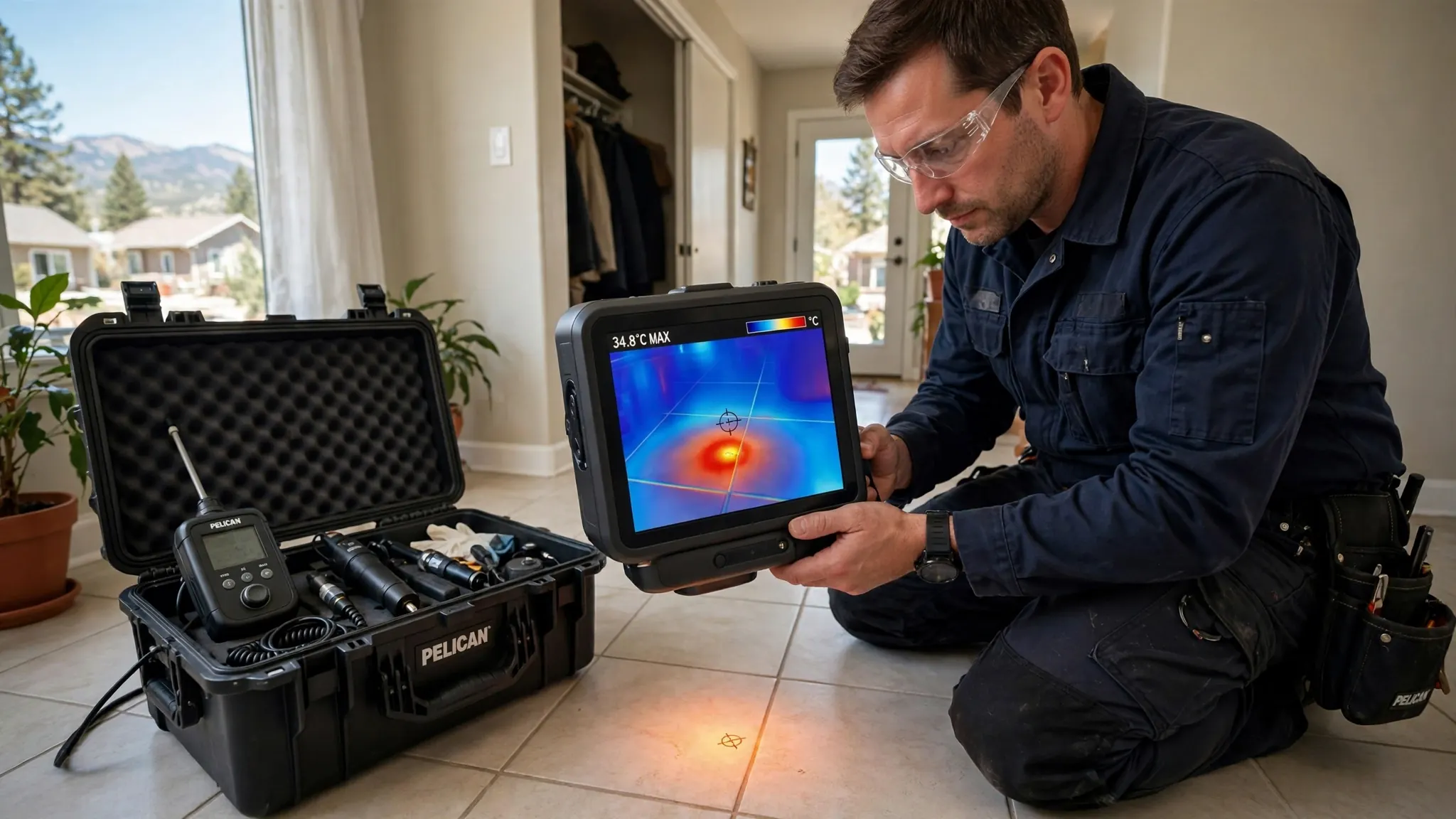
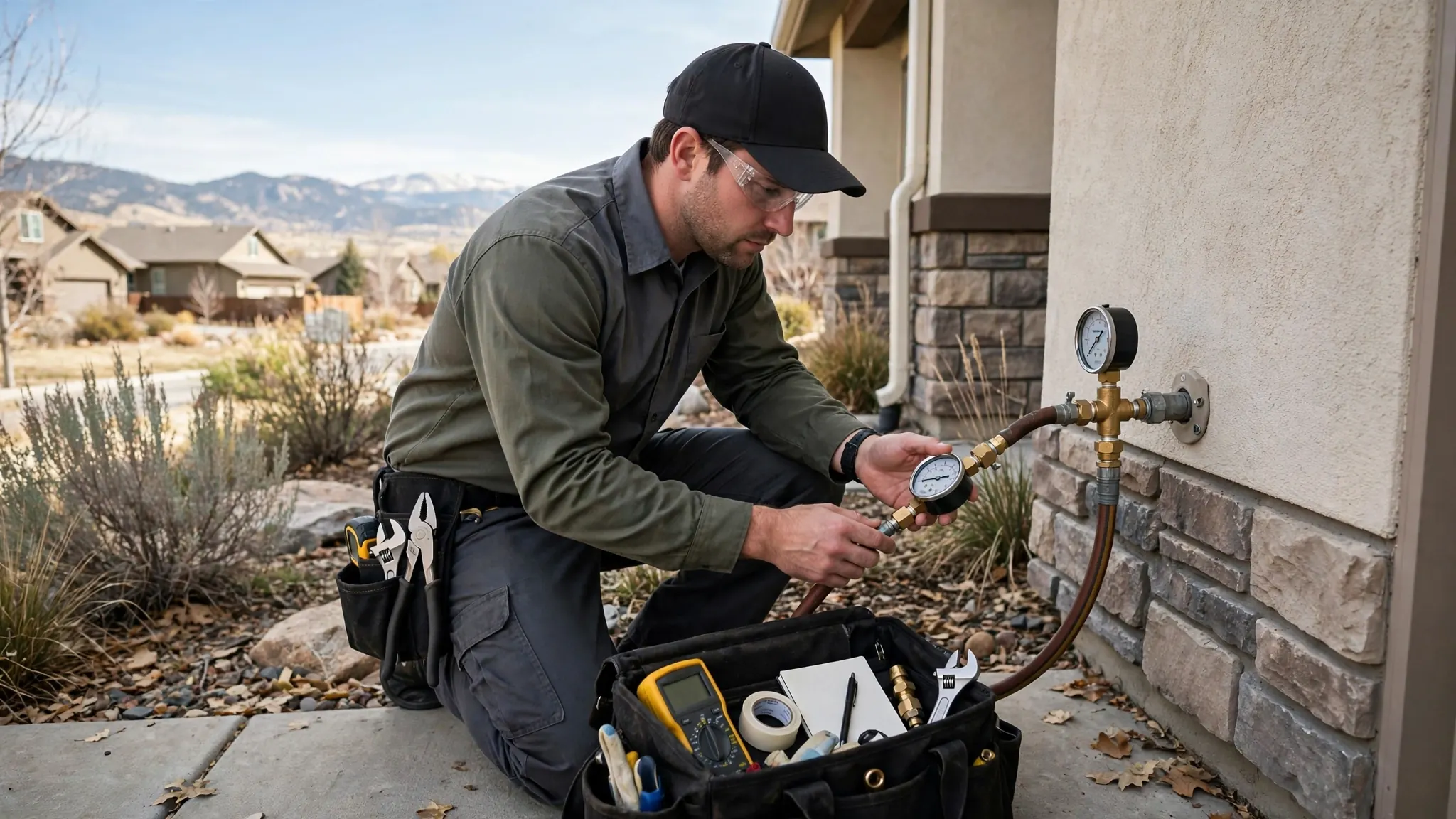
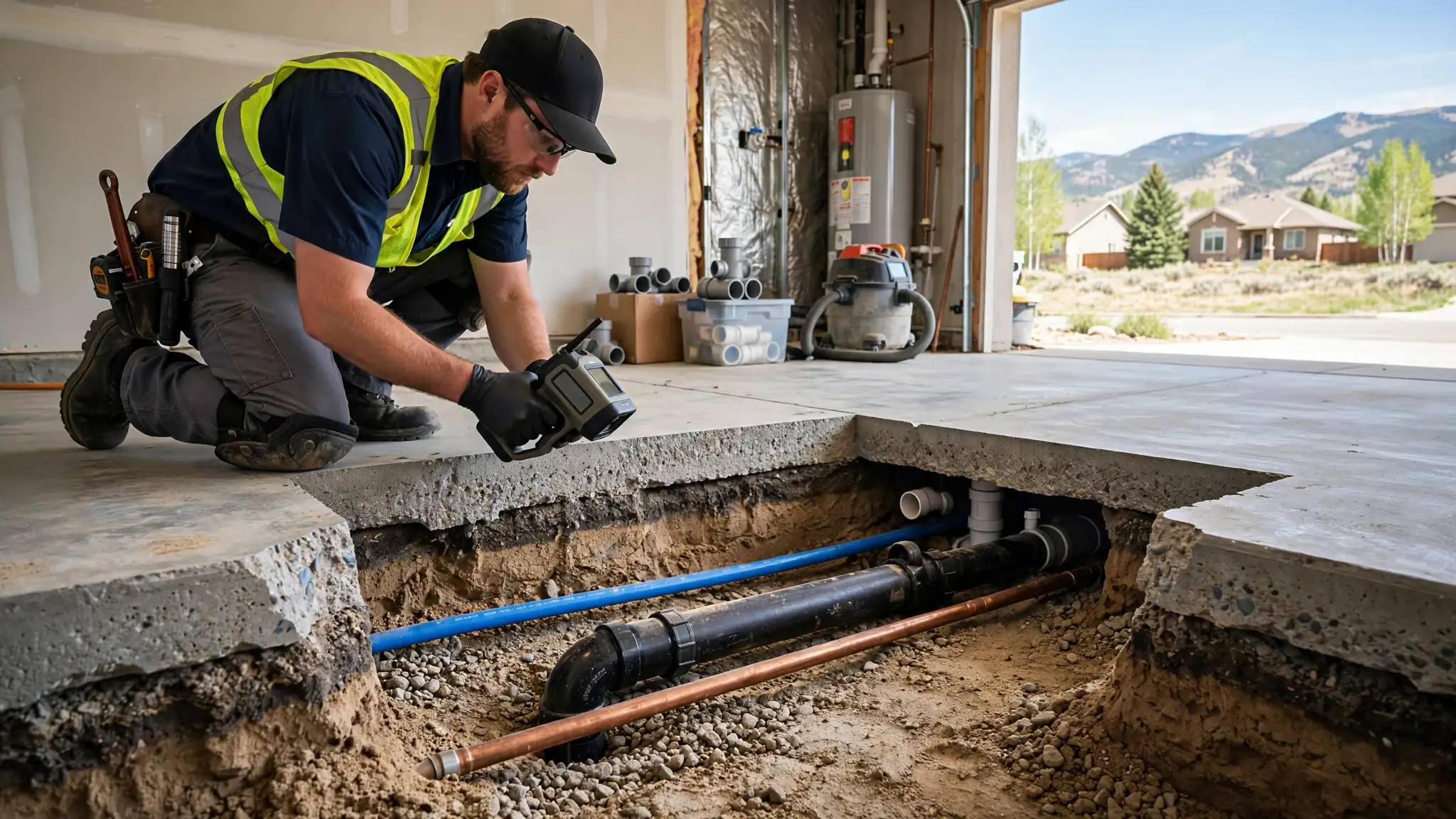
A proper slab leak diagnosis is methodical, and at no point does it involve breaking concrete to look around. We start with pressure testing to confirm which line — hot or cold — is losing pressure, which immediately halves the search area. Then acoustic ground microphones trace the sound of the escaping water through the slab, with the loudest point marking the source. Thermal imaging maps the heat signature for hot-side leaks and confirms the acoustic finding. The three methods cross-check each other, and the result is a pinpointed location, usually within a small area, delivered with a written report.
That precision is the whole value of the visit: the repair — spot repair, reroute, or epoxy lining — opens one small, correct section instead of exploratory trenches.
What Happens If You Wait
Nothing about a slab leak improves with time. The opening enlarges under constant pressure, so the water loss grows month over month — and so does the bill. Eroding soil undermines the slab's support, which is how you get from a plumbing problem to a foundation problem. Trapped moisture feeds mold in wall bases and under flooring, turning a pipe repair into a remediation project. We have seen 80020 jobs where a same-week call would have meant a single small opening, and a six-month wait meant new flooring through two rooms.
If you recognized even two of the signs above, treat today as the day. We answer 24/7, arrive in 30–45 minutes, and bring 25 years of slab leak diagnosis to your door. Call (720) 715-9734 — or email [email protected] with your symptoms and we will tell you honestly whether it sounds like a slab issue and what the visit involves.
Suspect a slab leak and wondering about next steps? leak detection costs in 80020 covers pricing factors, and emergency steps applies if water is actively spreading.