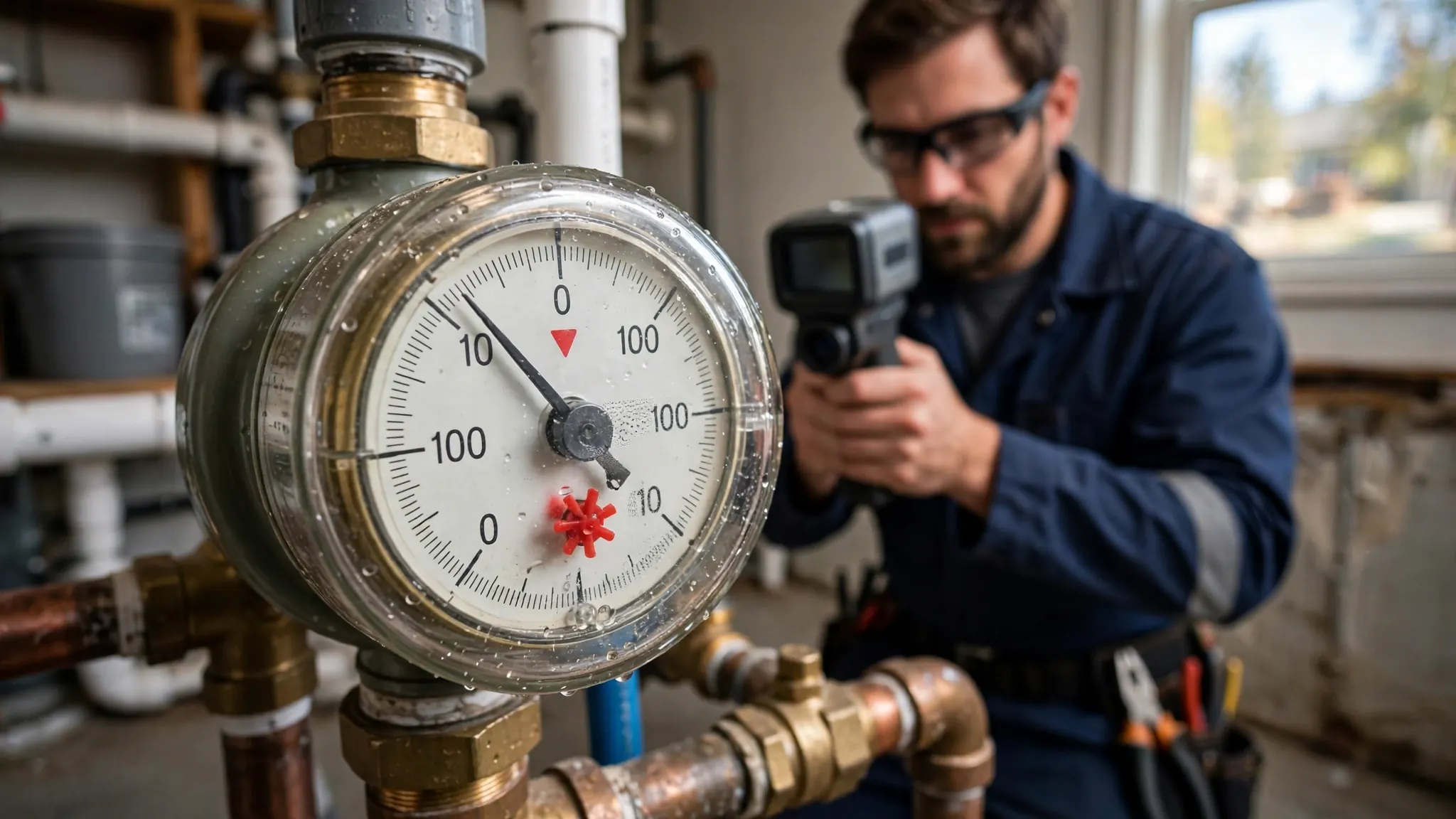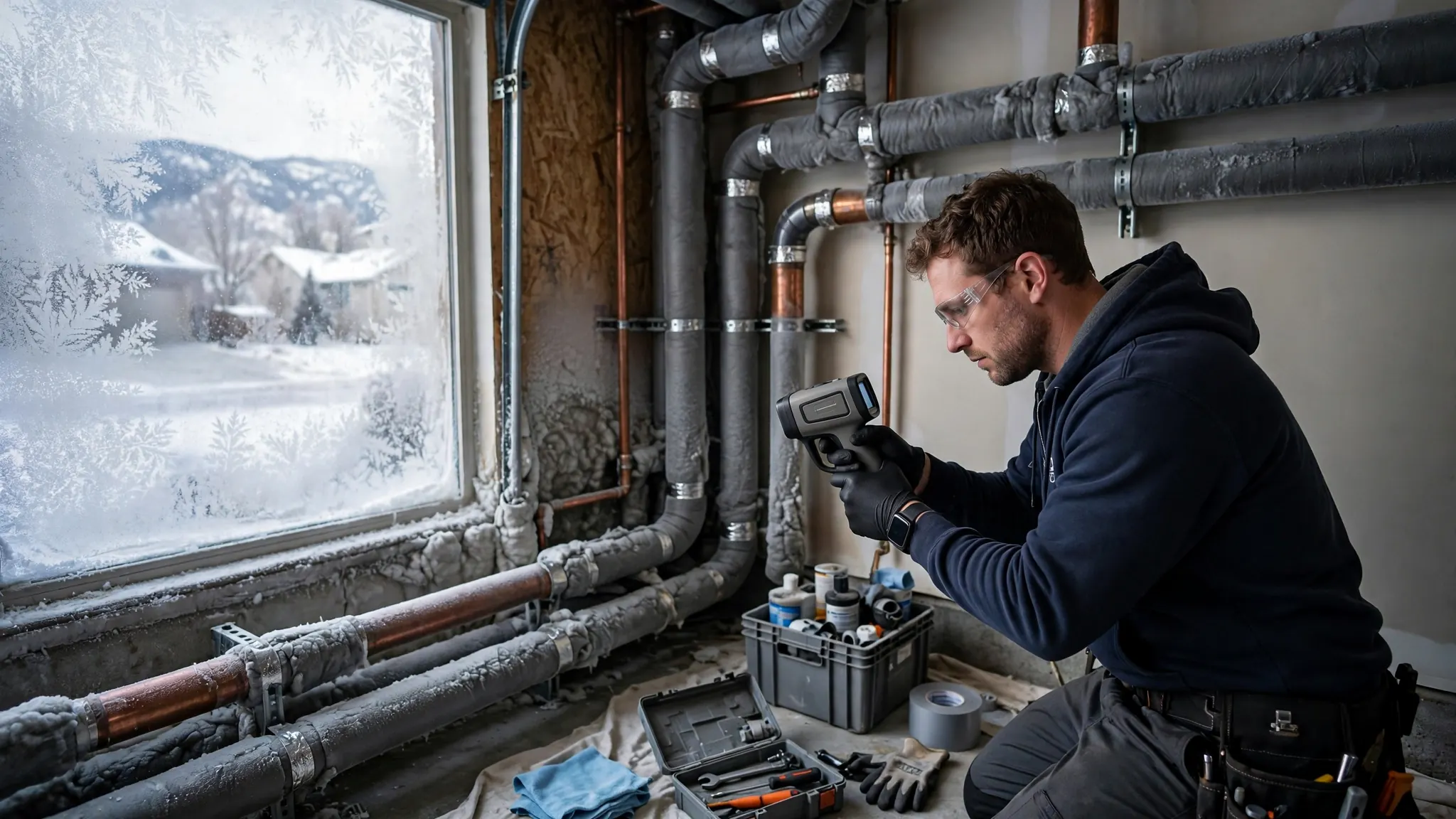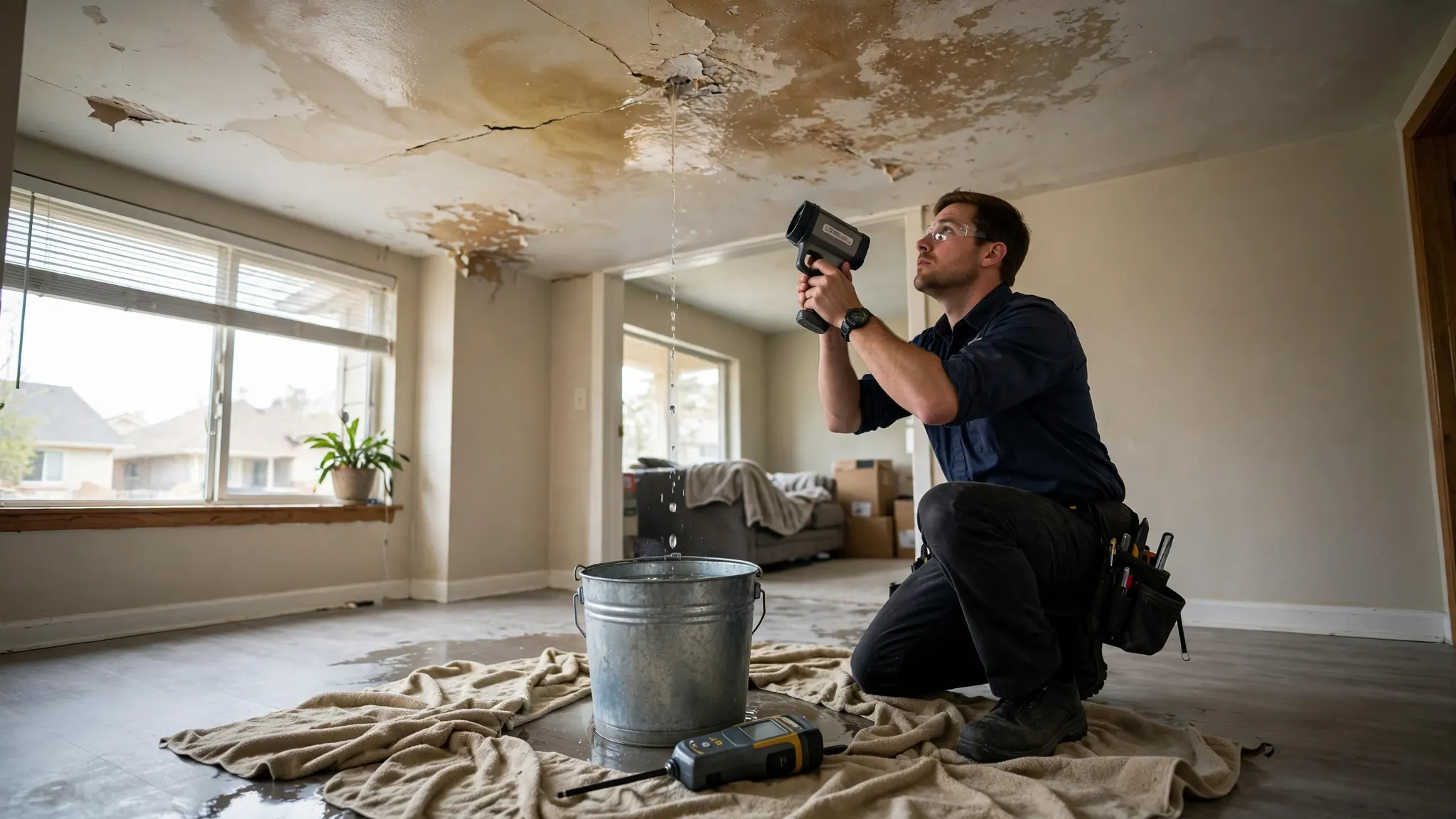
When water is pouring where it should not be in your 80020 home, you have two jobs: stop the flow and get a professional rolling. Turn off the main water valve if you can reach it safely, keep clear of anything electrical that is wet, and call (720) 715-9734 — we answer 24/7 and arrive in 30–45 minutes anywhere in Broomfield. While the technician is on the way, move valuables out of the water's path and start documenting with photos for your insurer. The guide below walks through each step in order, so you are not guessing while water spreads.
The First Five Minutes
Emergencies reward a short checklist, not improvisation. Do these in order.
1. Stop The Water
Find your main shut-off valve and turn it clockwise until it stops. If the leak is clearly coming from one fixture — a toilet supply line, a sink — you can close that fixture's individual valve instead and keep water on for the rest of the house. If you cannot find the valve or it is stuck, skip to step 3 and tell our dispatcher; we will talk you through alternatives on the phone.
2. Protect People First
Water and electricity do not mix. If water is near outlets, switches, appliances, or the breaker panel, stay out of the wet area and kill power to that zone from a dry location if you safely can. Get kids and pets clear. Everything else in this guide is secondary to nobody getting hurt.
3. Call (720) 715-9734
Our emergency leak detection line is answered 24/7 by people who do this for a living, not an answering service. Give your 80020 address, describe what you see, and say whether the main is off. The dispatcher will keep you on the line with shut-off and damage-control guidance while the technician heads your way — 30–45 minutes across Broomfield.
4. Move What Matters
Once the flow is stopped and help is rolling, move valuables, electronics, rugs, and important papers out of the affected area. Lift furniture onto blocks or foil if you have them. Every minute of standing water is what turns a repair into a restoration project.
Photograph the water, the damage, and the source area before you clean up. Insurers want to see the "during," not just the "after." A quick video walkthrough takes thirty seconds and can save you real money on a claim.
What Not To Do
Panic produces a predictable set of mistakes. Do not keep running water "to see where it is coming from" — you already know there is a leak, and every gallon adds to the damage. Do not start tearing open walls or ceilings yourself; you will likely open the wrong spot, and a professional with acoustic and thermal instruments will find the real source faster and cleaner. Do not use electrical equipment — shop vacs, fans, dehumidifiers — in standing water until the area is verified safe.
And do not assume a small drip can wait until morning. Small drips in the wrong place — inside a wall cavity, above a ceiling, under a slab — do their worst damage silently. If you are unsure whether it qualifies as an emergency, call anyway. We would rather talk you through a minor issue at midnight than meet you at noon after it became a major one.
While You Wait For The Technician
Thirty to forty-five minutes feels long when water is involved, but it is productive time. If the main is off and the area is safe, start mopping up standing water with towels — less standing water means less wicking into drywall and subfloor. Open cabinet doors under sinks so trapped moisture can air out. If a ceiling is bulging with water, place a bucket underneath and — only if you can do it safely from the side, not standing under it — poke a small relief hole with a screwdriver so the water drains in a controlled way instead of bringing the whole section down.
Write down what happened while it is fresh: when you first noticed it, what you were doing, which valve you closed, anything unusual in the days before (a new noise, a warm spot on the floor, a bill that jumped). Hand that timeline to the technician — it shortens the diagnosis. Our 80020 leak detection page covers the common causes we find behind these midnight calls, from burst supply lines to failed service lines.
What Happens When We Arrive
The emergency visit has a clear order of operations. First, we verify the water is stopped and the scene is safe. Then we trace: acoustic listening to follow the sound of the leak, thermal imaging to map where water has traveled behind surfaces, and pressure testing to confirm which line is compromised. All of it is non-invasive — no demolition during the diagnostic phase, even at 2 a.m.
Once the source is pinpointed, we stabilize. That often means isolating the damaged section so the rest of your home gets water back — because nobody wants to spend the night with the whole house shut off. You get a written finding: where the leak is, what failed, and what the repair requires. If the damage involves walls or ceilings, our guide on first steps for a ceiling leak explains what to expect next.
After The Emergency
With the leak found and the immediate danger handled, the next moves are administrative. Call your homeowners insurer promptly — most policies want early notice, and our written detection report is exactly the documentation adjusters ask for. Keep every receipt related to the incident, including the emergency visit itself. If water sat long enough to soak drywall, flooring, or insulation, ask about moisture mapping and drying; mold does not need much of a head start in a damp wall cavity.
Then do the one thing that prevents a repeat: learn from it. Find and label your main shut-off valve if you did not know where it was. Note which line failed and why — freeze damage, corrosion, a worn supply line — and ask the technician what to watch for. With 25 years serving Broomfield homes, we have seen every version of this night, and the households that fare best are the ones that turn one emergency into a plan. We are here 24/7 at (720) 715-9734 whenever you need us — and at [email protected] for anything that can wait until morning.
Once the water is stopped, slab leak warning signs helps you recognize hidden damage, and same-day service in 80020 explains how fast a standard visit can be scheduled.