Leak detection cost in 80020 comes down to a handful of straightforward factors: where the leak is suspected, how hard it is to reach, which instruments are needed to find it, and how long the diagnosis takes. A professional detection visit in Broomfield, CO covers a full non-invasive survey — acoustic listening, thermal imaging, and pressure testing as needed — with the leak pinpointed to a specific location and a written explanation of the findings. There are no fixed dollar figures here because every situation differs, but once you understand what drives the price, you can get a straight answer from any company before work begins. Call (720) 715-9734 for a free, no-pressure quote on your situation.
What A Detection Visit Includes
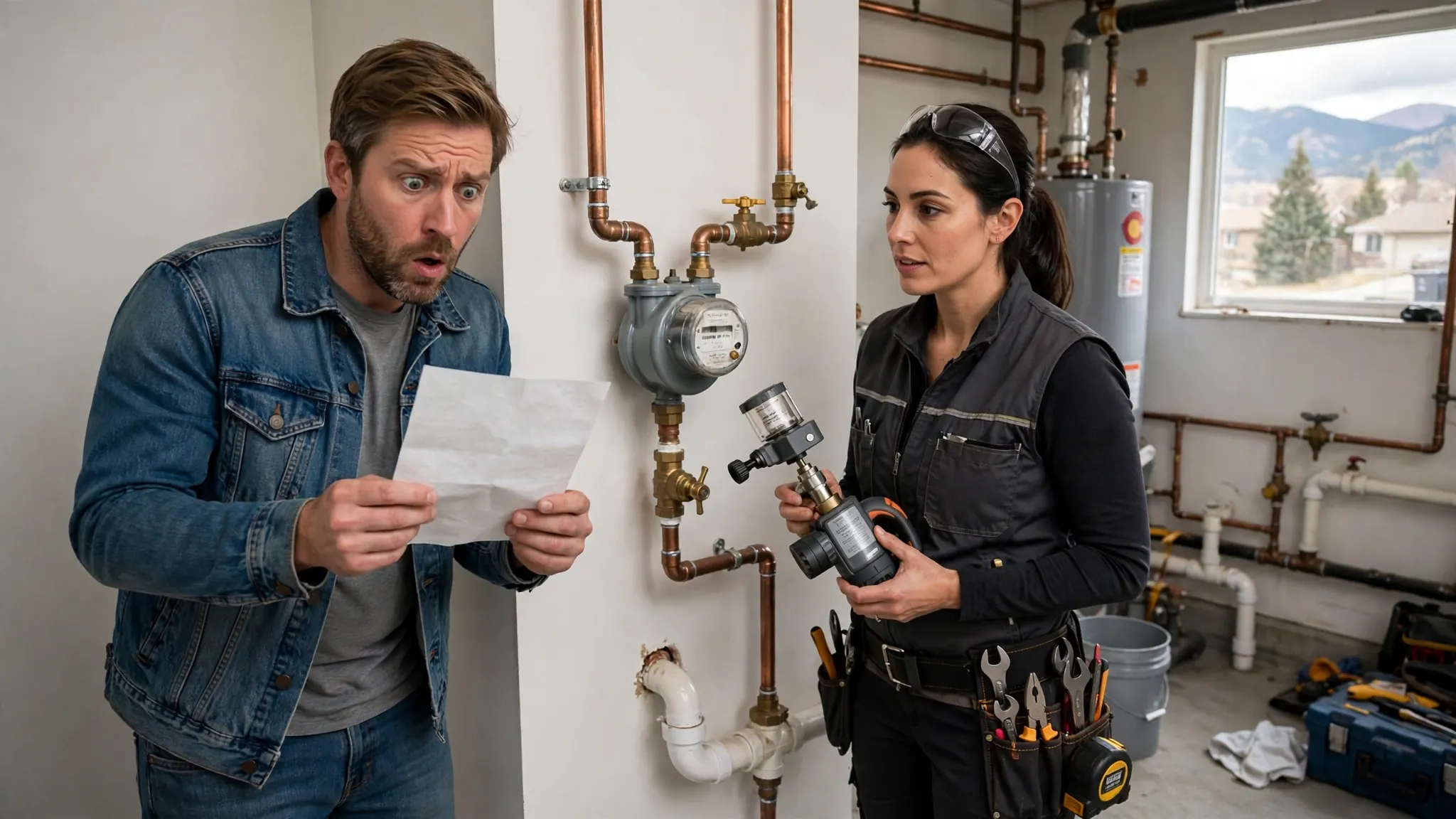
A real leak detection visit is a diagnostic appointment, not a repair job. When our technician arrives at your 80020 home, the work follows a deliberate sequence. First comes the interview: what are you seeing, hearing, or smelling? When did it start? Has your water bill changed? Those answers shape the whole survey. Next is the meter check — with all water off, a spinning meter confirms you are losing water somewhere in the system. From there, the search narrows using instruments rather than demolition.
Depending on the symptoms, that means acoustic listening at fixtures and walls, a thermal camera sweep to spot temperature anomalies behind surfaces, and pressure testing to isolate which section of pipe is losing pressure. You get a pinpointed location and a plain-language explanation — the written finding your insurer or repair plumber needs next.
The 5 Factors That Move The Price
Every quote reflects the same basic realities — if one seems wildly out of line, ask which factor the company is counting.
1. Where The Leak Is Suspected
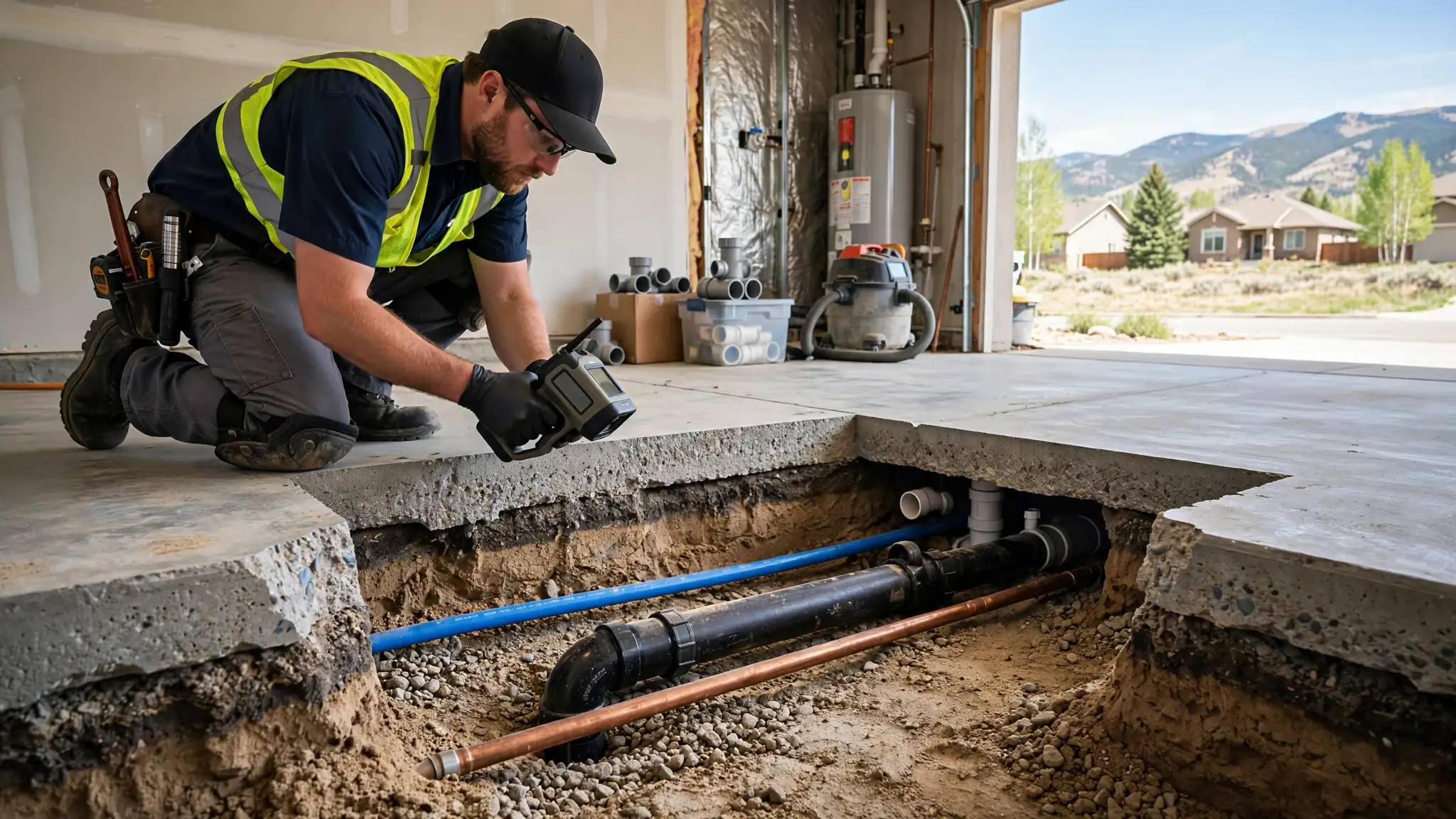
Location is the single biggest driver. A leak behind a bathroom wall with a visible stain gives the technician a head start — the search area is small and the instruments confirm what the eyes already suspect. A leak under the concrete slab, by contrast, hides with no surface clues at all, and the diagnosis takes longer. Suspected slab leaks and buried service lines sit at the more involved end; visible fixture and wall leaks sit at the simpler end.
2. Accessibility
How easy is it to get listening equipment to the pipes? Finished basements, tight crawlspaces, and long pipe runs under landscaping all add time. None of this requires demolition — it just means a more methodical survey.
3. Which Methods Are Needed
A straightforward case might need only acoustic listening and a meter test. A stubborn one can require thermal scanning, pressure isolation of multiple zones, and tracer equipment for buried lines. More methods means more technician time on site, and the price reflects that.
4. Time On Site
Most residential detection visits resolve within a focused appointment. Complicated properties — large homes, multiple suspected areas, or leaks that only appear intermittently — take longer. A company that charges fairly ties the price to the work, not to a mystery flat fee.
Two quotes can look different for legitimate reasons — one includes a full written report and a follow-up explanation, the other is a quick listen-and-point. Ask what each visit actually includes before deciding which is the better value.
Situations That Cost More To Diagnose
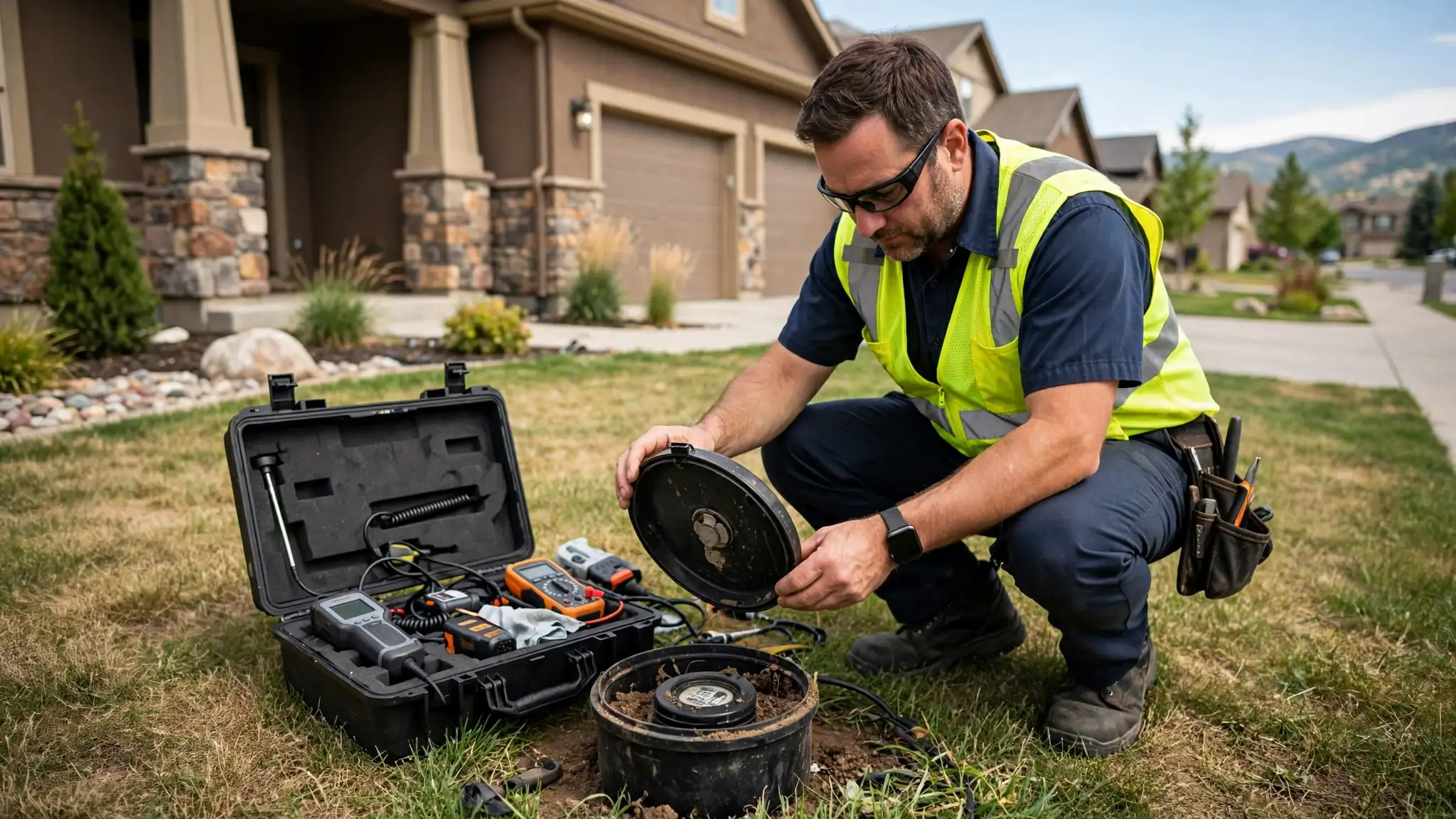
Some 80020 homes present genuinely harder diagnostic puzzles, and an honest company will tell you so upfront. Buried water service lines between the meter and the house require tracing equipment and a survey across the yard. Slab leaks demand systematic acoustic and thermal work across the whole floor. Intermittent leaks — the kind that only show up when a certain fixture runs or the irrigation is on — may need the technician to reproduce the conditions before testing.
If you are not sure which situation you are in, start with the free checks: our guide to reading your water meter shows how to confirm you actually have a leak before calling anyone. And if your bill is what tipped you off, our 80020 leak detection page walks through the common causes behind a sudden spike.
How To Avoid Paying Twice
The most expensive leak detection is the one you pay for twice — usually because the first visit never actually pinpointed anything. A few habits protect you. First, do the simple checks before booking: meter test, toilet dye test, a walk around the irrigation zones. Second, hire a specialist whose whole job is finding leaks, not a generalist who will "take a look" and then start cutting. Third, insist on a pinpointed location in writing — "somewhere in the east wall" is not a diagnosis, and a repair plumber cannot work from it without opening half the room.
Finally, be skeptical of the too-good number. Detection that is priced far below every other quote usually means one of two things: a rushed visit that misses the leak, or a low entry price that grows once the technician is in your home. A fair price for thorough, documented, non-invasive detection is the cheapest option in the end, because it is the one you only pay once.
Getting A Straight Answer Before You Book
You do not need to become a plumbing expert to get a fair deal — you just need to ask the right questions. What does the visit include? Which methods will you use for my symptoms? Will I get a written report? What happens if you cannot find the leak? How is the price affected if the job takes longer than expected? A company that answers these directly, in plain language.
We serve the entire 80020 ZIP — and all of Broomfield — 24/7, arriving in 30–45 minutes for urgent calls. With 25 years in the trade, we have diagnosed just about every kind of hidden leak this area produces, and we will tell you honestly what your visit involves before we dispatch. Call (720) 715-9734 for a free quote, or reach us any time at [email protected].
For a step-by-step on getting numbers in writing, see how to read a leak detection quote, and choosing the best company in 80020 shows what to compare beyond price.