Nobody can responsibly quote commercial leak detection from a price list, because no two commercial buildings present the same job: a 2,000-square-foot retail unit and a 60,000-square-foot multi-tenant building differ by an order of magnitude in pipe to survey, zones to isolate, and coordination to arrange. What a good provider can do — and what this guide does — is explain exactly which factors move the number, so you can scope your building accurately and budget with confidence. Note: 80038 is a PO-box-only postal zone, so commercial coverage here means the greater Broomfield area served by our local dispatch. Our leak detection service for the 80038 area handles commercial properties across that coverage, and our commercial leak detection team scopes every building individually before quoting.
What Makes Commercial Pricing Different
Residential detection is largely a one-technician, one-visit affair with a predictable shape. Commercial work introduces variables that residential jobs never encounter: multiple plumbing zones that must be isolated and tested independently, long pipe runs where acoustic correlators replace handheld listening, building systems — boilers, lift pumps, commercial water heaters, irrigation for grounds — that each need their own assessment, and the overriding constraint that the business keeps running while the survey happens.
That last point shapes both method and cost. A residential technician works in a quiet house; a commercial technician works around operating hours, ambient noise, and occupied spaces. Surveys are frequently scheduled during quiet periods — early mornings, nights, weekends — which is more expensive in labor terms than a midday residential visit but dramatically cheaper than shutting down revenue-generating space. The quote reflects this operational choreography, not just the instruments.
Scale also changes the diagnostic strategy. Where a home gets a whole-system survey in one pass, a large building gets zone-by-zone testing: divide the plumbing into sections, pressure-test each independently, and concentrate the acoustic and thermal work on the zones that fail. It's methodical, it's efficient at scale, and it's a different skill set than residential detection — which is why commercial experience specifically is worth asking about.
Building-Size Factors That Move The Number
When we scope a commercial building, these are the factors that determine the shape — and the price — of the survey:
- Total pipe to survey. Square footage is a proxy, but pipe footage is the real metric: a sprawling single-story retail building can hold more pipe than a compact three-story office. Long runs mean more listening points and more correlator setups.
- Number of plumbing zones. Each independently isolated zone is a separate pressure test and a separate analysis. Buildings with clear zone valves survey faster than ones where isolation requires hunting.
- Stories and vertical runs. Multi-story buildings add vertical stacks, more fixture groups per floor, and the particular challenge of leaks that travel downward — the visible damage is often floors below the source.
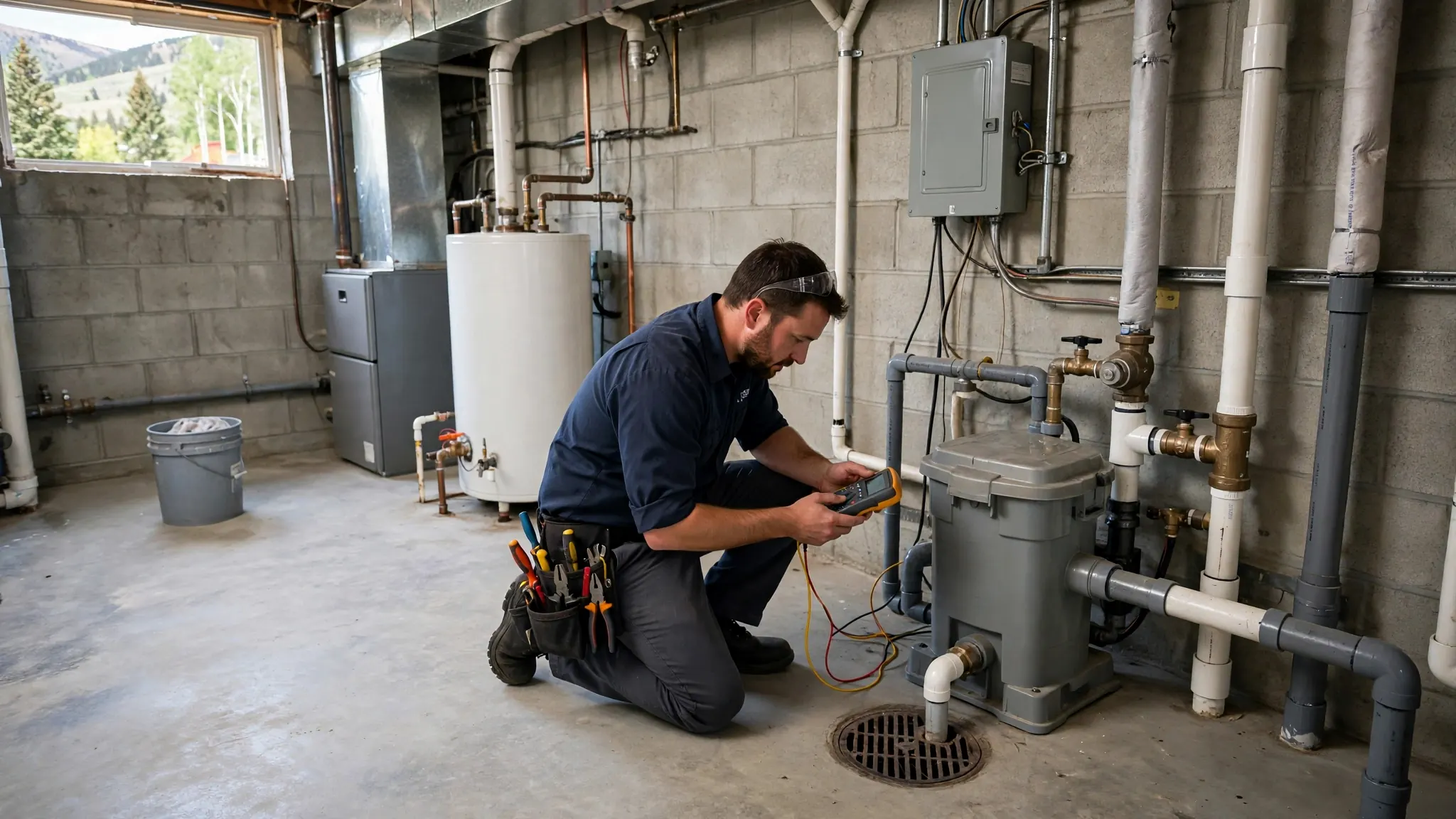
- Specialized systems. Commercial kitchens, laundry facilities, medical or lab plumbing, and floor drains with lift pumps each add assessment time. Our companion guide to commercial floor drain backups covers the drain side of that infrastructure.
- Access and as-builts. A building with current plumbing drawings and labeled shutoffs surveys far faster than one where the technician is mapping the system from scratch. If your as-builts are missing, say so — we'll factor the discovery time in honestly.
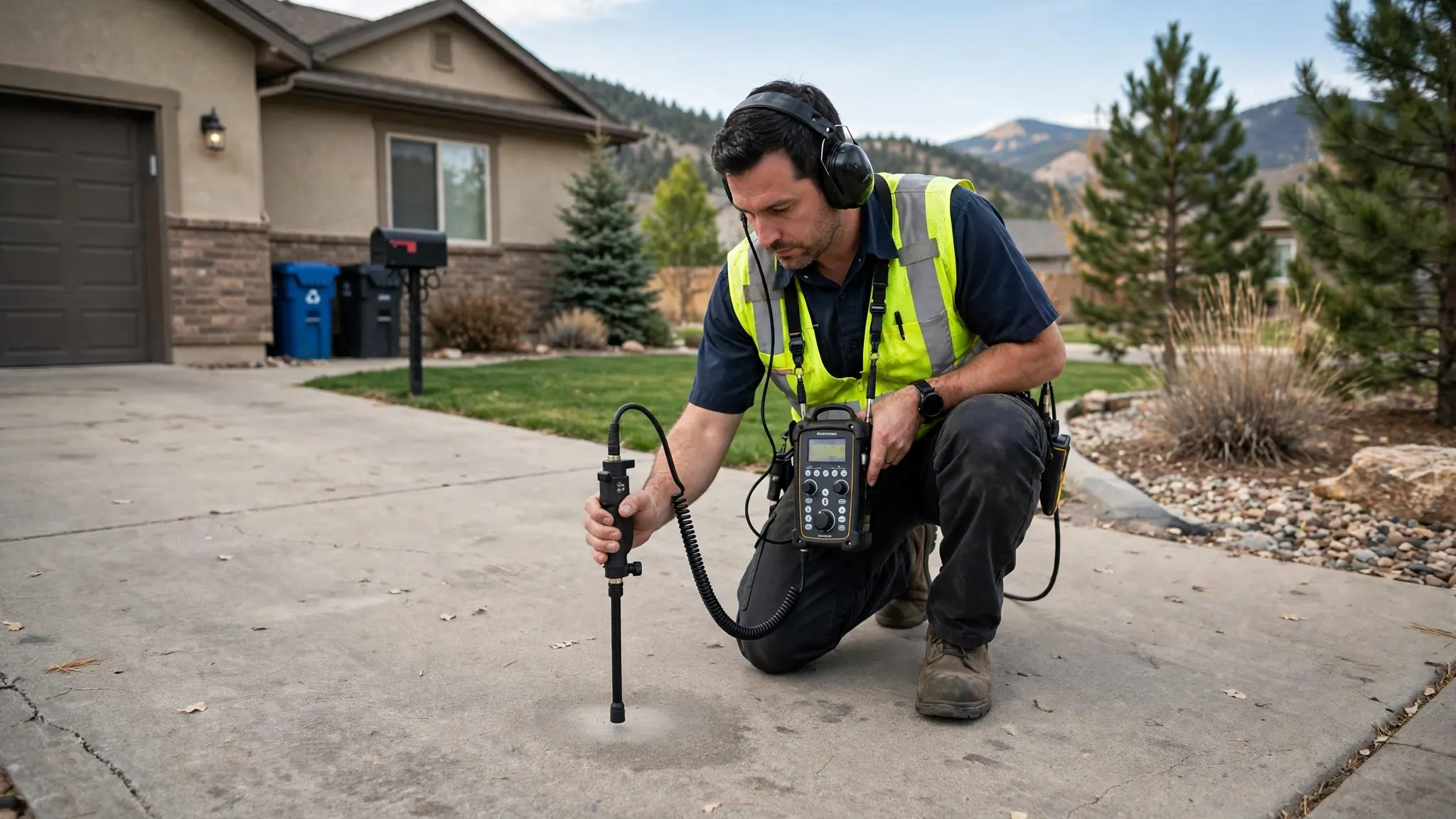
- Slab and foundation scope. Large commercial slabs mean large-area acoustic and thermal surveys. Ground microphones and correlators scale to the task, but the square footage under survey is a direct cost driver.
Minimizing Disruption: Scheduling Around Operations
The number-one concern we hear from managers isn't price — it's disruption. A well-planned commercial survey is nearly invisible to occupants, and the planning is part of the service. Quiet-hours scheduling puts the noisiest diagnostic work — acoustic surveys that need a silent building — into nights, early mornings, or weekends, when ambient noise is lowest and the readings are cleanest. That scheduling also happens to produce better data: a silent building is an honest building.
Zone isolation keeps the rest of the building fully operational while one section is tested. Tenants in untested zones never lose water, never hear equipment, and often never know a survey happened. For buildings that can't tolerate any water interruption during business hours, phased surveys spread the work across multiple quiet windows — slightly more total time, zero operational impact.
Communication planning matters as much as technical planning. We coordinate with your designated contact on timing, access, and tenant notification, and we sequence the work so critical areas — kitchens during service, retail during peak hours, medical spaces always — are never touched at the wrong moment. Tell us your constraints during scoping; the survey plan is built around them, not despite them.
Commercial scoping begins with a discussion of your building, your symptoms, and your constraints — not a quote pulled from thin air. Call (720) 715-9734 and we'll walk through what your survey would actually involve.
Documentation Property Managers Actually Need
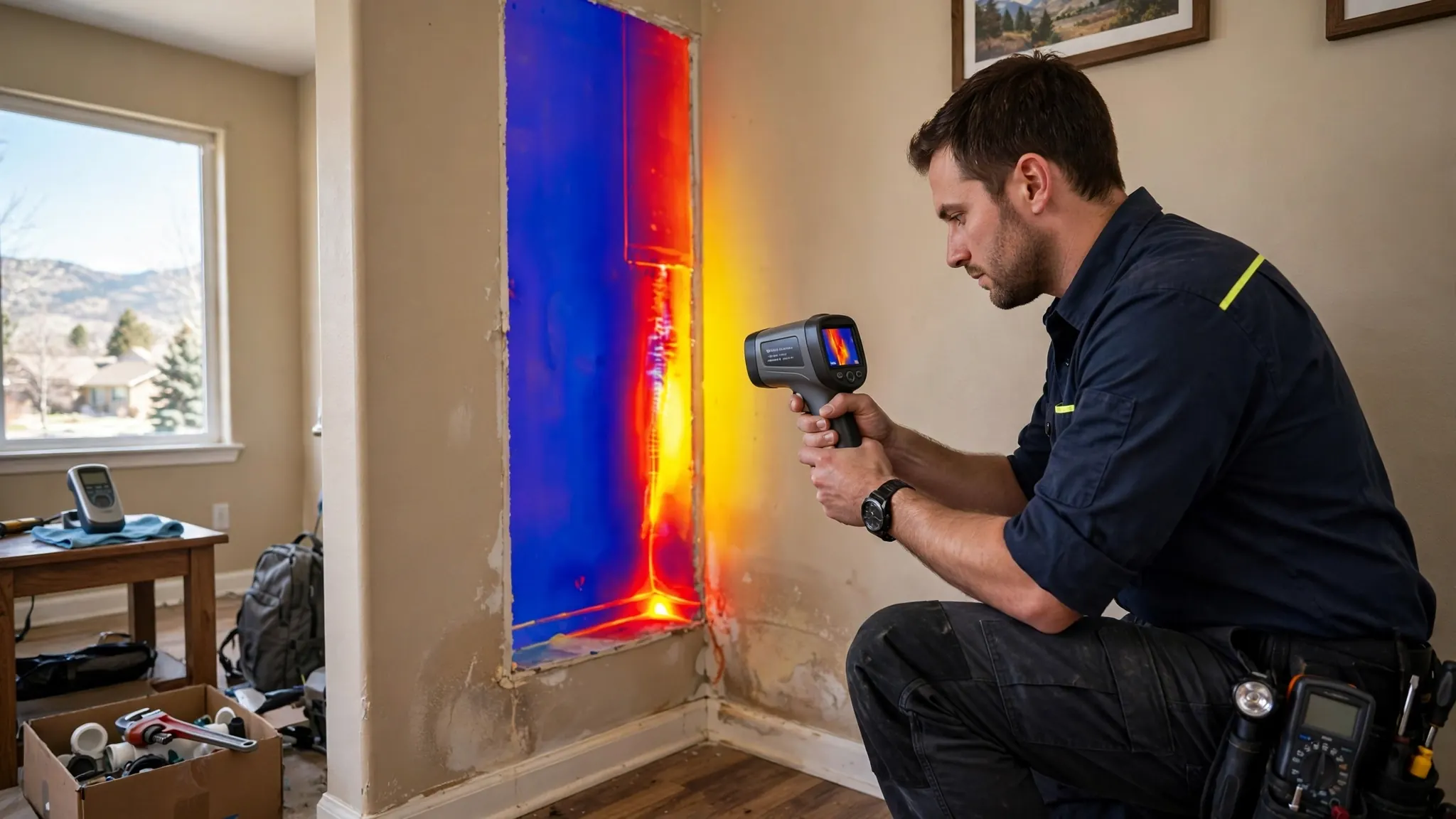
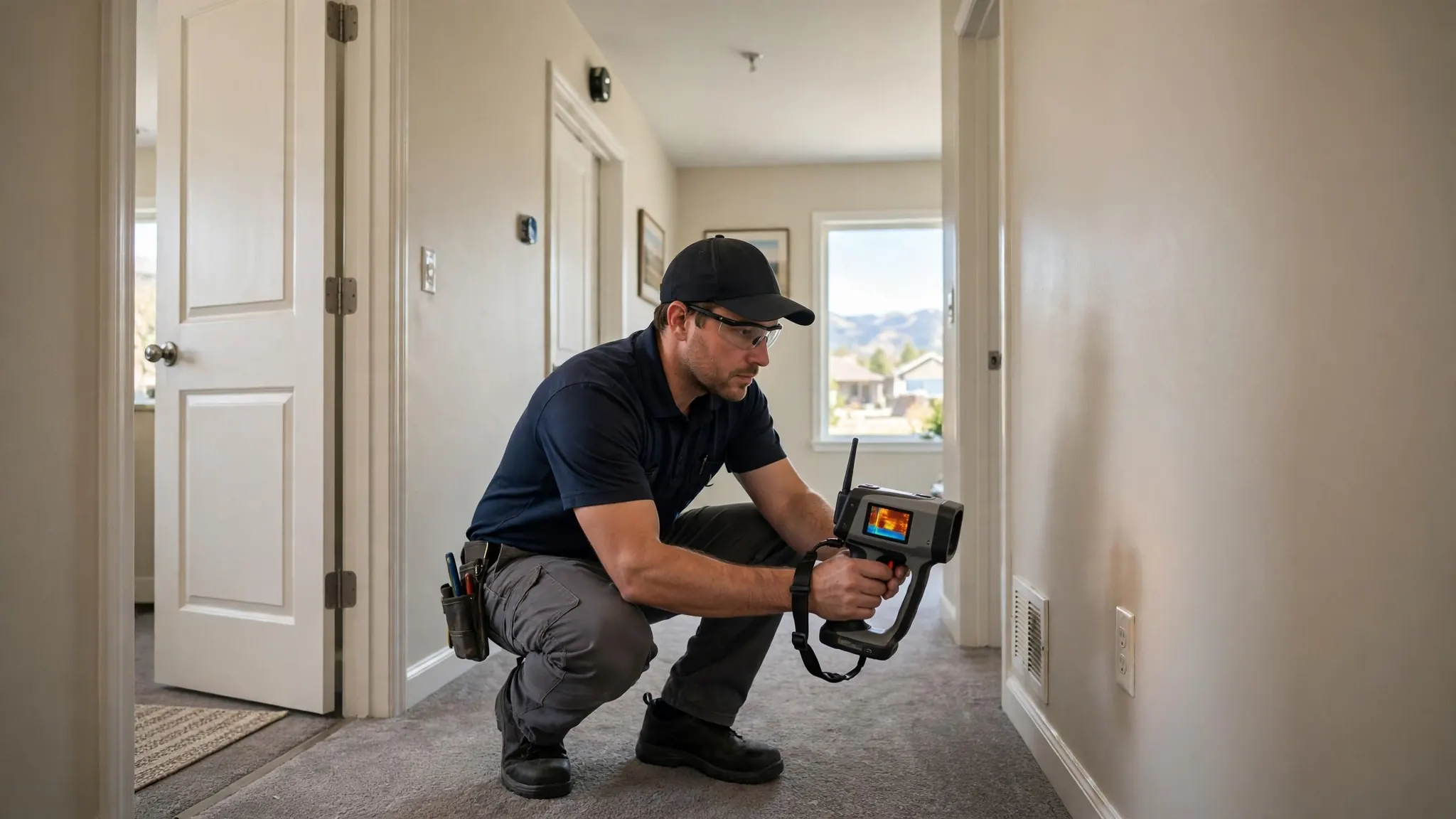
Commercial detection produces paperwork that serves audiences beyond the repair crew, and a professional survey is designed with those audiences in mind. The standard deliverable — our leak detection report format — includes pinpointed locations, thermal images, pressure test readings, and a plain-language description of findings. For a property manager, that package does four jobs at once.
First, it directs the repair: the contractor gets an exact location instead of a zone to explore, which keeps bids tight and timelines short. Second, it supports insurance claims with the kind of evidence adjusters accept — instrument readings and images, not opinions. Third, it documents the building's condition for ownership, lenders, or buyers; a clean survey with full documentation is an asset record. Fourth, it settles responsibility questions — landlord versus tenant, common area versus unit — with facts instead of arguments.
If your situation involves emergency commercial response, the same documentation standard applies under time pressure: even a 2 a.m. visit produces the images and readings your insurer will ask for on Monday morning.
The Planning Checklist For Managers
Before the survey date, a short preparation list makes the visit faster and cheaper:
- Assemble building documents: as-built plumbing drawings if they exist, prior leak and repair history, recent water bills showing the anomaly, and any existing inspection reports.
- Identify your decision-maker and make sure they're reachable during the survey window — scope questions arise, and waiting on authorization burns scheduled time.
- Map shutoff locations or be ready to walk them with the technician. Labeled valves save real time; unlabeled ones get labeled during the survey.
- Arrange access to mechanical rooms, tenant spaces in the survey zone, roof access if rain leaders are suspects, and any locked utility areas.
- Brief tenants on timing and what to expect — which is usually nothing, since zone isolation keeps their water on. A one-line notice prevents a dozen worried calls.
- Flag operational constraints: hours that are absolutely off-limits, noise-sensitive tenants, health-code considerations for food service, and any areas requiring escort.
Getting An Accurate Quote For Your Building
An accurate commercial quote comes from an accurate scope, and an accurate scope comes from a real conversation about your building. When you call, expect questions about square footage, stories, number of units or tenants, the symptoms you're seeing, your water bill history, and your scheduling constraints. The more of the checklist above you can answer, the tighter the quote — vague inputs produce padded quotes, because honest providers price the uncertainty in.
Be wary of anyone who quotes your building sight-unseen from square footage alone, or who bundles detection with repair work you haven't asked for. Detection is a diagnostic service with its own clear price; the repair quote comes after, informed by the pinpoint. And if a provider can't explain how they'll schedule around your operations, they haven't thought about the part of commercial work that matters most to you.
Our commercial crews bring 25 years of detection practice to Broomfield buildings, hold an average 4.9-out-of-5 rating across more than 250 customer reviews, and answer 24/7 for commercial emergencies with 30–45 minute arrival. For unexplained usage spikes in commercial accounts — often the first sign of a hidden building leak — the meter analysis that starts every investigation is already part of the survey. Call (720) 715-9734 to scope your building properly.