The best leak detection company in 80020 is the one that finds your leak the first time, without tearing your house apart to do it. That comes down to four things you can verify before booking: specialized instruments and methods, deep local experience, a genuine 24/7 response capability, and a review record with real volume behind it. This guide gives you the exact questions to ask and the red flags that tell you to keep dialing. When you are ready, call (720) 715-9734 — we will answer every question on this list straight, because we built our business to pass it.
Specialist Vs. Generalist: Know Which You Need
Most plumbing companies will happily take your leak call. That does not make them leak detection companies. A general plumber's strength is repair — cutting, replacing, soldering. A detection specialist's strength is diagnosis — listening, scanning, pressure-testing, and pinpointing the source through intact surfaces. When the leak is visible and obvious, call the plumber. When it is hidden — a stain with no clear origin, a bill that jumped, the sound of running water with everything off — the specialist saves you money by making the repair surgical.
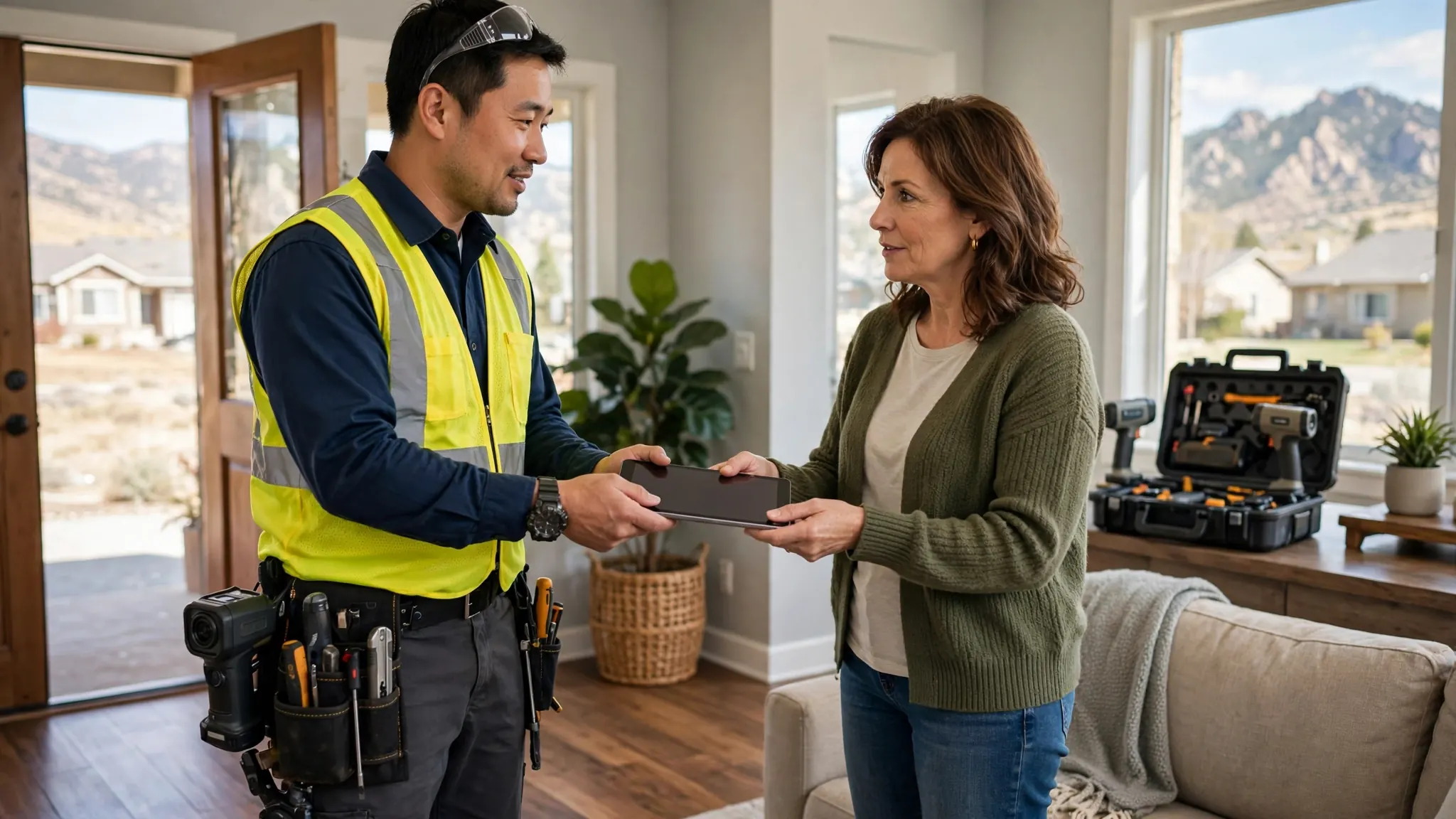
The practical test is simple: ask what the visit produces. A specialist's answer is a pinpointed location and a written report. A generalist's answer is often "we'll open it up and see." Our leak detection service is built around the specialist model — 25 years of diagnosis-first work across Broomfield — and our 80020 page shows how that plays out for the leak types this ZIP code sees most.
The Methods Test
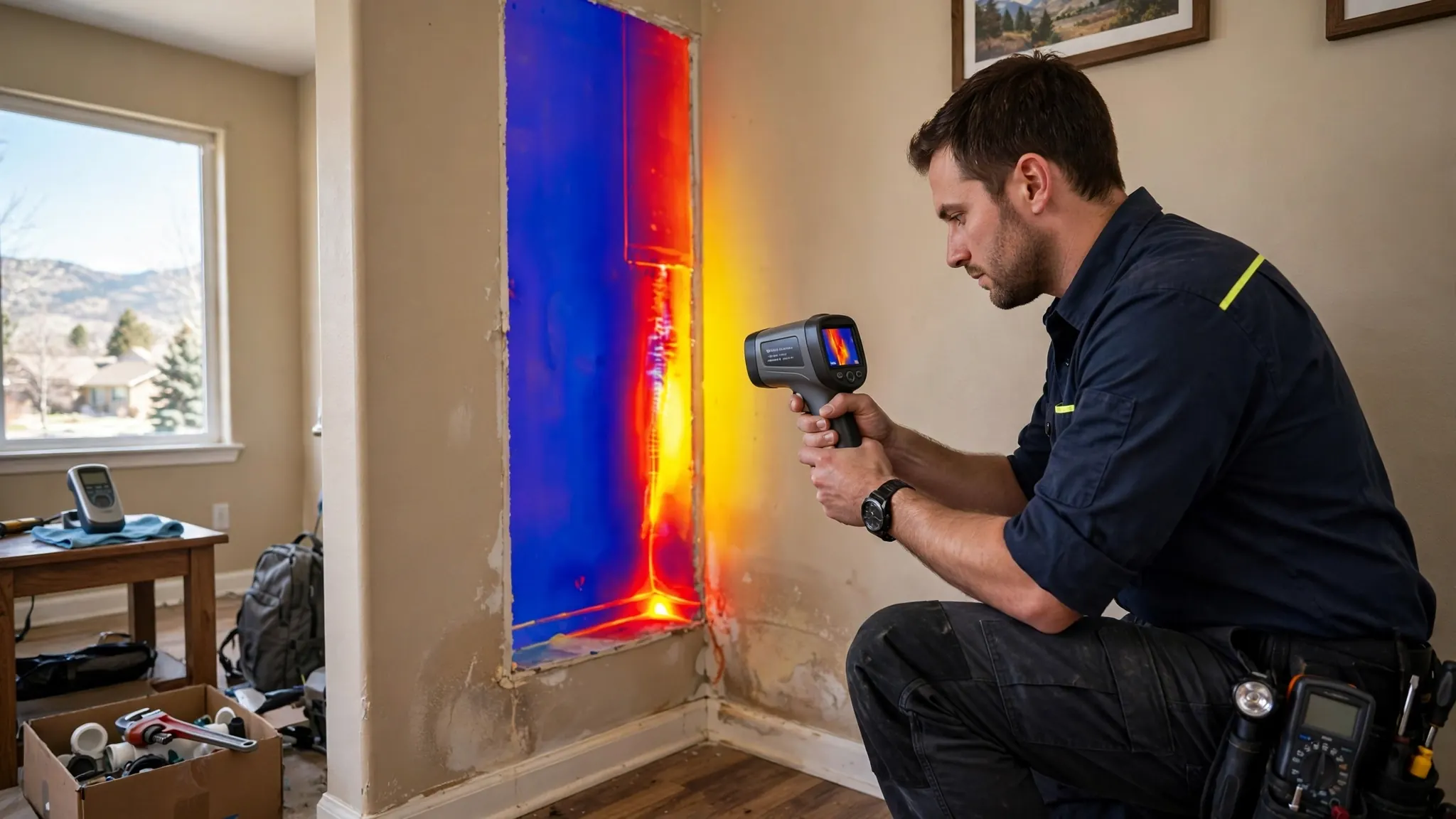
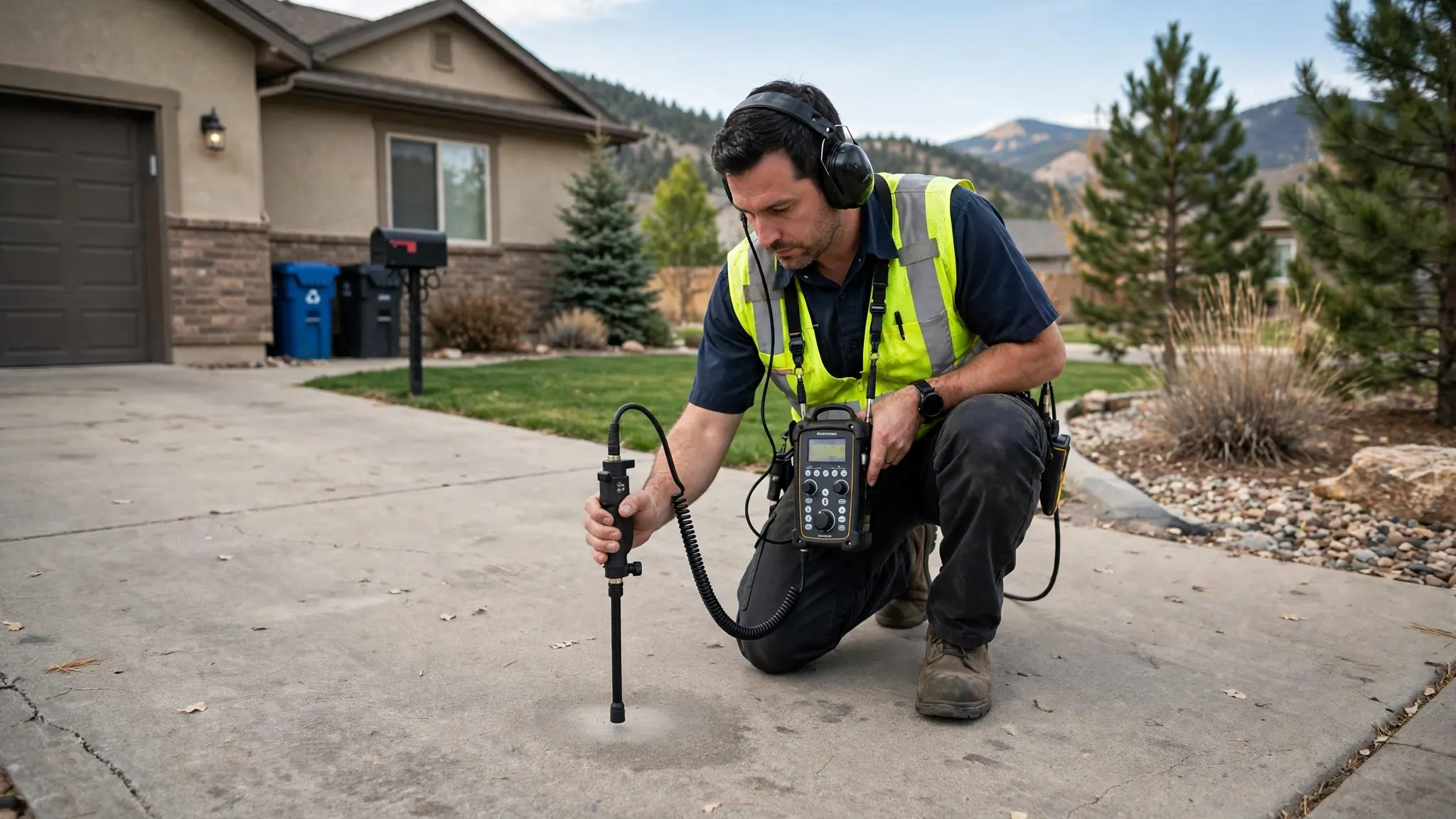
Ask the company, in plain words: "How will you find my leak?" Then listen for instruments, not adjectives. A competent answer names specific methods matched to your symptoms — acoustic listening for pressurized supply lines, thermal imaging for hot-water leaks and moisture mapping, pressure testing to isolate the failing zone. For a suspected slab leak, you want to hear about ground microphones and systematic zone testing, not just "we have a lot of experience with those."
Vague answers are the tell. "We have our ways," "we'll figure it out when we get there," or a pivot straight to repair pricing all suggest the diagnosis is an afterthought. The company's method should be the first thing they are proud to describe, because it is the product you are buying.
Ask: "For my symptoms — a spinning meter and no visible water — which instrument do you reach for first, and why?" A real specialist answers in one sentence. Anyone else changes the subject.
Experience That Actually Counts
"Years in business" is only useful if those years were spent finding leaks. Twenty-five years of leak detection in one market teaches things no training course covers: which 80020 neighborhoods sit on slab foundations prone to under-slab failures, how Broomfield's freeze-thaw cycle cracks supply lines at the foundation penetration, where the aging copper runs hide in older homes. Local pattern recognition is what turns a two-hour search into a forty-minute one.
Ask how long the company has served Broomfield specifically — not just how long it has existed. A national franchise can be fine, but the technician who shows up should know the area's plumbing, not just the brand's playbook. Local crews also have local reputations to protect, which tends to keep the work honest.
Response Time And Availability
A leak does not respect business hours, so your detection company's hours matter. "24/7" should mean a live person answers and a technician actually dispatches — not a voicemail that promises a callback in the morning. Ask directly: if I call at midnight, who answers, and how fast can someone be at my door in 80020?
We answer around the clock and arrive in 30–45 minutes across Broomfield, because we are based here — that window is a dispatch reality, not a marketing line. Any company quoting you a fast arrival from two counties away is quoting a hope. Proximity is part of the service.
Reading Reviews Like A Pro
Star ratings are a starting filter, not a decision. What you want is volume plus consistency: an average rating from 250+ customer reviews tells you the score survived contact with hundreds of real jobs. Then read the words, not just the number. Look for reviews that mention accuracy — "found it on the first visit," "pinpointed it exactly," "no unnecessary holes." Those are the reviews that describe a detection specialist rather than a friendly generalist.
Also note how the company responds to the occasional bad review. A professional, specific reply suggests a business that takes its work seriously. Silence, or a defensive rant, suggests the opposite. Nobody pleases everyone; what matters is how they handle it when they do not.
Red Flags That Mean Keep Looking
A few patterns should end the conversation. A flat quote with no questions about your symptoms means the price was invented, not estimated — it will change when they arrive. High-pressure tactics on the first call ("we can only hold this price today") have no place in a diagnostic service. No written findings means no accountability for the diagnosis. And any company eager to start cutting before testing has the order of operations backwards: detection first, demolition never — or at least, demolition only in the one right spot, after the instruments have spoken.
The right company welcomes your questions, explains its methods plainly, quotes honestly, and documents its findings. That is the standard we hold ourselves to on every 80020 visit. Call (720) 715-9734 or write [email protected] — ask us anything on this list and judge the answers for yourself.
Already comparing quotes? understanding a leak detection quote breaks down what each line item means, and hiring a leak detection plumber walks through the full checklist.