Hiring a leak detection plumber in 80020 is a three-stage process: vet the company before booking, prepare your home before the visit, and know what to do with the findings after. The key insight most homeowners miss is that you are hiring a diagnostician first and a repair crew second — the quality of the diagnosis determines the size of the repair. Get the order right, ask the right questions, insist on written findings, and a hidden leak becomes a small, precise job instead of an exploratory demolition. Here is the practical walkthrough, start to finish. When you are ready to book, call (720) 715-9734 — we answer 24/7.
Stage 1: Vetting Before You Book
Start with specialization. You want a company whose core business is finding leaks — not a general handyman service that added "leak detection" to a long menu last year. Check how long they have served Broomfield specifically: 25 years in this market means the technician has seen your neighborhood's pipe failures before, which shortens every diagnosis. Confirm they are properly credentialed and carry insurance, and read reviews for mentions of accuracy — "found it first visit," "exactly where they said" — which matter more than generic friendliness.
Then make the call and judge the conversation. Do they ask detailed questions about your symptoms? Do they explain which methods fit your situation — thermal imaging for a suspected hot-side leak, acoustic tracing for a buried line, pressure testing to isolate the zone? Do they quote the visit clearly and confirm whether you will receive a written report? A company that handles this call well handles the job well. Our 80020 leak detection page and Broomfield service overview show what a specialist operation looks like from the customer's side.
When hiring, you are buying an answer: where is the leak, exactly. Keep the repair decision separate until you have that answer in writing — it keeps every subsequent quote honest and comparable.
Stage 2: Preparing Your Home
Preparation is simple but it genuinely improves the visit. Clear access to the areas showing symptoms — move furniture away from the stained wall, clear under sinks, make sure the technician can reach the water meter and the main shut-off valve. An adult needs to be home to grant access and answer questions; if that cannot be you, brief whoever it is on the timeline of what you have noticed.
Write down the essentials before the technician arrives: when the symptoms started, what you have observed (sounds, smells, warm spots, bill changes), what you have already checked, and any recent events — freezes, remodeling, landscaping work, irrigation changes. Secure pets in a separate room; technicians carrying sensitive instruments and moving between rooms work faster without a curious dog underfoot. Know where your main shut-off is — if you do not, the technician will show you, and that alone is worth the visit.
Stage 3: The Visit — What Good Looks Like
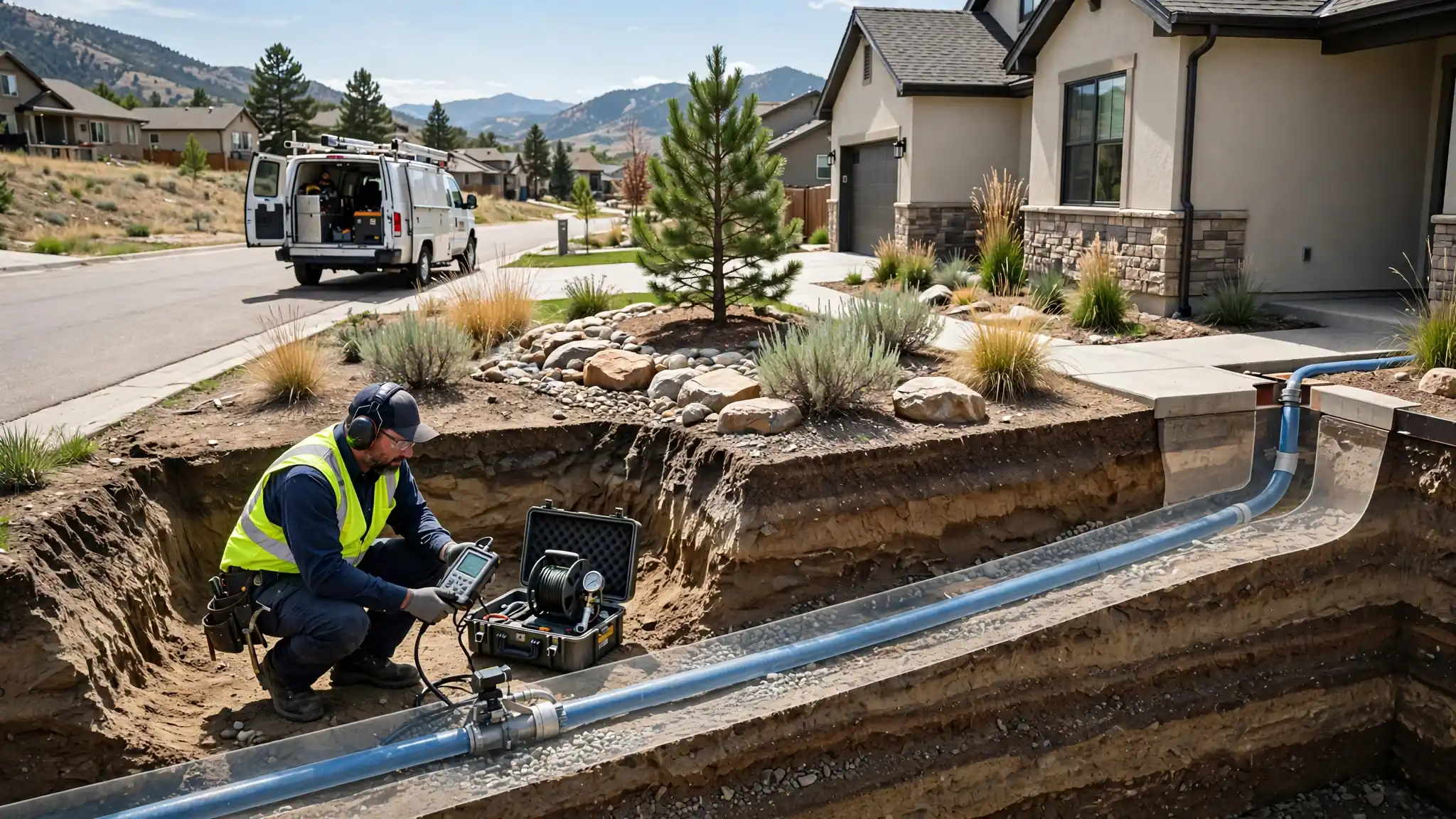
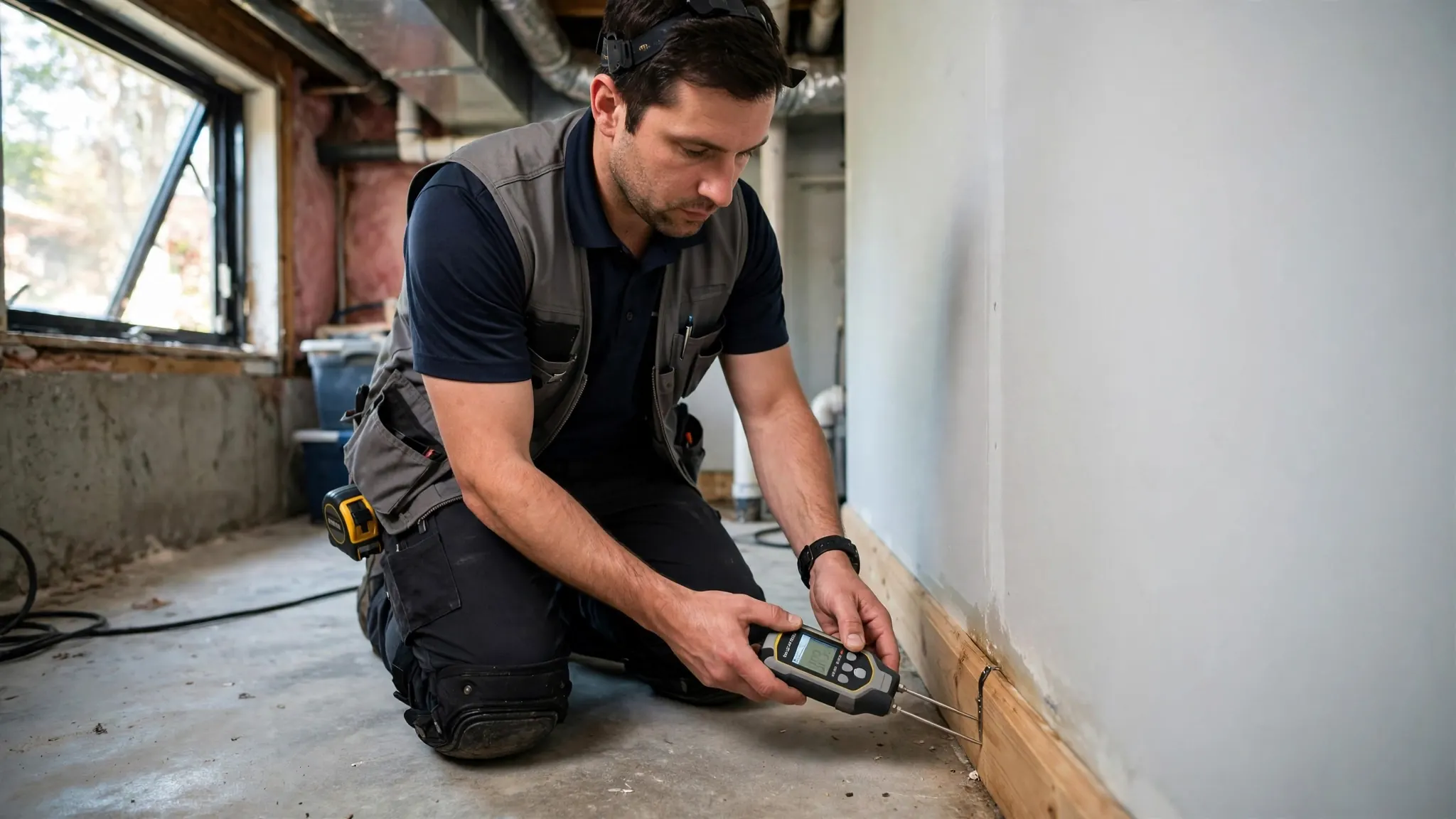
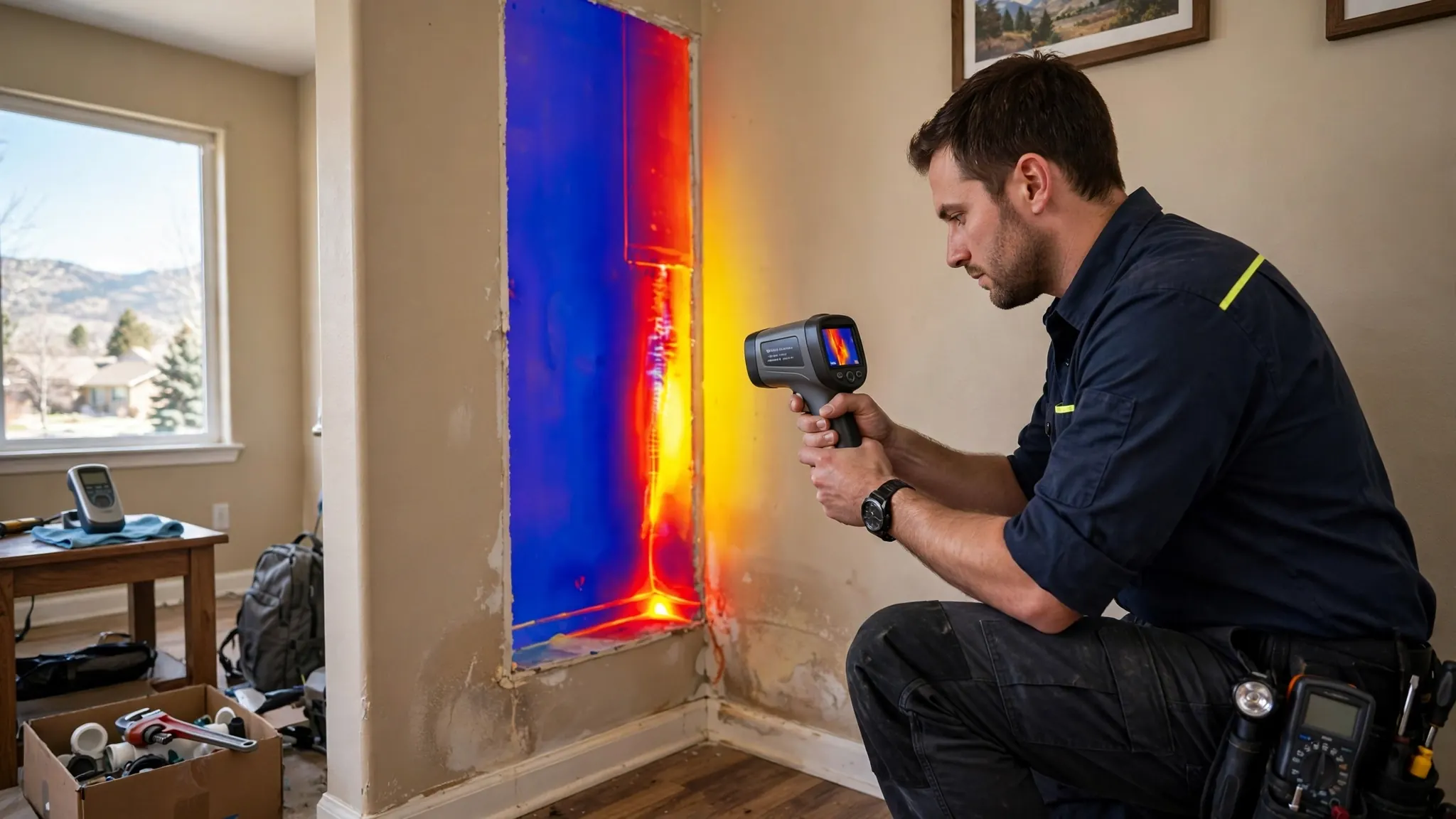
A professional visit follows a visible logic. It opens with your briefing — the technician listens to your timeline and asks follow-up questions. Then verification: a meter check with everything off to confirm active loss. Then the systematic search, method matched to symptoms — acoustic listening for pressurized supply leaks, thermal scanning for hot-water lines and moisture mapping, pressure testing to isolate the failing zone, line tracing for a service line between meter and house. The methods cross-check each other; the technician is not guessing, they are converging.
Watch for the hallmarks of quality as it happens. The technician explains what they are doing and why, in plain language. They do not open walls, cut drywall, or dig — detection is non-invasive, full stop. They take readings and notes rather than relying on memory. And they tell you what they are finding as they go, including when a test rules something out — negative results are information too. If instead you get vague reassurances and a rush toward cutting, speak up: the diagnosis comes first, always.
After The Findings: Next Steps
The visit should end with three things in your hands: the pinpointed location, a plain-language explanation of what failed, and a written report documenting the findings. That report is your leverage for everything that follows — get the repair quoted against it, send it to your insurer with the claim, keep a copy with your home records. Because the location is precise, repair quotes become comparable: every plumber is pricing the same small, defined job instead of padding for uncertainty.
You are free to hire anyone for the repair — the findings are yours. Some homeowners ask the detection company for a repair referral; others get two or three independent quotes. Either approach works once the diagnosis is solid. What you should not do is let anyone re-diagnose from scratch at full price: a proper written report stands on its own, and a repair plumber who respects it is a repair plumber worth hiring.
Mistakes That Cost Homeowners
The expensive mistakes are all variations on skipping the diagnosis. Hiring a generalist to "take a look" and watching them open three walls hunting for the source. Accepting a verbal "it's probably in the east wall" and paying a plumber to explore. Choosing the cheapest quote without checking what the visit includes, then paying a second company to do it properly. Waiting weeks to book while a pressurized leak compounds the damage.
Each one is avoidable with the process above: hire the specialist, prepare the home, demand the written pinpoint, then decide on the repair with full information. It is a simple sequence, and it is the difference between a small precise job and an expensive exploratory one. We have spent 25 years making this process smooth for Broomfield homeowners — 24/7 availability, 30–45 minute arrival across 80020, and findings you can take anywhere. Call (720) 715-9734 or email [email protected] to get started.
Before you sign anything, reading a leak detection quote shows how to parse an estimate, and same-day scheduling in 80020 explains options when time is short.