A sudden water bill spike in 80020 is your plumbing's way of sending a distress signal — the meter counted water you never knowingly used, and something has to explain it. In our experience across Broomfield, the culprit is a hidden leak far more often than a billing error: a running toilet, a cracked irrigation lateral, or a pressurized supply leak silently wasting thousands of gallons a month. This guide walks you through the investigation in the right order — the free checks first, the definitive meter test, and exactly how professional leak detection in 80020 tracks down what you cannot find yourself. If you would rather skip to the answer, call (720) 715-9734 — we do this every day.
Step 1: Read The Bill Properly
Before anything else, look at the right number. Your bill shows two things: how much water you used (gallons or CCF) and what you were charged. Rate increases change the dollars without changing the gallons — so if the usage line jumped, that is real water leaving your system, not a price hike. Compare the same month last year rather than last month: seasonal habits distort month-to-month comparisons, but year-over-year with similar weather tells the truth.
Also check whether the read was actual or estimated — an estimated read followed by an actual one can fake a spike. One call to the utility settles it.
Step 2: Rule Out The Innocent Causes
Several perfectly innocent changes raise usage, and ruling them out first keeps you from paying for a detection visit you did not need. Houseguests, a new lawn or garden watering schedule, a filled pool or hot tub, a malfunctioning water softener stuck in regeneration, a dripping hose bib someone left cracked open — walk through each one honestly. Check toilets too — a failing flapper wastes hundreds of gallons a day silently, and the dye test takes two minutes.
If every innocent explanation checks out and the gallons are still high, you are no longer looking at a habit problem. You are looking at a leak. Our high-bill leak page covers this triage in more depth, including the seasonal patterns specific to Broomfield homes.
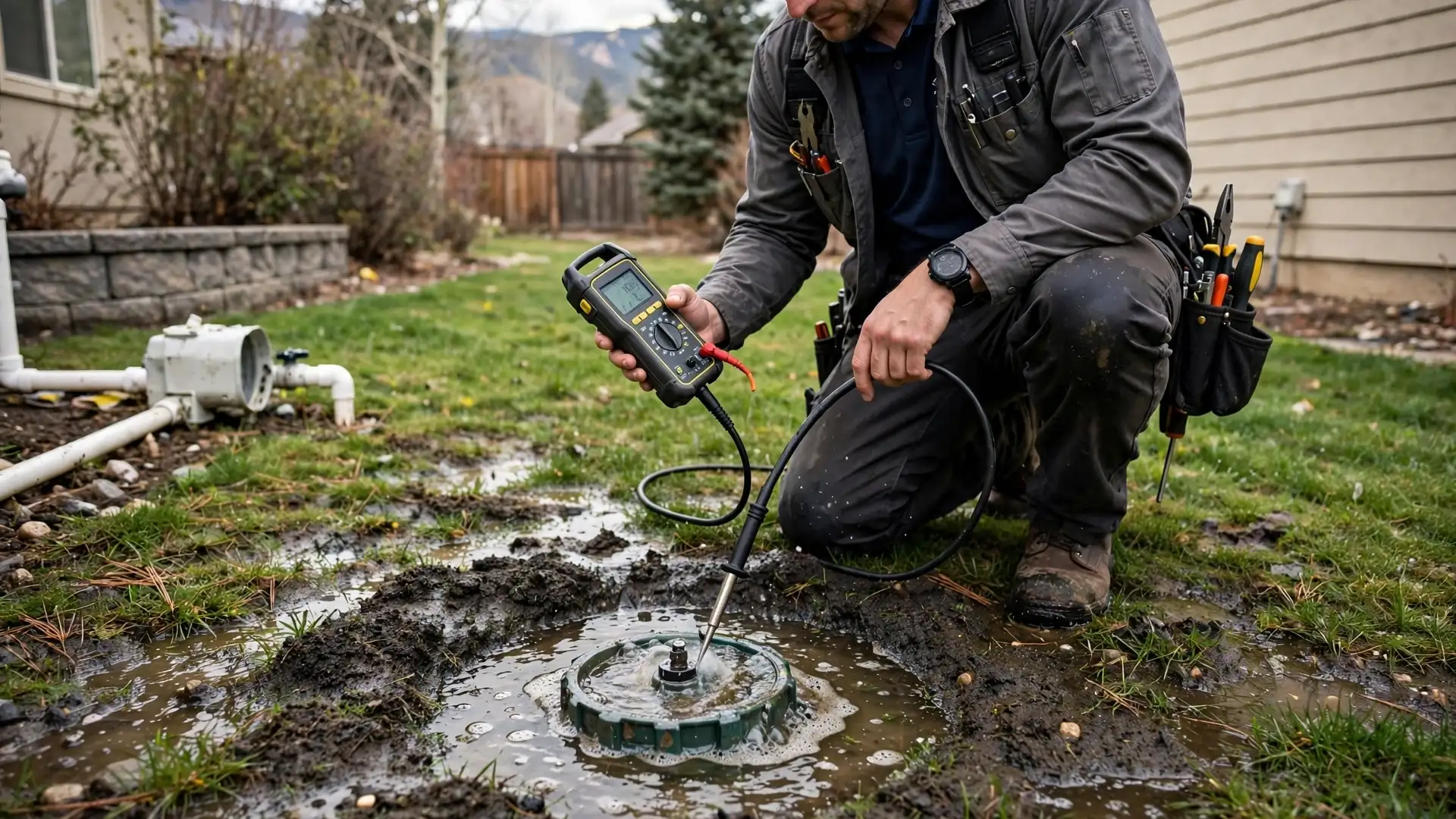
In 80020, summer bill spikes are irrigation-related more often than not. Walk each zone while it runs and look for geysers, sunken heads, and zones that stay soggy for days. A cracked lateral can waste more than any indoor leak — our irrigation leak specialists find these weekly.
Step 3: The Meter Test — The Decisive Check
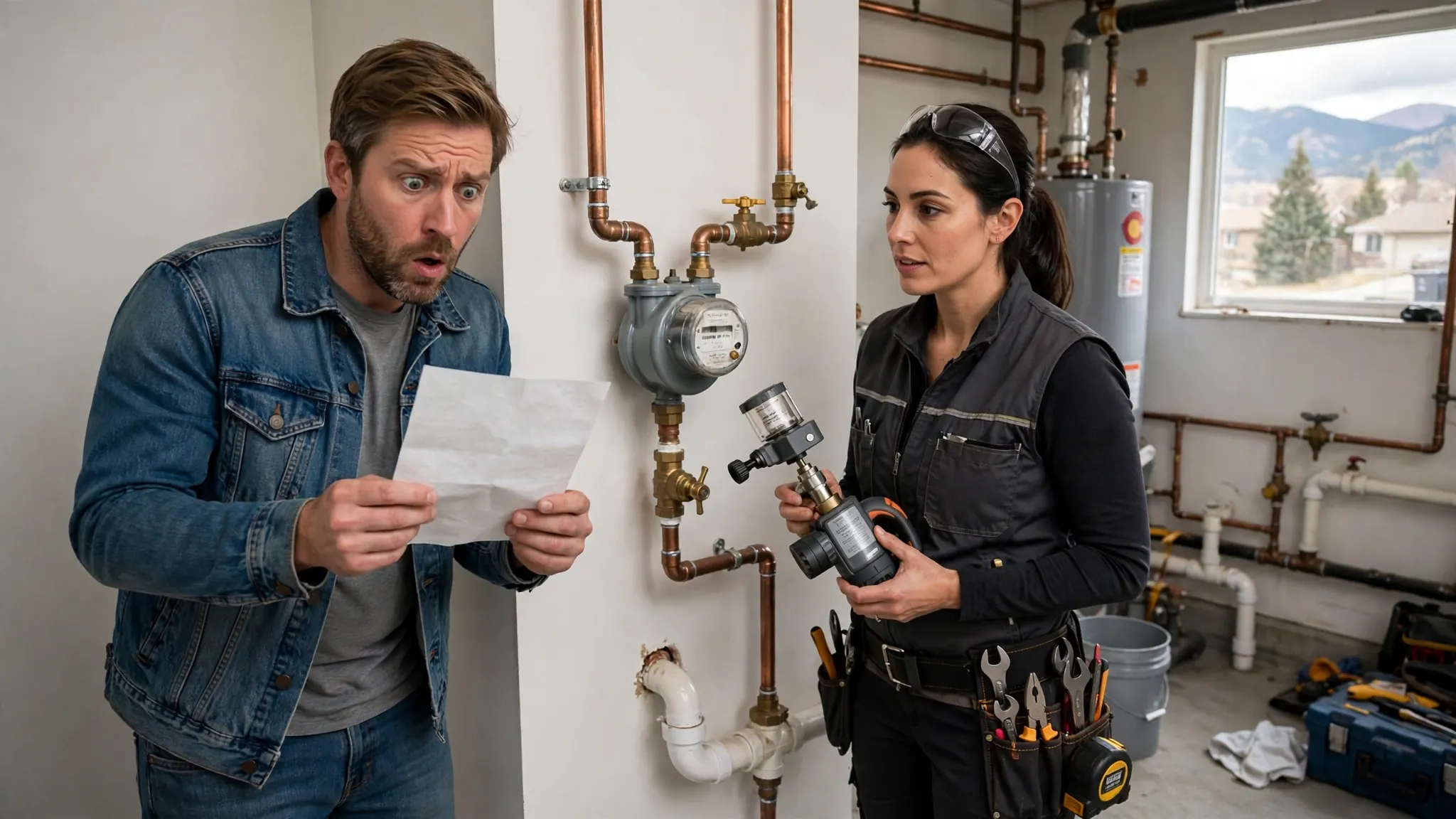
This is the test that settles the question. Turn off everything in the house — every fixture, the ice maker, the softener, the irrigation controller — and go to the water meter. Find the leak indicator (a small triangle or star on the dial) and watch it for two full minutes. If it moves at all, water is flowing through your system with nothing turned on. That is a leak, confirmed, no interpretation needed.
For a slower suspicion, write down the meter reading, use no water for two hours — overnight works well — and read it again. Any change means water left the system while you slept. Either version of this test turns "I think my bill is high" into "I have a confirmed leak," which is exactly the information a detection company needs to help you efficiently.
Step 4: The Usual Hidden Culprits
With a confirmed leak and no visible source, the field narrows to the usual suspects. Toilet flappers and fill valves top the list — silent, constant, and wildly wasteful. Next comes irrigation: cracked laterals, broken heads, and valves that fail to close, all buried or outdoors where nobody looks closely. Then the supply side: service lines between the meter and the house, pinhole leaks in walls, and slab leaks under the foundation — the pressurized leaks that run around the clock and never show themselves until the bill arrives.
The pattern of the spike helps aim the search. A sudden jump points to a new failure — a burst line, a stuck valve. A gradual climb over several billing cycles points to something enlarging slowly, like a pinhole leak or a deteriorating flapper. Note which pattern matches yours; it is genuinely useful information for the technician.
How Professional Detection Finds It
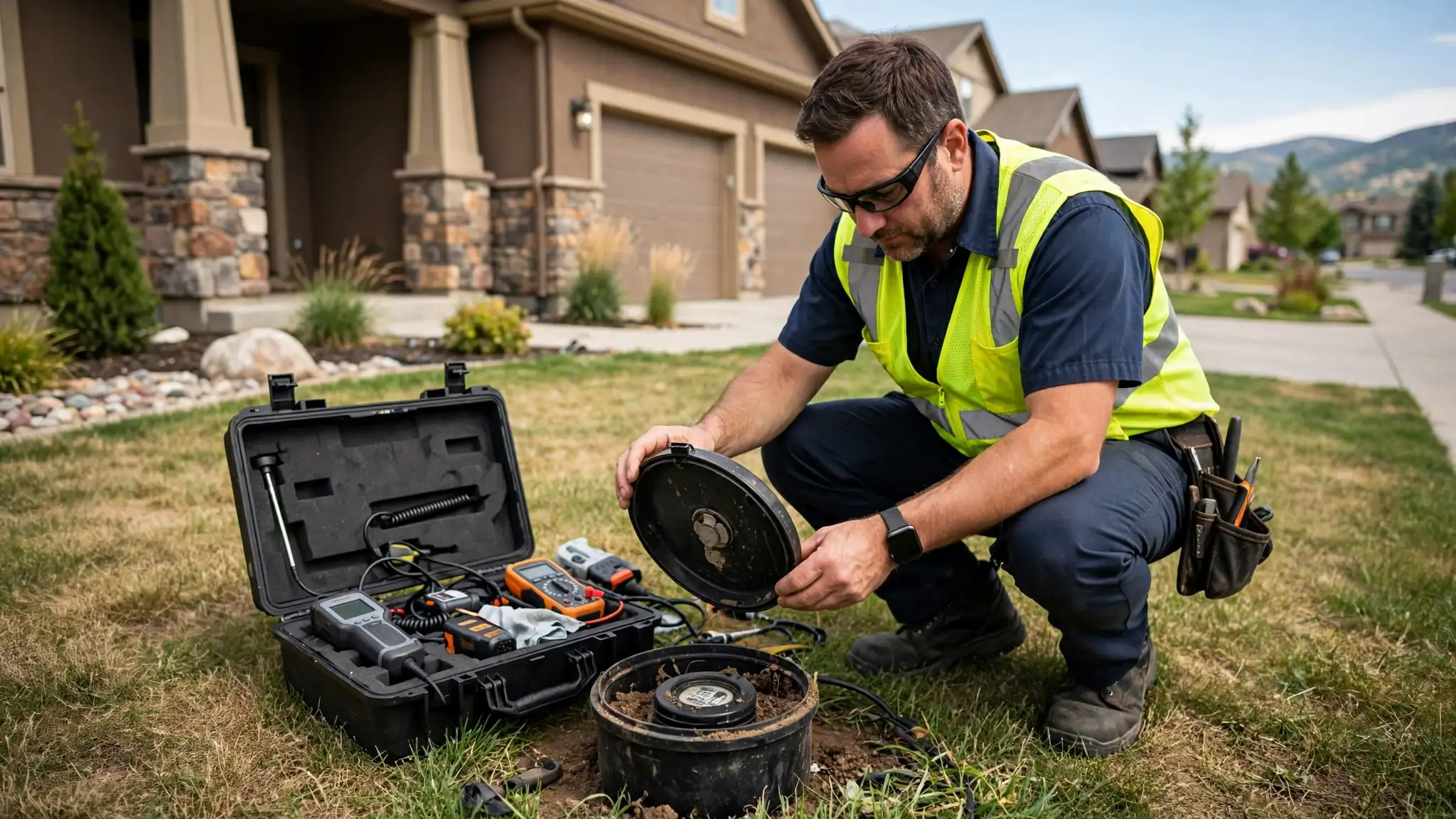
When the free checks run out, instruments take over — and the approach depends on what the evidence suggests. For suspected supply-side leaks, we pressure-test zones of your plumbing to isolate the failing section, then use acoustic listening and thermal imaging to pinpoint it through intact surfaces. For irrigation, we test zones individually and trace the lateral that will not hold pressure. For the meter-to-house service line, line tracing follows the pipe's path while acoustic equipment listens for the escape point.
Everything is non-invasive: no exploratory demolition, no torn-up yard on a hunch. You get a pinpointed location and a written report of findings — the documentation that supports both the repair and any conversation with your water utility about a leak adjustment. With 25 years finding exactly these leaks across Broomfield, we have seen every version of the mystery bill, and the answer is always findable.
After The Leak Is Found
Once the source is identified and repaired, two administrative moves protect your wallet. First, watch the next full billing cycle to confirm usage returned to baseline — that is your proof the right leak was fixed. Second, contact your water provider about a leak adjustment: many utilities offer a one-time bill credit when you can document that a leak was found and repaired, and our written report plus the repair receipt are exactly what they ask for.
Then make the bill work for you going forward. A quick glance at the usage line each month — not the total, the gallons — turns your bill into an early warning system that catches the next leak in its first month instead of its sixth. And if a spike ever appears again, you already know the drill: rule out the innocent, run the meter test, and call (720) 715-9734. We answer 24/7, arrive in 30–45 minutes, and you can always reach us at [email protected].